

There is a quiet revolution happening across British business. Not in the press releases, not in the glossy trade show stands, but in the back offices of distributors, the Excel spreadsheets of wine merchants, the inboxes of sales teams who spend half their working lives doing things that have nothing to do with selling wine. Artificial intelligence is transforming how businesses operate, how they compete, and increasingly, how they survive. The drinks industry, for all its charm and tradition, is at risk of being left behind.
That was the uncomfortable but galvanising truth at the heart of a panel session held at last month’s London Wine Fair. One of the final sessions of the show, titled ‘AI: Friend or Foe?’, brought together five business leaders who work at the coalface of technology and drinks.
Operators, consultants and founders that are already using AI not as a novelty but as critical infrastructure in how their business operates.
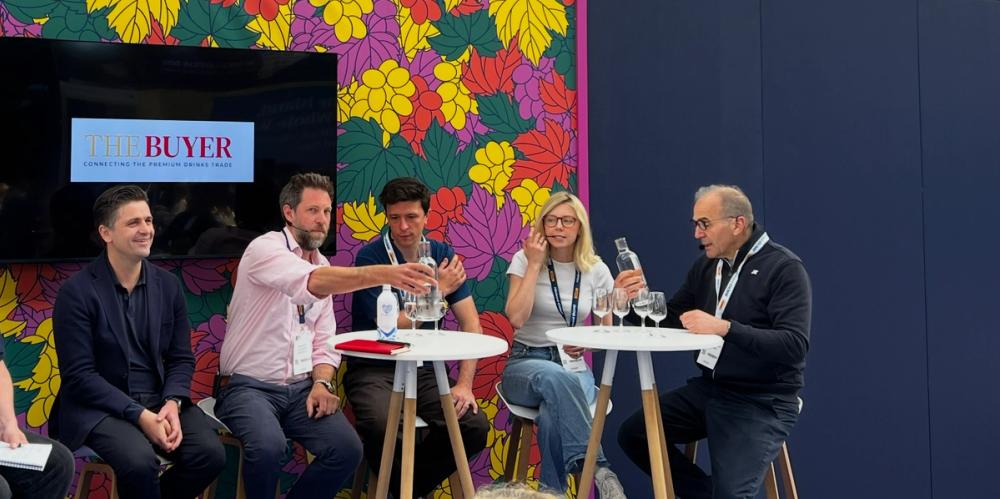
The AI panel at the London Wine Fair. Left to right: Mitch Fowler, Fero, James Grant, iwantmore.ai, Paul Cartwright, Tvision, Laura Rosenberger, Nick Martin, Wine Owners
The panel included Mitch Fowler, chief executive and co-founder ofFero, James Grant, co-founder of iwantmore.ai, Paul Cartwright, chief technical officer of TVision, AI consultant Laura Rosenberger and Nick Martin, chief executive and co-founder of Wine Owners.
Before a word of the debate had been spoken, moderator Richard Siddle, editor-in-chief of The Buyer, revealed how he had invited many of the top 10 drinks distributors in the UK to participate. Not one said yes. Some admitted they weren’t using AI at a level they felt comfortable sharing publicly. Others simply declined.
The answer to the opening question of how widely AI is being used in the drinks industry laid bare the issue the sector is facing – not much. And those who are using it are mostly doing so in the most basic way possible, like a free ChatGPT account, generating a bit of copy or answering a quick question.
Or as Siddle put it: “Like glorified Google.”
There is, as several panellists noted, a pervasive anxiety about AI in the industry. Employers worry their staff will think their jobs are threatened. Staff worry their employers are right. Leaders who have never used the tools don’t know where to begin, and so they don’t begin at all.
Long term, this response won’t be sustainable. But understanding why the drinks industry feels this way is the first step to moving past it.
A relationship industry in a data world
The drinks trade is, at its heart, a relationship business. It always has been. Whether you are a Bordeaux négociant, a UK distributor with 30 years of contacts, or a wine merchant who knows every customer’s palate, the currency of this industry is human connection. Trust, taste, personality, presence. These things cannot be automated and nobody on the panel suggested they should be.
But there is also the reality that most people who work on the relationship-facing side of the industry spend an alarming amount of their time not building relationships. They are logging into systems. Updating spreadsheets. Chasing invoices. Reconciling stock.
As Nick Martin of Wine Owners put it: “Sales people do admin. People who are spending far too long logging into multiple systems to try and update stuff or check stuff. If that can be dealt with, then everyone’s happier in their work too.”
The opportunity AI presents to the drinks industry is not to replace the people who look after those relationships or know the range inside and out. The opportunity is to give those people back the hours that have been stolen from them by process and admin.
The perception problem
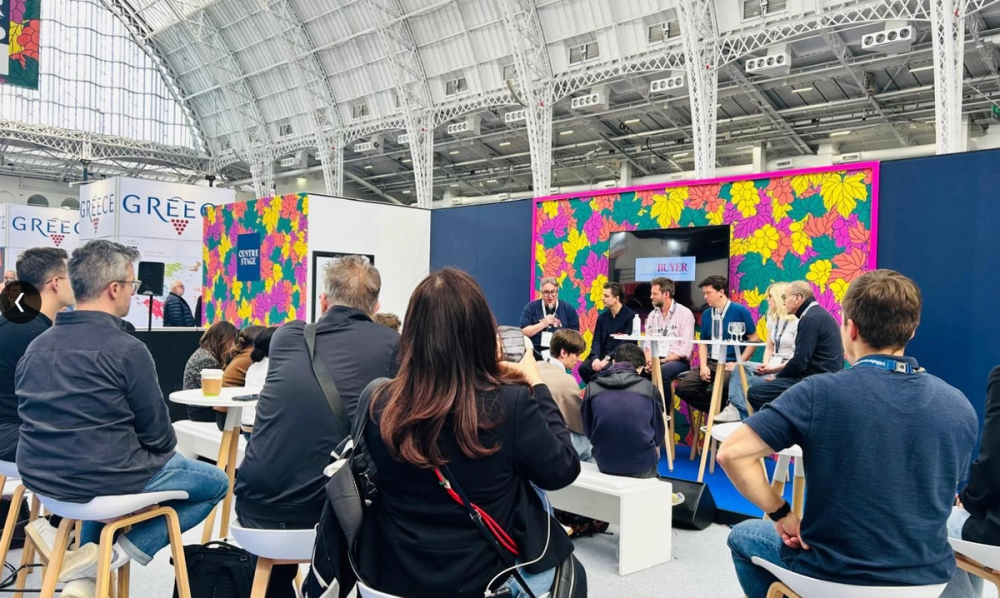
The AI panel at the London Wine Fair was able to give direct advice on the steps all drinks businessess should be taking to embrace and embed AI into their businesses
Ahead of understanding what AI can do for a business, people need to understand how to use it. Using it incorrectly can be damaging to those hard-won relationships.
“Most people still use AI as just a question-answer thing,” said James Grant of iwantmore.ai. “I’m going to ask ChatGPT a specific question. I’m just going to get back a bit of text. The number of emails you see coming out where people have just used AI to generate an email, just sent it off without any thought as to how that’s perceived on the other end is horrific. That’s where you’re losing that credibility, you’re diminishing those relationships.”
This is perhaps the single most damaging misuse of AI in a relationship-driven industry: using it to hollow out the very thing that gives the industry its value. A mass-produced AI email, stripped of personality and context, sent to a buyer when a business has spent years cultivating that relationship, is not just unproductive, it is potentially destructive. Not because the tool is bad, but because it is being misused by someone who doesn’t understand it.
Mitch Fowler ofFero bluntly added: “It’s not AI that will take your job. It’s the person who’s leveraged it properly. And it’s the same with businesses.”
Free AI or paid? When to make the switch?
One of the most practical exchanges of the session came when discussing what the difference is between, for example, free ChatGPT and paid AI tools. And potentially more importantly when should a business make the switch?
Paul Cartwright of TVision gave a clear answer: “Fundamentally, free ChatGPT and paid Claude, or Copilot, or whatever [is used], they are the same thing, a large language model. What you’re paying for is two key things. One, you’re no longer the product. When you use the free ones, you do not know where your data is going. Two, as you move into using AI in business, you’re moving beyond a chatbox. Taking that brain out of the chatbox and using it in business processes, putting harnesses around it, is where the real value lies.”
Martin simply said: “If you’re a business, don’t be using the free version. That’s probably the simplest way to look at it, because you’re giving it your data and you don’t want to be doing that.”
Fowler was quick to pick up on the cost point: “If you can’t find $30 of value out of a monthly subscription to Claude, or Copilot, or Gemini, whatever you’re using – you are using it wrong. This technology is the most financially accessible technology that has been introduced in years.”
A £20 or £30 monthly subscription is essentially a rounding error in most businesses. The barrier is not cost. It is understanding.
What AI can do for drinks businesses
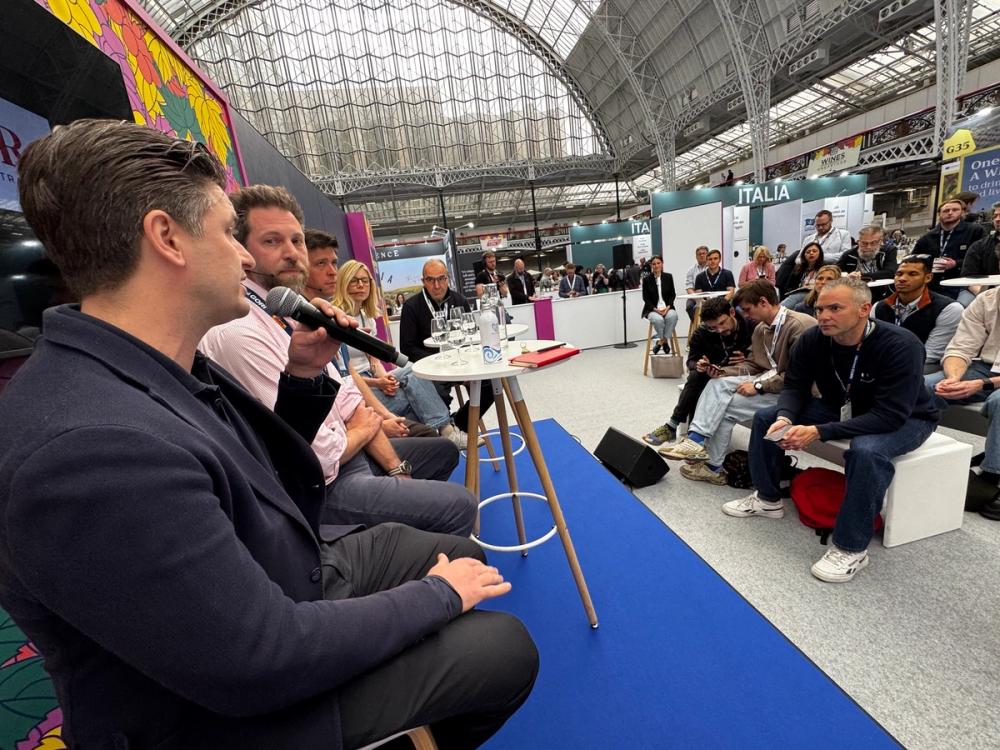
AI friend or foe was the theme addressed by the London Wine Fair panel
The session was most alive when it got into the specific uses of AI for the drinks industry.
Customer communication and sales admin
Laura Rosenberger described a pattern she sees repeatedly: salespeople pinging emails into a shared inbox, where a team manually processes each one.
“An agent can do all of that stuff. The agent can communicate back with the customer or the sales team. That takes the most time-consuming thing away from salespeople so they can go and sell,” she stressed.
Data quality and reconciliation
Martin highlighted something that will resonate with anyone who has ever tried to clean a customer database in a wine business.
He said: ”AI will spot issues in data coming out of background systems. Duplicate customer codes, broken links between orders. Being able to spot those things is just transformational.”
Creating a company record
Cartwright described how his team transcribes all meetings automatically, creating a searchable record of every conversation. This builds genuine institutional memory that any team member can query at any time, he said.
Human resources
Grant said AI has a big role to play in how certain functions in any company can be automated and made more efficient.
He explained: “I built a demo for a client last week which automated entirely a 30-stage new joiner onboarding process. Took me 20 minutes to do that in Claude. Teeing up emails, writing contracts, sticking things in diaries. And I am the least technical person in my team.”
Scaling without hiring
Fowler was able to explain how Fero is using AI to help its customers not only be more efficient, but, crucially, profitable too.
One Irish client, for example, in the past 12 months since adopting AI-powered tools built by Fero, grew their top line by 572% and their profit by 410%, all with the same team. No new hires required.
Automation vs AI
One of the more nuanced points came from Rosenberger, who made a distinction many businesses overlook: a lot of what companies call AI transformation is actually just automation, and much of it could have happened years ago.
“Probably two-thirds of what we find in businesses in terms of the inefficiencies they’ve got at the moment could have been solved by automation five years ago,” she claimed.
“AI is now just sexy. Boards are speaking about it, they bring us in, and we have to say ‘sorry to disappoint’.”
She said before rushing to deploy large AI language models, it is worth asking: which parts of our operation are still running on manual processes that even basic software could handle?
In most drinks businesses, the answer is sobering. That said, what AI enables goes significantly beyond traditional automation, particularly in its newer agentic forms, where models actively do things rather than just produce content.
The amount a non-technical person can now automate themselves, without a developer or a large IT budget, is, as Rosenberger put it, “out of this world.”
Who should drive AI in your business?
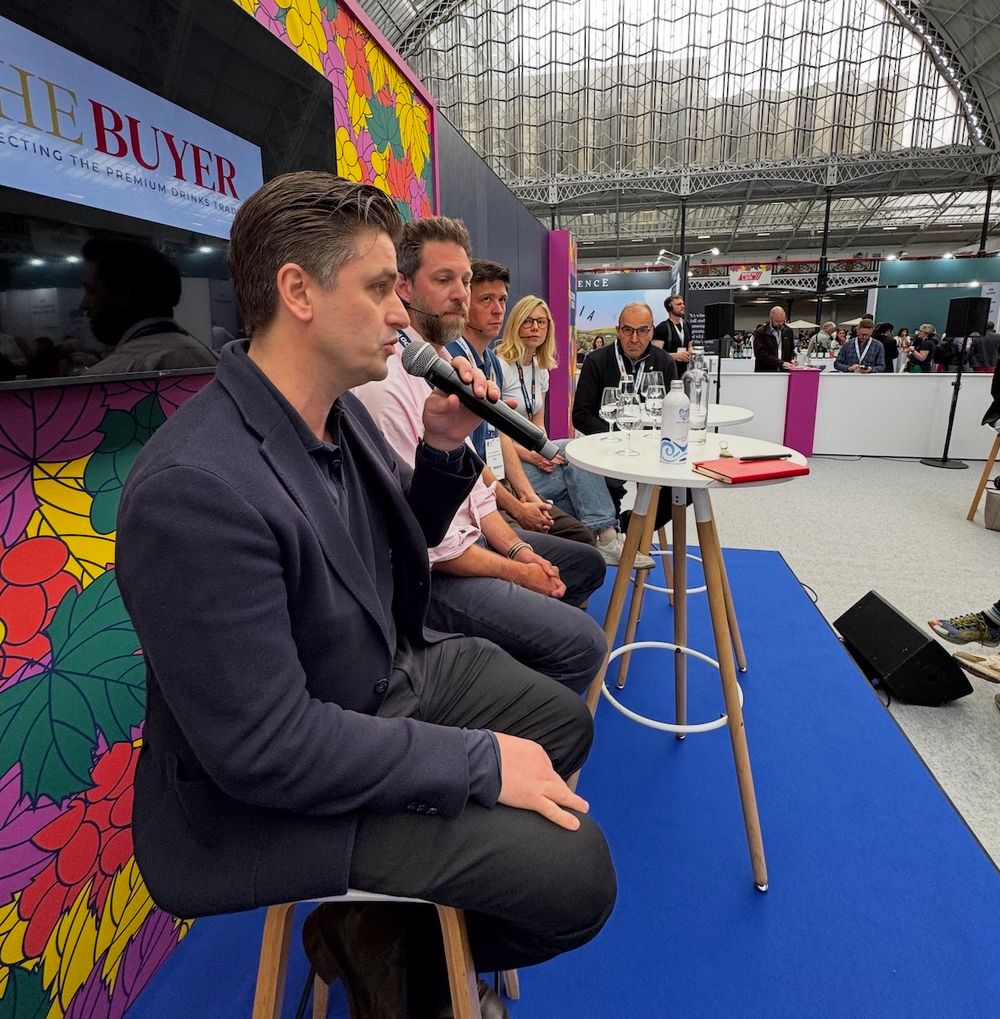
AI needs to be embraced by everyone in your business and not just driven by the IT team was a key message from the AI panel at London Wine Fair
The panel was asked who should be driving the AI agenda in any business? Should it come from the chief executive, or the board, or is it all down to the technical and IT team?
The answer was striking. It needs to be driven by your company’s business leaders.
“This is a business problem, not an IT problem,” said Cartwright.
Rosenberger advocated for a two-pronged approach. One where a smart, operationally-minded internal AI champion, combined with a leadership team that is genuinely committed to transformation, is essential.
“The companies that have started making good progress have had a founder or a CEO who’s had that ‘aha’ moment where they’ve seen the light and got that vision for what it means for the company,” she said.
The internal champion, she stressed, does not need to be technical. Operational experience may be more valuable than a coding background.
AI is not a substitute for strategy
Wine Owners’ Martin was keen to stress the point that “AI is not a substitute for strategy”.
As he explained: “Before thinking about tools or automation, businesses need clarity around their model, positioning and where they genuinely have a right to compete. AI then becomes an accelerator, helping improve execution, operational efficiency, customer engagement and speed of delivery.
“What’s changed over the last 24 months is remarkable. Tasks that once required huge amounts of manual effort can now be accelerated dramatically, from data cleansing and migration, to enrichment, integrations, actionable insights and increasingly intelligent automations.”
He added:“AI has to deliver commercial value. In an industry made up largely of SMEs, investment decisions matter. Technology has to create measurable operational and financial benefit, not simply add complexity or cost.
“The wine trade is changing quickly. Businesses willing to rethink operating models and embrace smarter infrastructure will be in a much stronger position for what comes next.”
Just get started
Fowler said the most important thing any business can do is to simply make a start when it comes to AI. The stakes are too high if you don’t. The good news is there is already a lot of expertise out there help you.
As he said: “It’s not like walking into Tesco and pulling something called AI off the shelf. It’s about partnering with people that are using these capabilities to make their products more efficient.”
Grant at iwantmore.ai agreed and said later on Linked-in that attending the London Wine Fair for the first time reminded him of a quote from Homer Simpson from ‘Homer vs. the Eighteenth Amendment’ (Season 8, Episode 18) of The Simpsons.
“To alcohol! The cause of, and solution to, all of life’s problems.”
To which Grant said: “If you replace the word alcohol with AI, and in an industry where relationships matter so much, there is potentially as much risk to ballsing it up from the poor use of AI as there is opportunity. AI literacy is key.
“However… perhaps don’t listen to this quote from Homer when it comes to AI – ‘Trying is the first step towards failure.’ Just get started.”
AI is now the cost of doing business in an industry that has been slow to digitise. And that cost is now being measured not just in inefficiency, but in competitive disadvantage.
Read the rest of the full article – including the panel’s practical starting points for businesses with no technical background, and their view on what the next two years holds here.


