Plans to invest in cybersecurity partnerships and train 1 million AI engineers by 2029
issued Friday, April 3, 2026, 5:34 p.m.
[TOKYO] Microsoft has announced a four-year, US$10 billion investment package in Japan, a key pillar of its push for artificial intelligence across Asia.
OpenAI’s initial backers will work with Sakura Internet and carrier SoftBank to develop the cloud and AI infrastructure, with the two companies becoming Japanese entities that will supply graphics processing equipment and other computing resources. Sakura Internet shares rose 20% on the news on Friday (April 3), while shares in SoftBank, the communications arm of investment group SoftBank Group, rose 1.6%.
As part of that package, Microsoft, whose Copilot has struggled to keep pace with OpenAI’s ChatGPT and Google’s Gemini, plans to invest in cybersecurity partnerships and train 1 million AI engineers by 2029. But the biggest spending will go toward expanding the company’s cloud computing capabilities and building new data centers, President Brad Smith said in an interview with Bloomberg and Japanese broadcaster TBS.
“We’re not just building these things based on hopes and prayers. We’re building them based on clear signals of demand and demand,” he said after a meeting with Prime Minister Sanae Takaichi. If it moves too slowly, it will lose market share to competitors or Japan will fall behind, he said.
“It’s clear that we have to keep our feet on the ground as we speed up, and that’s what we’re doing.”
The Redmond, Wash.-based company is battling Amazon.com Inc. and Alphabet Inc. for dominance in Japan and aims to build a robust AI ecosystem to catch up with the U.S. and China. Microsoft’s efforts in Japan, which it says will help keep data processing within the country’s borders, follow similar announcements in Singapore and Thailand earlier this week, as well as a pledge to spend about US$2.9 billion over two years in Japan in 2024.
navigating asia
new world order
Get insights delivered to your inbox.
But as the Middle East war enters its second month, U.S. hyperscalers’ plans to spend about $650 billion this year to build power-hungry data centers are facing global power constraints. Resource-poor Japan relies on the Middle East for more than 90% of its oil and is already turning to less efficient coal-fired power plants to ensure it meets its existing energy needs.
“It’s an uncertain world,” Smith, 67, said of the prospect of oil shortages. “We’ll get through it somehow, and that’s one of the reasons we build this diversity into our supply chain wherever possible.”
The Japanese government plans to allocate about $7.7 billion this fiscal year to support cutting-edge chip and AI development. It aims to leverage the country’s leadership in the field of industrial robots to capture more than 30 percent of the global market for so-called physical AI by 2040.
Related items

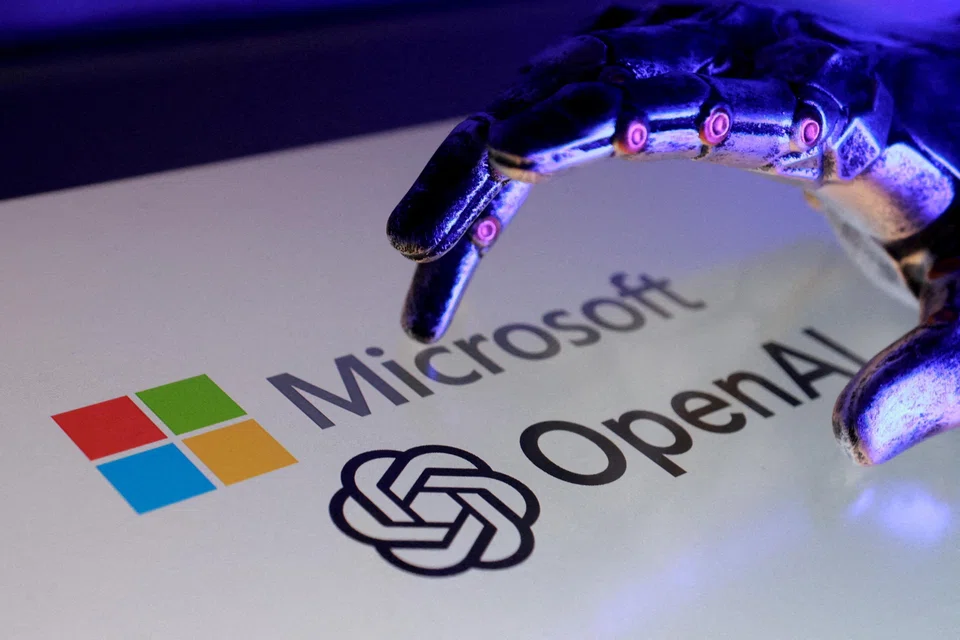
Microsoft has shifted its focus to selling its workplace AI tool Copilot, rather than offering it for free as part of a software bundle. The company is integrating its separate Copilot teams for consumer and enterprise customers to create smoother AI services across its products. bloomberg
Decoding Asia Newsletter: A guide to navigating Asia in the new world order. Sign up here to get the Decoding Asia newsletter. Delivered to your inbox. free.