0:00 spk_0
Grocery shopping doesn’t have to be this like tedious process of putting individual items in, but rather it’s a collaboration with an AI who has, you know, an understanding of what you need.
0:14 spk_1
Howdy y’all. Welcome to the Big Idea on Yahoo Finance. As a co-founder of the small business funding platform, Hello Wallace, it has always been my mission to help ensure entrepreneurs have the tools they need to succeed. So let’s cowboy up.Today’s big idea question is, can you make healthy living easy, accessible, and affordable? Our industry focus will be membership-based e-commerce. So, I’m a big snacker, and maybe it’s, uh, the GDP is because of my obsession with snacks, but the global snack box subscription market was valued at 8.6 billion in 2025 and is expected to reach $21 billion by 2034, which is probably because of my kids now.Loving snacks. Joining me to talk about this is founder and CEO of Thrive Market, Nick Green. Thrive Market is a mission-driven online marketplace, making healthy and sustainable living accessible and affordable for millions across the US. The other thing we’ll cover today that, um, I’m very passionate about is advocacy and giving back. And I will tell you, Thrive Market has done that in a way like no other and become profitable. So, let’s hear more from Nick at Thrive Market.Nick, welcome to the Big Idea. It’s so good to have you.
1:29 spk_0
Thanks
1:29 spk_1
forhaving me. I, I feel so lucky. I’m, I’m surrounded by all your amazing products, and I, I was just saying that your design is gorgeous.
1:38 spk_0
Yeah, we’re, we’re really proud of it. It’s something we’ve worked on for a long time. We’ve got an in-house team that does spectacular work.
1:44 spk_1
Now, how did this whole deal come about? How, what, what brought your mind to Thrive Market?
1:51 spk_0
You know, the, the germa fry market really goes back to my own childhood. Uh, I grew up in the middle, middle of the country, uh, outside of Minneapolis, Minnesota. Uh, I had a mom who worked really hard to make healthy choices in the 80s and 90s, uh, not an easy time, of the, you know, epicenter of dinners, a lot of TV dinners, a lot of ultra processed food, um, and frankly, not a lot of awareness of how bad some of that stuff really was.And my mom was a pioneer in the sense that she, uh, sort of had had that awareness and developed it on her own, doing her own research and, you know, trying to make healthy decisions based on, uh, you know, seeing folks in her own family that had, uh, challenges with weight, with diabetes, uh, with other chronic diseases, uh, often related to diet. And so I, I grew up with the, like, you know, no sugared cereal on the, on the table, no soda in the fridge.Uh, and, you know, didn’t really like it as a kid, but it set in place, you know, a pattern of health for our family that really made a difference in, uh, you know, being able to go to college, be healthy through, you know, my twenties, running, running uh my first company. Uh, and when I sold my first company, basically wanted to do something that was, you know, really foundational for me. And, and this was the most, you know, fundamental mission that I felt so strongly about. And that’s, you know, healthy living, healthy food.Should be accessible, should be easy. It should be affordable for anyone.
3:14 spk_1
Well, and you stepped into the, the membership or subscription market. How did you make a decision to monetize that way?
3:24 spk_0
Well, for us, it really started with the mission and how do we actually make organic natural products more affordable, you know, we basically stepping back, looked at what are the barriers, right? And growing up, growing up in the Midwest, one of the obvious ones was geography, and so we said if we’re online, we can ship it anywhere. But even if you’re shipping anywhere in the country, there’s still the issue of price, and the organic food at the time, and, you know, still largely is anywhere from 20 to 40% more expensive than conventional equivalents. And so membership for us was a way that we couldCreate the working capital and the profit generation to then sell the products at a lower price. And so we, you know, studied Costco, uh, as a, a business that I grew up, you know, going to the warehouse clubs with my mom, whether it was Costco or Sam’s Club, uh, you know, saw how if you buy in bulk, and you have that membership model, you can get stuff really affordably. Um, and, and we, we basically studied that model as a way to enable the mission. And, you know, the other side of it was, and this has been the case from day one.Every paid membership also allows us to then subsidize a membership for someone that can’t afford it. Um, so we, we thought that one for one model would create community. Uh, obviously it was an important part of access for those that can’t afford the membership. Um, and then it’s, like I said, then the kind of core of our economic model and part of the reason that we’ve been able to, uh, you know, scale, keep to the mission, but also be profitable.
4:44 spk_1
And the, the, the cash flow around that, I mean, explain a little bit more to folks how that really does allow you.Um, I think you told me before to, to plan ahead a little bit more than a traditional model.
4:58 spk_0
Yeah, well, the key thing is, is you get that that membership fee upfront, and from an accounting standpoint, you recognize the revenue over the course of the year, but you are paid upfront. And so, if you’re, you know, spending a customer acquisition, that payback offsets your customer acquisition costs, so basically acts as working capital.Um, and if you’re a, you know, early stage business that’s not profitable, it’s at least partially funding your business. And so, you know, my co-founders and I had started and sold companies before we put the initial capital in the business, uh, but we also had a lot of trouble raising money from anyone else. Uh, VCs turned us down, we ended up raising money from health and wellness influencers. And so the combination of, you know, our own capital, the health and wellness influencers, and then the working capital kind of engine from membership is how we got off the ground, andYou know, e-commerce businesses are not high margin, especially in the early days at low scale. Uh, so it was really, really challenging to, you know, keep the, keep the machine tight, and I think if we hadn’t had the extra juice coming from the membership model, it just would have been that much harder to get itgoing.
6:00 spk_1
Well, and you were, you start in your garage, and, and you, you, you said you heard no, but you heard a lot of no’s, right? Didn’t, wasn’t it just insane amount of people that wouldn’tdo this with you?
6:11 spk_0
Yeah, it wasn’t my garage, so I didn’t even have a garage. I, I had moved out to LA, you know, a year before, after I sold my first company, you know, I’m living in an apartment in Santa Monica. We rented a, it was a it was a converted mechanic’s garage on Jefferson Boulevard, uh, actually not too far from where I am right now. Uh, and, uh, and we started building out our warehouse in our office in the same space. Uh, so we were, you know, picking and packing initial orders and everything.Uh, my co-founder and CTO, like, did the initial warehouse design. Now, I remember having guys in it, we’re like literally putting together the shelving units, kind of thing. So it was, it was a wild time. And part of the reason we had to do it all ourselves was, and, you know, have the office and the warehouse in the same places. We’re having a lot of trouble raising money. And yeah, as you said, it wasn’t just, you know, 5, 1015, 2030 no’s, it was like 150 no’s, uh, you know, my one of my co-founders and I.You know, we went to San Francisco, we went to New York, we obviously talked to every VC in LA, and I think that the call that a lot of them made was, you know, well, one, they didn’t think the middle class, middle America wanted to eat healthy. So it’s like, you know, the demand is in places like LA and New York, and there’s already Whole Foods, and there’s Airwan, and, you know, we just kept saying we’re not trying to compete with Whole Foods. Half of American families, half of American families don’t live within driving distance of a health food retailer. And if you live in LA, you know, you just don’t realize that.And, uh, and I obviously did. I felt it very viscerally because I’d grown up with that, um, and you know if you’re talking to VCs who are on the coast who are in these affluent places who are affluent themselves who probably aren’t doing their own grocery shopping, you know, it’s hard to get that message through, um, but fortunately for us, you know, the health and wellness influencers who we are already talking to about promoting the company, so these are, you know, authors, thought leaders, bloggers, YouTubers.Uh, they came up and said, let us, let us back it. And you know, we got a couple of those and then a couple more and then a couple more, and it just snowballed and all of a sudden we had our, our round basically with, you know, $100,000 to $25,000 checks.
8:12 spk_1
And, uh, you know, our, our folks that are listening and watching, they’re, they’re gonna hear a lot of nos as they start their companies. What, what, what’s your advice to them personally, because that can be so demoralizing, you know, to get through those moments.
8:27 spk_0
I think it’s a combination of kind of holding to reality simultaneously. On the one hand, investors know, you know, they have an outside in perspective. They’ve got a lot of pattern recognition from things that they’ve seen. So I think it’s naive to say, oh, don’t listen to the investors, like, you know, right, you know, trust your gut entirely. You know, like we got a lot of good feedback from the investors, and obviously some of those conversations helped reveal to us weaknesses and what we’ve been thinking about, and we iterated the business model as we had those, those dialogues.Um, so I think you have to take the, you know, find the signal through the noise, but then recognize that a lot of it is noise, right? They’re bringing their own baggage, they’ve got their own criteria for why they’re gonna, they’re gonna fund the business. And for me it was just always this gut check of like, why are we doing this? What do we know?You know, what do we think they’re right about and they say no, and then what do we think they’re wrong? And like, you know, as much as we learned from those conversations, it also built our conviction on the opportunity that we had and why it hadn’t been tackled before, right? Seeing that people just, you know, in the hubs where startups were, were, were beginning, in the places where businesses are built.Uh, you know, there just wasn’t this awareness of the problem, and that problem is access, and for us, you know, that was a problem that wasn’t just a business opportunity. It also was something we felt viscerally had to be solved, and, um, and so honestly for us it was the best thing that could have happened to us. And I think, you know, if you can take those setbacks, whether it’s from investors or anyone else as an opportunity to one, learn, and then 2, you know, kind of develop that, uh, that fire in the belly, like give yourself that extra motivation.Uh, it was both for
10:01 spk_1
me. Uh, have you ran into any of them who said no, and they’re like, crap, that was, that was a mess.
10:07 spk_0
There, I mean, some of them for sure. Some of them have become, you know, become friendly with them since then, just from the LA community. Um, you know, one of the investors that rejected us actually led our Series A, and it was the conversations that we initially had. This is Dana Suttle, who’s now on our board and is a dear friend and is, you know, literally been back in the company for more than a decade now.And you know, her conversations, for feedback on why they passed was one example of where that was actually good feedback. And then we came back to her and it’s been a great relationship. So, you know, mostly they’re great people, you know, trying to make the best decisions for themselves. It’s not that I, I harbor any resentment. But like I said, it was, there is a sense of like, all right, we want to prove these people wrong. Like, you know, they’re, they’re questioning our core thesis, our, our, our mission, andUm, and so yeah, like I said, I, I took that as a little extra motivation and, and it’s, it, it drove us through those early years.
10:59 spk_1
That’s awesome. Well, here we are, you know, a decade later, and I was so inspired by how you’re using AI for your entire company for meal planning. Tell, tell us about that. It, it’s so exciting.
11:15 spk_0
I mean, it’s just incredible how fast the world is changing, and, you know, as I zoom out how much since, you know, since we started the company, uh, launching back in at the end of 2014, you know, there’s so many things that have changed, um, but there, there is one thing that’s the same, and that’s that people are wanting to get healthier, and it’s still not easy, and, you know, we made it easier by cutting down the barrier to from geography, we’ve been really successful at cutting down the barrier to price.But I think until now, the one barrier we’ve always seen that’s really fundamental, uh, is really just the, the problem of, of choosing and kind of finding out what’s good, figuring out what’s good and what’s not. And I think when people go into a grocery store, one of the biggest challenges, like, everything now makes a health claim. Whether it’s unhealthy or healthy, it’s gonna make a health claim.And if you go on social media, you have influencers saying exactly opposite things about what you should do for your health, and you have health trends that everyone thinks are like, you know, the bee’s knees, and then a year later it’s like, oh no, actually, you know, sugar alcohols aren’t so good. And so, you know, what we’ve always tried to do is cut through that noise and be that trusted source.So give people, you know, we’re not trying to be the everything store like an Amazon, we’re ultra curated. We have these filters that you can find the products that meet your diets. Um, we try to, you know, clear away the hype, have only the highest quality products and make it really easy for people to find that. And how this comes to AI is that for the first time, I think we’re gonna have an absolute step function.And how well we can help people do that, where you don’t need to come in knowing what products you’re looking for, or even what diet you’re ascribing to. If you come in with health goals for you and your family, we take you now through a linear process like an onboarding process where you answer questions. That data maps against the entire data set of historical thrive market members, and we’re able to actually build your cart for you on that first order.And it’s not that that the car’s gonna be perfect, but half of the items, over half of the items on 1st order now are coming from that AI cart, and you know, these AI algorithms, the models are only gonna get better, and we’re working on figuring out how do we do that on nth order, so not just the 1st order, but get intelligent as people put together their further orders, um, and, you know, ultimately.The world that we can end up going to is really one where grocery shopping doesn’t have to be this like tedious process of putting individual items in, but rather it’s a collaboration with an AI who has, you know, an understanding of what you need, what your family is looking for, but also has this enormous data set to draw on.And you know, that’s what we’re now finding is so valuable in, in our business is we have 1.7 million members. We know not just people in general, but specifically the consumer that that cares about health and wellness, what they need, and that data can enable us to help anyone coming into the onto the platform.To find the rightproducts.
14:02 spk_1
That’s amazing. I, I, I’m so inspired by that ability, and one of the things that seems like you all have done at Thrive forever is ensure everyone is included in this process and the education around that. And you were also one of the first to accept, uh, government-supported food programs too, is thatright?
14:25 spk_0
That’s right. I mean, since day one, we, uh, as I’ve said before, if you’re a low-income family, a first responder, a military veteran, teacher, student, you know, anyone that for whatever reason wouldn’t be able to afford the membership or couldn’t access a paid membership, we give you a free membership.And you know what we realized pretty, pretty early on is that makes a big difference, but it’s not necessarily enough. And that at first the way that we tried to solve that was getting them even better prices by basically enabling our paid members to donate a portion of their savings because the average member is saving, you know, $20.30 dollars, sometimes $40 on an order. You get to check out, you can actually choose to donate a portion of that to the gives members’ budgets, and we raised.Almost $30 million over the last 10 years just through that donated charity. It’s, it’s incredible. Like our members are so generous. We see 3 to 5 times the typical e-commerce donation and checkout rates. And then that allows us to subsidize that gives, gives members shopping budgets. So it’s like get a free membership, get the subsidized pricing. But even there, so many of these folks, especially the ones that are, you know, really struggling economically or financially.Uh, you know, their, their shopping budgets actually with food stamps, and until a couple of years ago you couldn’t use food stamps online at all. So we became the first pure play e-commerce retailer to start accepting food stamps online. Uh, it was very, it was, you know, non-existent until 2021. The USDA, uh, after a petition that we ran and we were working on with them, they, they opened it up to.Uh, e-commerce retailers that had a brick and mortar presence and then finally a couple of years ago, they said, all right, Thrive Market, we’re ready to go. It was, you know, a decade in the making. It was one of my, one of my proudest moments in the business. And, you know, we opened that up and, and now I feel like we have this sort of really robust solution for, you know.Any low income family that they get the free membership, they get the subsidies from our member base, and they can use their
16:12 spk_1
awesome. I love it. So on our show we talk about, uh, dirty unicorns, some of the a mistake you made in business that we can all learn from. What, what’s one you’d share with us?
16:25 spk_0
Oh my gosh, we, we could be here for a few hours sharing, like we, we, let’s put it this way, we’ve rolled through the mud, uh, you know, for years. I, you know, I would just say to any, um, any entrepreneur, like you will, you will always, if you read a news article, if you see the headlines, like you will see a sanitized story, and the truth is building businesses is super hard.
16:45 spk_1
It is
16:45 spk_0
I mean, we, we had in the 1st 3 years is like every quarter there was an existential moment, um, you know, I mentioned the situation with fundraising.Um, but you know, we had one situation where we, this is like totally self-inflicted, you know, we had, we had realized if we give new members a free jar of coconut oil, this is back in 2015 when there was a like the coconut oil craze, 100 things you could do with coconut oil was like the big article that we had driving traffic to the site, and, uh, you know, we opened up this, this funnel that said get a membership, get a free jar of coconut oil, and we had, we did exactly deluged with people coming in.Um, the problem was it turned out none of these, or not none of them, but many of them didn’t want a thrive market membership at all. They just wanted their free jar of coconut oil. So a month and a half later we’re seeing this like, you know, just this disaster we’ve created. We turn off that funnel and I found out we had just bought $1.5 million of inventory of coconut oil, and I remember assessing the damage.Like, it was like a week and a half later, we had now normalized our coconut oil sales, and it’s like, all right, we have 17 years inventory of coconut oil. Um.And you know we did like we found a way to to to give it away, you know,
17:59 spk_1
we have, I could just see you and every employee you have doing everything you possibly can cooking with it, using it every Christmas gift for the next 10 years. It was,
18:08 spk_0
yeah, then the challenge was like over the next few months like the coconut oil, coconut oil trend did kind of decline, so we’re like, you know, we, you don’t want to be holding coconut oil when the, uh, when the tide goes out.
18:20 spk_1
Hey, um, how do you, well, first of all, is, is it the hardest question ever to say, do you have a favorite Thrive product?
18:28 spk_0
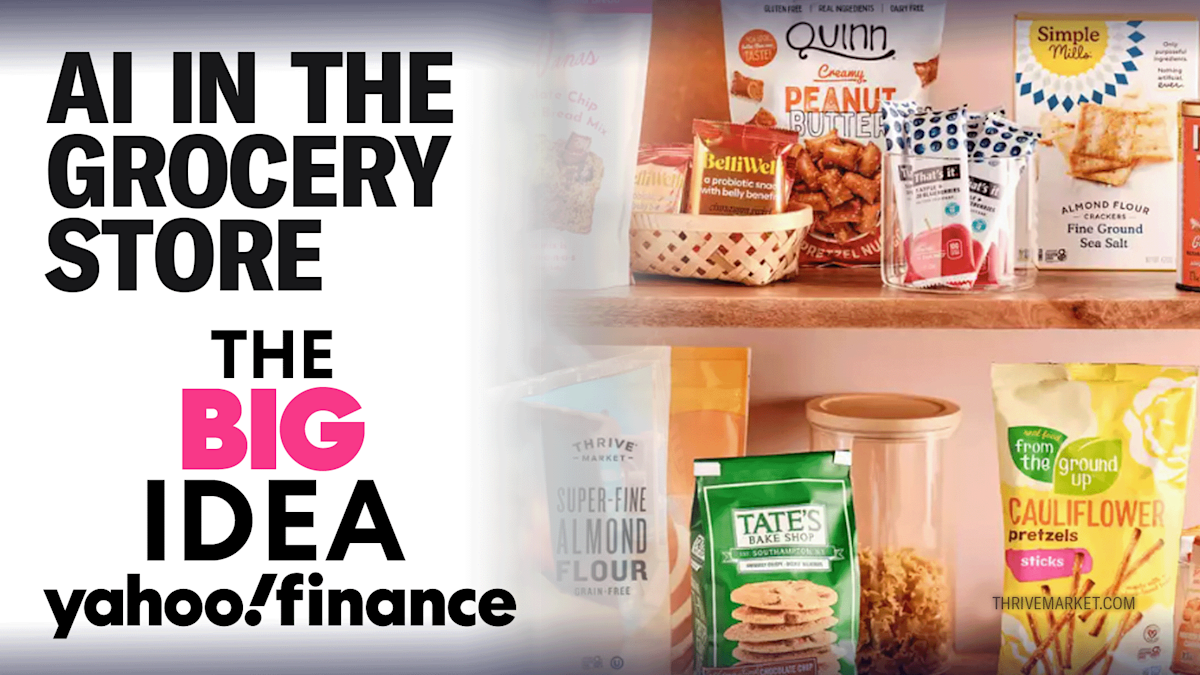
Well, I’m glad you asked that because, you know, as you can see from the picture in the background and you know, this one here, my personal favorite, like I put it on everything is olive oil.
18:38 spk_1
Um, I’ve got ithere actually, it’s gonna comehome with me. There we go.
18:41 spk_0
My wife is from Spain, so like, you know, olives and olive oil are huge in our, in our home. We have 4 kids, you know, they’ve been eating olives since they were like, you know, under 1 year old, um, and she, one thing she hates about this product is actually not from Spain.Uh, but it starts with Crete, which is an island in Greece. It’s the oldest olive producing region in the world. Uh, it’s a multi-generation farm, um, just an incredible, incredible story. It’s, it’s organic, it’s regenerative, it’s single sourced. Uh, so that’s my all-time favorite. There’s another one right behind you that’s, uh, that box called Fruit Circles, which is a kid snack. So it’s like think about fruit roll up and, you know, kind of like fruit snack type snacks.It’s that, but it’s 100% real fruit, and it’s also organic, super clean product. Uh, kids love it. I find the, the part I find the most funny there is we actually find a lot of parents also love them. So they’re like, you know, it’s like the kids are eating them, but then the parents are sneaking them in as well.
19:37 spk_1
Well, with 4 kids, you also have the greatest focus group ever because they’re probably the hardest on you of anybody.
19:44 spk_0
You know what, my kids, we have all sorts of challenges before, but they’re all good eaters. That’s like one thing I could be grateful for, um, and yeah, I credit my, my wife for that because she’s bringing Spanish food and like all this stuff in, into the mix, but also that they’re, they’re eating Thrive Market food, you know, every meal, every snack, and yeah, they’ll definitely tell me if something isn’t quite right.
20:05 spk_1
Ilove it. So what is, what is the future of Thrive? What are you excited about?
20:10 spk_0
Yeah, I mean, we, we talked about one big thing, which is how does this new AI world change what’s possible in terms of our mission of access. And I, I really do think it is the thing that can break down that last barrier, and, you know, I don’t know what you call that, if it’s intimidation, it’s overwhelm, it’s choice, it’s the, it’s the time that it takes, all of those things we can just continue to radically simplify, and we’re seeing it already, you know, 60% of items in first order are coming from the AI card.You know, people want that feedback. They want that help, uh, and again, you know, the models are just getting smarter and smarter. So that is one thing that’s super exciting. You know, the thing that I always remind the company, uh, the, the, the team across, across every, uh, part of the company is how early we still are in this journey. Um, you know, we’re obviously 11 years in. It’s been a long, you know, winding path. We have 1.7 million members we’re doing.You know, hundreds of millions in sales and we’re, we’re, we’re profitable and we’re all, we’re really proud of that. So it’s a lot of milestones that we wanted to hit.
21:11 spk_1
Hold on, wait, I just want to say congratulations, by the way. I, we can’t just coast over a million plus members, profitability. I mean, and you’re, you’re feeding people in a beautiful way. So I just have to say congrats. OK, keep going.
21:25 spk_0
Thank you. And you know, honestly, the thing I’m most proud of is the fact that we have shown, you know, you, it’s not either or mission or business opportunity. Like the two have actually together. Like we’ve been able to be profitable for the last 3 years. We drive more profitability than a grocery store, which people said we’d never be able to do, and we’re still doing it while growing and compounding and building a great business and serving the mission. So that, that is something that we’re proud of. I’m not, not glossing over that, butIn the grand scheme of things, you know, we’re less than 2% of the US household population, right? There’s 100 million US households, um, so very few people have even heard of us, let alone tried Thrive Market. Um, and even for our existing members, because we’re only the dry side of the, the assortment and because they’re still going in many cases to the local grocery store, you know, we’re 5, 7% of their, uh, share of wallet. So we are making an impact, but, you know, I like to say right now we’re making a dent and we want to do a lot more than that.Um, and if we’re gonna solve the problem, it’s gonna be a, you know, it’s gonna be a multi-decade journey, and I think what gets me the most excited is we’re one decade in, and as I look at this coming decade,It’s just gonna get, it’s gonna move faster. We’re gonna get bigger. The impact’s gonna scale, and I think also consumers are continuing to want this more. Like if you had told me even five years ago that something like the Maha movement would happen, right, where this isn’t driven by, you know, liberal yuppies in like California and New York. It’s like people all over the country, you know, the poli like political affiliation unknown.That are just coming together saying, you know, we wanna, we wanna shift the way food is, is, is, uh, consumed in this country. And there’s obviously a lot of other things in that movement that that kind of maybe are, are, are from disparate camps, but the one core thing that just like always strikes me when I see, uh, things like that is, you know, people just coming and saying,Doesn’t matter where you are, it doesn’t matter socioeconomics, doesn’t matter geography, politics, like we want to be healthier, and especially parents want that, and I think they’re gonna want it more, and that’s super exciting.
23:24 spk_1
Well, Nick, um, first of all, thank you for coming on the Big Idea, and I, I just, I admire so much what an advocate you are for families. I, I just, the impact you’ve made.Um, the advocacy you’ve done, uh, I mean, food stamps alone, being able to bring those into, you know, e-commerce, what a, what a huge impact you’ve made on the world. Um, and thank you for feeding us all, most of all.
23:50 spk_0
Well, hopefully we’ll be feeding a lot more over the next 10 years. We’re, we’re really excited for things to come.
23:55 spk_1
Right on, man. Thank you.At the end of each episode, I’d like to give a shout out to a small business doing amazing work. Today I’d like to shout out one of Nick’s favorites, Pioneer Pastures. This is a US based food and beverage company that produces ultrafiltered A2 milk, chocolate milk, yum, and high protein shakes designed to be easier to digest and more nutritionally efficient than traditional dairy.The brand focuses on clean label dairy by using milk from A2 cows, increasing protein content, reducing sugar and lactose, and avoiding artificial ingredients, making it a better health option for conscious consumers. So you can check them out at pioneerpastures.com. Thank you, Nick, for coming on the show and thank all of you for joining us. We hope you’ve learned a lot. This has been the big idea from Yahoo Finance. You can come say hi to me on any of my social channels at Elizabeth Gore USA.Please make sure to scan the QR code below to follow Yahoo Finance podcast or check us out at the Big Idea wherever you get your podcasts. I’m Elizabeth Gore, and as my grandma always said, hold your head up high and give them hell. See you next time.
25:10 spk_2
This content was not intended to be financial advice and should not be used as a substitute for professional financial services.