

These projects are among 278 funded awards to national laboratories, companies, universities, and nonprofit organizations aimed at accelerating breakthroughs in energy, scientific discovery, and national security through new platforms that span nuclear fusion into critical minerals and combine AI, supercomputing, quantum systems, and advanced scientific instruments.
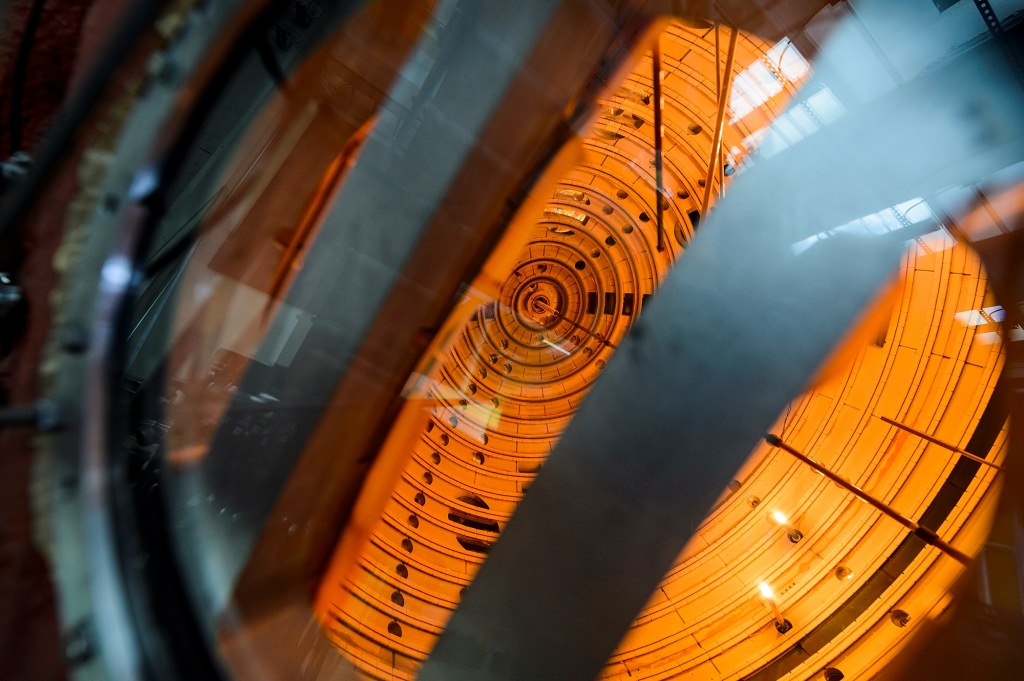
University of Wisconsin-Madison researchers joined industry partners and colleagues from universities and national laboratories at the first Genesis Mission Summit in Washington, D.C., on Wednesday. On July 22, the U.S. Department of Energy announced the first phase of the project, funded through the Genesis mission.
The University of Wisconsin-Madison will receive five Phase I awards ranging from $500,000 to $750,000 to support nine-month projects aimed at addressing some of America’s most pressing energy, science, and engineering challenges, including nuclear power, critical mineral extraction, and commercial fusion energy.
The University of Wisconsin-Madison has received more awards than any other public university in the United States, tied with Stanford University and second only to the Massachusetts Institute of Technology in total awards with six.
The agency awarded 278 awards to 168 universities, 87 national laboratories, 19 companies, and four nonprofit organizations. The current award stems from a funding opportunity announced by DOE in March 2026. The department said it had the largest response to a funding opportunity in DOE history.
The Genesis Mission brings together DOE’s national laboratories, universities, industry, and other partners to collaborate on efforts across energy, science, and national security. We are focused on using AI and advanced computing to support scientific research and deliver tangible benefits to society.
“Genesis Mission recognizes that no one institution can solve today’s most complex scientific and technological challenges alone. Each partner brings unique strengths, and together we can accelerate discovery and innovation,” said Dorota Brzezinska, vice chancellor for research at the University of Wisconsin-Madison.
“We are proud that UW-Madison was recognized at the creation of Genesis for its research strengths and the opportunity to contribute novel partnerships and workforce development approaches for the benefit of the nation,” Brzezinska added. True to the Wisconsin Idea, we are transforming research into real-world impact and developing the next generation of scientists and engineers with the skills they need to lead and succeed in the future of AI. ”
Funding to support a variety of innovative projects at the University of Wisconsin-Madison
Genesis Mission Phase I recognizes support teams that design and test research workflows that integrate AI and scientific investigation. Projects selected for funding span the School of Engineering, the School of Arts and Sciences, and the School of Computing and Artificial Intelligence. They include:
Building basic models of physics
The project, led by L&S physics professor Mariel Petty, will collaborate with researchers at Argonne National Laboratory, Carnegie Mellon University, and the University of Kentucky to investigate how large-scale AI models can learn from and connect data across multiple fields of physics.
In particular, this project explores how machine learning, a subset of AI in which computers “learn” from data, can help uncover new connections that were previously overlooked.
“As a new faculty member, it means a lot to have support for curiosity-driven basic research,” said Petty, who joined the University of Wisconsin-Madison Physics Department in August 2025 as part of the university’s RISE-AI initiative. “This project is noteworthy because it brings together disciplines and institutions that don’t normally work closely together.”
Use AI to accelerate critical mineral recovery
Athena Guillem, professor of geosciences at L&S, will lead a project to develop an AI system designed to dramatically speed up the recovery of copper and other critical minerals from U.S. deposits that are currently difficult or uneconomic to access.
Her collaborators include industry partners Ekion Pty Ltd. in Australia and Thunderstone Inc. in San Francisco, both of which specialize in extracting critical metals from rocks.
“We develop an agent AI framework, a team of specialized AI agents that work together like an autonomous research group,” Nghiem says. “This system compresses months of work into days by analyzing the scientific literature, running complex simulations, comparing results with laboratory and field data, and continually refining the model. We are particularly excited about this exciting opportunity to build on this important research direction with our industry collaborators.”
Advances in fusion energy with real-time AI
David Smith, a nuclear engineering and engineering physics scientist in the College of Engineering, will co-lead the project with Saemin Jun, a nuclear engineering and engineering physics scientist at the University of California, Madison, and Ryan Coffee, a scientist at SLAC National Accelerator Laboratory.
Their research focuses on advancing fusion energy by processing large amounts of experimental data in real time using advanced AI systems at the DIII-D National Fusion Facility in San Diego, California. Their approach aims to enhance plasma control, a key part of magnetic fusion energy.
“This funding will enable our team to quickly validate the technology and predictive models needed to bring commercial fusion energy closer to reality,” Smith said.
Accelerating fusion reactor design
Paul Wilson, professor of nuclear engineering and engineering physics in the College of Engineering, will lead a project aimed at improving fusion energy systems by advancing a critical component of fusion reactors called breeder blankets. This work utilizes both AI and machine learning to accelerate the design of improved breeding blankets.
The goal is to reduce the time it takes to design an optimal configuration.
“With its improved performance techniques, we develop large datasets used to determine optimal blanket configurations and train machine learning models that can further accelerate the optimization process,” Wilson said.
Improving supercomputer AI performance
Matt Sinclair and Shivaram Venkataraman, professors of computer science in the School of Computing and Artificial Intelligence, are collaborating on the design of more efficient supercomputers, which is especially important given the energy demands of AI and large-scale computing systems.
“We’re at a very interesting crossroads in how we design the hardware to run these (high-power computing) systems efficiently, how we build these systems to run them effectively, and how disciplinary scientists who do physics, chemistry, and meteorology, for example, can effectively run their workloads on these systems,” Sinclair says.
Their project will be conducted in collaboration with experts in a variety of fields from the University of Virginia, Fermilab, and Oak Ridge National Laboratory.
“It’s really exciting because you not only have the opportunity to come up with new ideas, but also to implement them and build tangible prototypes, systems, and products,” Venkataraman says. “This is a beginning, or Phase 1. And our hope is to recruit students and other scientists to work on these questions with us, and hopefully our work will help us put together a strong application for Phase 2. It’s exciting for the students here, and it’s a once-in-a-lifetime opportunity to work on a project like this.”
Subword to UW-Madison in the backyard
A number of UW-Madison researchers are also participating as sub-awardees in several other Genesis mission projects. One example is the fusion energy project led by the University of California, Madison spinoff company Realta Fusion in collaboration with L&S physics professor Cary Forrest. This effort builds on a long-standing collaboration between Realta Fusion and researchers at the University of California, Madison.
According to Debesh Ranjan, Grainger Dean of the College of Engineering, there are significant benefits to working with industry partners like Realta. “Because these collaborations help accelerate the path from breakthrough discoveries to real impact.”
And investing in college can help make these opportunities possible. For example, he said, “Through the Engineering Moonshot Initiative, we have invested in areas of growing national importance, including fusion energy, AI-enabled autonomous systems, and critical minerals, and these awards reinforce the strength of that strategy.”
Founding Dean of the School of Computing and Artificial Intelligence Remzi Alpaci-Dussault emphasized that the award strengthens the important role that universities play in addressing some of society’s greatest challenges.
“Artificial intelligence is one of the most powerful tools we have to advance scientific discovery, but its greatest impact comes when it is combined with deep cross-disciplinary expertise,” said Arpaci-Dussault. “These awards highlight the strength of UW-Madison researchers working together to solve complex challenges and reflect the School of Computing and Artificial Intelligence’s mission to advance people and technology that expands society’s potential.”
For L&S Interim Dean Christine Eschenfelder, these awards confirm that the university lives up to its reputation for rigorous research that benefits the public interest.
“Pushing the boundaries of science is the mission of the University of Wisconsin-Madison and the College of Letters and Sciences,” Eschenfelder said. “Using AI to advance science more quickly in fields such as physics and the earth sciences is a core goal of the RISE-AI initiative and a core priority for the University in supporting curiosity-driven discovery to address today’s complex challenges. This is great evidence of success.”


