Physics-based machine learning for toxicity prediction and optimization of curcumin nanocarriers

Data collection and curation The complete dataset including all physicochemical properties, loading metrics, cytotoxicity values, and composition details of all 75 nanocarriers is provided in Supplementary Table S1. This dataset included a wide variety of nanocarriers, including polymeric nanoparticles, lipid-based systems, inorganic nanoparticles, metal-organic frameworks, and hybrid composites. Information captured for every entry includes: Structural […]

Continue Reading

MBZUAI launches AI fellowship for Emirati researchers

The program funds overseas postdoctoral research for UAE nationals in the field of AI. The Mohammed bin Zayed University of Artificial Intelligence has launched the Ruwwad AI Scholars (RAIS) Fellowship, a fully funded two-year postdoctoral program for UAE nationals who have recently completed their Ph.D. The initiative supports advanced research placements at international institutions with […]

Continue Reading

Can and should deep learning predict war?

For centuries, war has been seen as a failure of human foresight. Diplomats respond, militaries prepare, and academics analyze, but conflict is rarely accurately predicted in advance. Now, that may be changing. Advances in deep learning neural networks are moving competitive predictions from guesswork to more accurate, data-driven predictions. The focus is no longer on […]

Continue Reading

Self-supervised machine learning pipeline for extracting information from live cell images at multiple doses and time points

dataset For pre-training, we selected 189 compounds from 10 MoA classes (ATPase, Aurora Kinase, HDAC, JAK, HSP, PARP, protein synthesis, topoisomerase, tubulin polymerization inhibitor, and retinoid receptor agonist, see distribution in Table SM1) at 10uM, similar to Harrison et al.52 They were randomly distributed into eight 384-well plates seeded with human osteosarcoma U2OS cells. Each […]

Continue Reading

Algorithmic Warfare Cross-Functional Team (AWCFT) / Project Maven

Project Maven, officially the Algorithmic Warfare Cross-Functional Team (AWCFT), was established in a memorandum signed by Deputy Secretary of Defense Robert O. Work on 26 April 2017. The memorandum directed the Department of Defense to accelerate the integration of big data, machine learning, and computer vision into intelligence workflows, beginning with the processing, exploitation, and […]

Continue Reading

Explainable machine learning with bayesian hyper-optimization for predicting cognitive impairment from longitudinal nursing home data

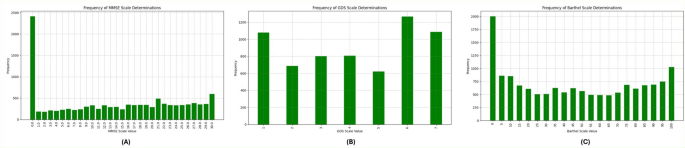
Dataset The dataset used in this study originates from a retrospective cohort of residents from four DomusVi nursing homes in Spain. Ethical approval for the study was granted by the relevant institutional committee (Code: 2023/576). The database contains information from 2,608 residents and includes 4,718,828 activity records collected over a 13-year period (2011–2024). Each entry […]

Continue Reading