Welcome to Eye on AI with AI reporter Sharon Goldman. Today’s issues: A new effort to bring sustainability back into the AI conversation…Cerebras prices its IPO above expected range…Anthropic is now courting small business owners…and court filings reveal Sam Altman owns more than $2 billion in stock in companies that traded with OpenAI.
In recent years, public discussions about the sustainability of AI have been largely drowned out by headlines about competition for computing power, energy, and geopolitical advantage.
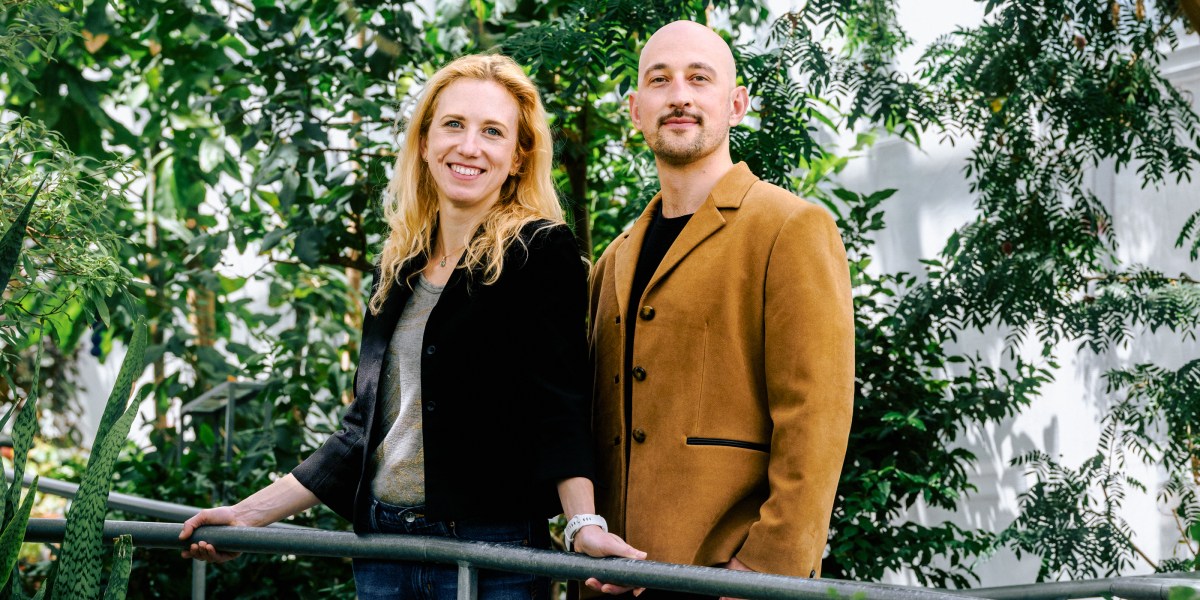
But two experts are trying to bring green AI back into the conversation. Sasha Luccioni has built a high profile over the past five years as Head of AI and Climate Change at open source AI company Hugging Face. Now, she and Boris Gamazaichkov, former head of AI sustainability at Salesforce, say they plan to help organizations make AI sustainability practical and measurable through rigorous research examining AI’s environmental impact, research-based guidance on AI strategy and procurement, and tools and frameworks that developers and business leaders can apply in the real world.
Even if the public discussion shifts toward “AI race” rhetoric and beating China, most companies still care about sustainability goals internally, she said. Their new Sustainable AI Group will help companies “better understand the choices they can make,” she explained. It will help understand where models are run and what types of models can help organizations decarbonize and “reduce the risks of using AI as much as possible.”
AI can be selected with sustainability in mind
The problem, Luccioni said, is that today’s AI, with its energy-hungry data centers and heat-intensive chips and servers that often require extensive cooling systems, exposes organizations to volatile costs, supply constraints, regulatory uncertainty, and increased pressure from both communities and employees. But the good news is that every layer of the AI stack can be designed and chosen with sustainability in mind, whether that means choosing a fine-tuned smaller model over Frontier LLM or running workloads in a data center powered by renewable energy rather than gas, she added.
“We hear a lot of employees saying things like, ‘I’m really concerned about the environmental impact of using AI in my work, so how can I use it more responsibly?’” Luccioni said, adding that backlash and criticism of AI data centers has become a bipartisan issue both on social media and in government.
For example, there is great confusion about how much water today’s AI data centers actually require. The reality is that cooling systems come with tradeoffs, Luccioni said. “Either you’re wasting a ton of water or you’re wasting a ton of energy.”
She explained that traditional water-based cooling systems rely on evaporation and require continuous replenishment of large amounts of water. But closed-loop systems that recirculate water come with their own costs. Additional energy is required to continuously cool the water moving through the system.
Many use cases do not require large models
Either way, Luccioni said the data center argument relies on the theory that everyone uses large general-purpose LLMs and generative AI models that require huge data centers to run.
However, she says that many enterprise use cases don’t actually require large-scale frontier models. Instead, companies often need smaller, specialized AI systems tailored to specific tasks, such as optimizing a factory’s energy use or helping employees search internal documents more efficiently. This type of model may be run locally or on-premises, reducing both energy usage and data privacy concerns.
Rather than assuming that every problem requires a giant LLM, Luccioni said organizations should start by thinking about what they actually need AI to do and choose the simplest and most efficient system that can accomplish that task sustainably.
“I think they should change the question and say, what can we improve in our company? And maybe there are smaller solutions,” she said. “There’s FOMO right now and people are rushing to it, but when you consider cost and commitment, it makes more sense to think about defining KPIs.”
Luccioni also said he has grown more convinced that market demand, not just criticism, could be the most powerful vehicle for driving change in the AI industry. Providers will eventually respond as more customers start prioritizing renewable energy-powered infrastructure and asking tougher questions about carbon intensity and sustainability, he said. However, many companies currently do not fully understand how their use of AI ties into broader sustainability efforts, and clearer communication between AI providers, corporate buyers, and sustainability teams is still lacking.
“Currently, the AI market does not differentiate between green and non-green,” she explained. “So what happens when enough people come together to start factoring that into their sourcing choices?”
Luccioni acknowledged that efficiency gains alone may not solve AI’s environmental problems, as the overall demand for computing continues to increase as organizations expand their use of AI. Still, Luccioni said he remains cautiously optimistic. “We feel there is enough existing interest; [including] “Boris works with customers at Salesforce, and I think there’s a lot we can do,” she said.
So, here’s more AI news for you.
sharon goldman
sharon.goldman@fortune.com
@SharonGoldman
The fate of AI
Exclusive: Martha Stewart’s new AI startup wants to take control of your home before things break – Written by Lily Mae Lazarus
Wells Fargo: AI is a ‘euphoric’ bubble and investors need to ride it until it bursts – Written by Jim Edwards
Apple and Andreessen Horowitz alumni raise $20 million to bring AI to ‘real economy’ businesses – Written by Jack Kubinek
Encrypted text reveals how NVIDIA chips and US technology are smuggled into China and Russia – Amanda Gelt
AI in news
Cerebras’ IPO price is above expected range. CNBC reports that AI chip manufacturers cerebral system This week, it priced its blockbuster IPO above the target range it had already set, raising about $5.6 billion, making it the biggest IPO of 2026 so far. This is a sign that Wall Street’s appetite for AI infrastructure remains very strong. The company is developing wafer-scale AI chips. Nvidia For AI training and inference, demand reportedly exceeded available share by more than 20 times. Investors appear to be betting that the AI boom and the need for large-scale computing power is still in its infancy, and that Cerebras will join a growing wave of AI infrastructure companies heading to public markets.
Anthropic is currently courting small business owners. human The company is making a big push beyond large enterprises and developers by targeting small and medium-sized businesses with a new service called “Claude for Small Business,” reflecting the next phase of the AI industry’s commercialization strategy, TechCrunch reported. The new package integrates Claude with commonly used business software such as QuickBooks, PayPal, HubSpot, Canva, DocuSign, Google Workspace, and Microsoft 365, and provides prebuilt workflows for finance, marketing, human resources, and sales tasks. This move suggests that AI companies are increasingly viewing small and medium-sized enterprises (SMEs), many of which have been slow to adopt AI despite accounting for a large share of the economy, as a key untapped market for generative AI tools and agents.
Sam Altman owns more than $2 billion in stock in companies that have done business with OpenAI, according to court filings. According to Reuters, Sam Altman owns more than $2 billion in stock in companies that do business with OpenAIpotential conflicts of interest will come under new scrutiny as the company faces lawsuits, political pressure and an anticipated IPO. The revelation came to light during testimony. Elon MuskIn a lawsuit over OpenAI’s transformation into a for-profit entity, Altman said he has recused himself from negotiations with companies he has invested in, including Fusion Startup. hellion energy with AI chip manufacturers cerebral system. The report also notes that 10 Republican state attorneys general have asked the SEC to closely examine OpenAI’s disclosures ahead of a potential public offering, while Congress has separately requested information about the company’s safeguards regarding conflicts of interest.
Pay attention to AI numbers
46%
Many engineers say they feel pressured to work faster than a sustainable rate and are increasingly being monitored, even though they see productivity gains from AI coding tools, according to a new survey from a software delivery platform. Harness surveyed 700 engineering practitioners and managers.
This highlights what the company calls the “AI productivity paradox” within its engineering teams. 89% of engineering leaders say AI coding tools have increased developer productivity, but many developers say the reality is much more confusing.
The report also found that developers currently spend 31% of their time on “invisible work” that is rarely tracked, such as reviewing AI-generated code, fixing bugs, and switching between tools. Meanwhile, 81% said AI coding tools have increased the amount of time they spend on code reviews, highlighting growing concerns that companies are overstating AI’s productivity gains and underestimating the human workforce needed to manage the output AI generates.
AI calendar
June 8th to 10th: Fortune Brainstorm Tech, Aspen, Colorado, apply to join here.
June 17th-20th: Vivatech, Paris.
From July 6th to 11th: international conference above Machine Learning (ICML), Seoul, South Korea.
July 7th to 10th: A.I. For the Good Summit in Geneva, Switzerland.
August 4th-6th: Ai4 2026, Las Vegas.