A new video from aviation analyst Vikram V, better known on YouTube as Wyngx, raises questions about the new findings of the Aircraft Accident Investigation Bureau's preliminary investigation into Air India AI-171 crash. In his latest detailed documentary about the AI 171 documentary, he worked hard to recreate the final moments of the ill-fated Boeing 787 using 3D models of the aircraft and surrounding areas. By matching and stabilizing publicly available video frames by frame, he challenged widely circulated theories and stitched together simulations that raised questions about the official narrative.
Vikram is known for his cinematic reconstruction and meticulous storytelling on aviation safety. He is a veteran creator with over a decade of experience, sharing previously rare early response videos, systematically exposing the widely circulated theory surrounding crashes.

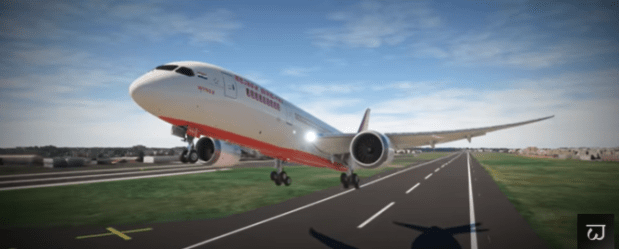
The video raises three related questions as he progresses to the junk theory that accidental fuel switches are shut off.
1-How did the plane continue to speed up after the cutoff?
In the video, according to a preliminary report from AAIB, the takeoff roll began at 1:37.37pm and continued to increase the speed for the next 56 seconds until it reached a V1 speed of 153 knots, continuing to increase the speed the plane had to take off. According to the preliminary report, experts said at 1:38:42 that the plane reached a maximum speed of 180 knots. Immediately after this, the fuel cutoff switches on Engine 1 and Engine 2 move to the cutoff position, the report says.
Experts claimed that the plane reached a maximum speed of 180 knots and that the two engine fuel switches were turned off shortly after, according to the report. “But intuitively, when the engine goes off, it's expected that speed will stop rising, he asked.
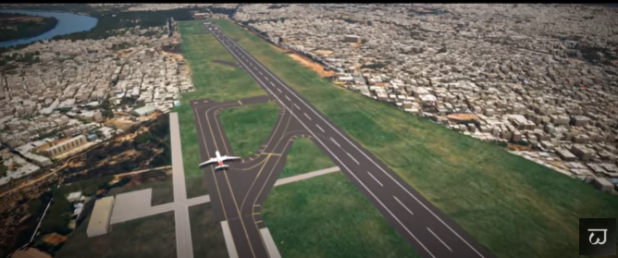
He said it was odd that the report claimed that the maximum speed had hit before the engine was shut off, as this was the reason he wanted to simulate a crash. Discussing based on his simulations, he said that as the plane rolls down the runway it matches what the interim report says until the SIM speed touches a speed of 180 knots. However, he argued that rather than slowing down, it soon continued to accelerate for the next five seconds until the SIM plane actually reached a speed of 196 knots.
2-Has the fuel switch moved from running to the cutoff position?
The video states that there was no solid evidence that the switch would cut out the fuel. He added that conversations between pilots suggested that the switch was moved. This is the theory that preliminary reports further promoted it. Five seconds after maximum speed, the RAM air turbine begins to generate hydraulic capacity, and somewhere between these two points, one pilot asks the other pilot “Why did you turn it off?” and the other pilot says he didn't. At 1:38:52 after 5 seconds, the left engine switch returns to its running position, and after 4 seconds, the right engine switch also returns to its running position. The pilot made a Mayday call at 1:39:05pm.
The cockpit switch has specific protection measures to prevent accidental movement. The switch has three levels of safeguards. The switch is spring loaded and must be pinched and lifted against spring pressure. “Second, there is a raised guard near the switch to prevent accidental touching of the hands. Third, there is a mechanical stop near the base, which also prevents accidental activation,” he added.
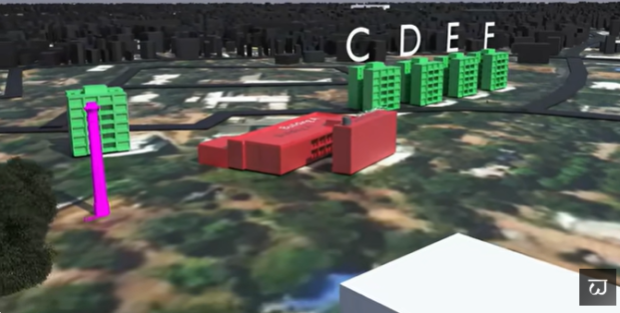
Theory 2 is unlikely, as he insisted that it was hard to believe that both switches had moved incorrectly within a second. Experts then said the only theory he didn't oppose was that the switch was moved manually.
He concluded that if the switch moves, the only reason is “deliberate activation” and that there is no other possibility based on his understanding.
3- ELT Mystery: Why didn't you survive?
The plane's black box was severely damaged, so did the electronic locator transmitter (ELT). An ELT is a device that sends radio signals when a crash occurs and is used by rescuers to determine where the crash occurred.
This is used in cases such as the Germanwings 9525 and MH370. However, with the Air India 171, the ELT did not work. According to the qualifying report, “ELT was never activated.”
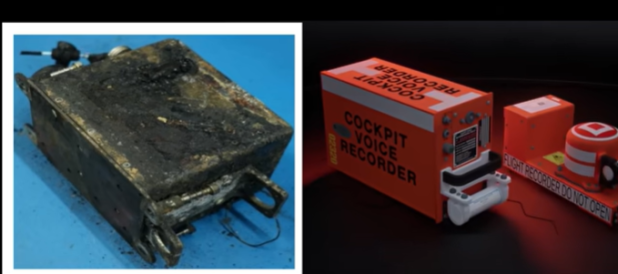
Experts argued that there could be two reasons behind this.
- The pilot never armed Elt, but he said it was very unlikely.
- Another plausible explanation is that the ELT is actually fixed right next to the rear black box. I suffered very similar damage to what the rear black box suffered.
Four theories of what happened
The preliminary report was criticized by pilot agencies and others as it suggested several intentional attempts by the pilot to cut off the fuel. To address concerns, experts list four different theories about what happened.
- The switch was intentionally moved to the cutoff position by someone in the cockpit
- The switch was accidentally moved by someone in the cockpit
- Software features have moved two switches to the cutoff position
- The switch never moved to the cutoff position and something else caused the engine to burn.
He rejected theory 4 and 3, saying in the case of number 4 the black box should not have recorded the cutoff switch movement without such movement. illustrate the diagram, he argued that the wires operate directly from the physical switch to the flight recorder, with its only task being to record the actual physical position of the switch every second.
Regarding Theory 3, I stated that the software may have moved the switch to its cutoff position. This is called TCMA (adjusting malfunctions in thrust control). Aviation experts have expressed their opinion that the software works if they believe the engine's power supply exceeds the safety limits.

He states that the TCMA does not function via the cockpit fuel switch at all, and instead physically closes when a high-pressure shutoff valve located deep inside the engine directly disconnects the fuel supply.
“When this valve closes, it cannot be reversed by the pilot and requires maintenance action to reset the system,” he said, adding that for the AI-171 the engine had successfully restarted during flight. This means that the engine could not be restarted if TCMA is the root cause. “So this is not a hindrance to the TCMA,” he concluded.
How was the simulation carried out?
Vikram was used for long periods of time in simulation to fit the proper trajectory of the plane. In the video, he explained that he first noticed that during takeoff the plane's blurry CCTV was stable using Photoshop frames frame by frame.
Next, to understand the actual position of the plane in all frames, he matched the virtual camera that matches the original CCTV camera. Vikram said he had to find three things –
- Where in the real world did the CCTV cameras be located?
- What kind of camera was this so he could find the size of the sensor?
- And what kind of focal length did the camera take?
“To get a sense of where the real world cameras were located, I used this watchtower and two road markings and gates, cross-referenced on Google Maps,” he added.
After a thorough investigation, he discovered that the camera used at Ahmedabad airport was made by a company called Infanova and the size of the sensor used was about 1 x 2 inches. Due to the focal length, he said it could have been anything. “So it was a manual process of locking the camera in place and playing around with the focal length of the virtual camera until the 3D environment coincided with the source footage. And once the camera was locked, I matched each frame of 3D plane with the actual AI-171 position in the footage,” he added.

He used the second image of the rat photo from the interim report from this camera's location and matched it with the ground plan. The plane and the simulation plane matched exactly the same due to doubt during the simulation process.
The Air India Airplane AI-171 flies from Ahmedabad to Gatwick, London. On June 12, 2025, he killed everyone except one passenger, which killed a medical college student who crashed and exploded. It left many questions about what happened within seconds with grieving family and led one of the worst accidents in the world's aviation history.
The Aircraft Accident Investigation Bureau (AAIB) is investigating the case, but aviation experts are also moving forward to share their insights. And one such insight has raised serious questions to both preliminary reports and what could have actually happened within the cockpit.