

By 2026, video will become the primary medium for communication, marketing, education, and entertainment. With that change, “video references” has matured from a niche research concept to a practical toolkit used by creators and organizations every day. But what exactly does “reference to video” mean, why is it important right now, and how should you approach it as a creator, marketer, or product leader? This article explains it in plain language and gives you a practical place to start testing the technology.
What is “reference to video AI”?
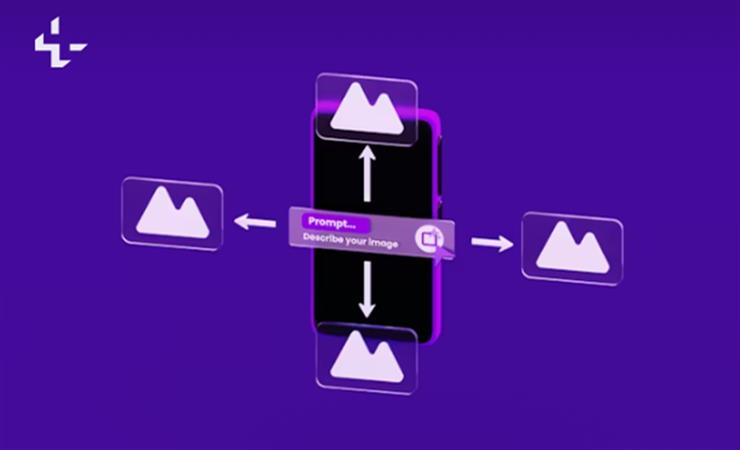
References to video AI essentially refer to generative video systems that use one or more reference inputs to guide content creation. These references include images, short video clips, audio tracks, text prompts, motion capture data, or style references (for example, frames showing color grading and composition). The AI uses these cues to generate new video footage that matches the look, movement, or narrative intent of the reference.
Why this matters in 2026
Several practical changes make references to video AI particularly relevant today.
- Speed and cost: Creating high-quality videos required sets, actors, equipment, and long editing cycles. Reference-based AI dramatically reduces these barriers, allowing small teams to create professional-looking footage in a fraction of the time and cost.
- Creative control: References allow creators to maintain aesthetic consistency. By providing your model with branded frames, character sketches, or sample clips, you can get output that matches your guidelines without having to create frame-by-frame animation manually.
- Personalization at scale: Marketers can use reference clips and consumer data to create personalized video ads (with different actors, localized backgrounds, or messaging) without increasing production resources.
- Iterative workflow: References speed up experimentation. Instead of reshooting a scene, you can generate variations by adjusting references or prompts and fine-tune the shot until it matches your creative needs.
Popular models and ecosystem
The past few years have seen rapid innovations, including diffusion-based temporal models, time-adaptive neural radiation fields, and multimodal transformers that coordinate audio, motion, and visual reference data. Currently, several specialized models coexist. Some models focus on photorealism, some focus on stylized animation, and some are optimized for fast real-time performance on the device.
If you’re considering this space, it helps to work through a platform or agency that aggregates access to top models and provides operational workflows, rather than piecing together individual APIs. One option to consider is Pollo AI. Polo AI offers access to a variety of leading AI video models, including Veo3, Pixverse AI, and Sora, positioning itself as an all-in-one agency that combines that access with production support and apps for project management. This combination can shorten the learning curve. Get model selection and guidance, plus tools for iteration, collaboration, and delivery.
Practical tips for creators and teams
- Start with clear references. We provide high-quality images, mood boards, or short sample clips that demonstrate the look, camera angle, and motion you want. The better the reference, the closer the output will be.
- Please choose the appropriate model. Some models excel at photorealism (good for product demos and live-action replacements), while others excel at stylized animation and rapid response. Testing multiple models in small pilots can save time.
- Plan for temporal consistency. If you need longer sequences, check if your model maintains consistent motion and lighting from frame to frame. Some methods still struggle with very long continuous sequences.
- Use the app/agency tier for production environments. An agency or platform that combines model access, human review, and project management can help move experiments to deliverables more efficiently.
- Maintaining an edit-first mentality, we generate flexible assets (layers, passes, alpha channels) that allow you to use traditional editing tools for final mixing, sound design, and color grading.
Ethics, rights and quality control
References to video AI raise important ethical and legal questions.
- Consent and Likeness: Avoid producing realistic footage of real people without their explicit consent. Policies and laws are evolving, and platforms are increasingly requiring watermarks and disclosures.
- Copyright of reference materials: Make sure you have the rights to any images, clips, or music used as reference materials.
- Exploitation and deepfakes: Establish internal policies and safety checks to prevent abuse, especially in politically or reputationally sensitive situations.
- Quality and authenticity labeling: Be transparent with your audience when compositing content. It builds trust and reduces risk.
Looking to the future
By the end of the decade, references to video AI will become a standard tool in many creative toolkits. Expect improved temporal consistency for long forms, faster real-time rendering at higher fidelity, and more control over style transfer. The ecosystem continues to specialize, including a marketplace of validated model outputs, agency services focused on compliance and quality control, and tools that integrate AI-generated pipelines directly into familiar editing suites.
conclusion
References to video AI are no longer abstract promises, but practical ways to quickly create, iterate, and personalize videos. Whether you’re an independent creator, a brand team, or a product studio, the key is to start with small experiments, respect ethical and legal boundaries, and consider partners that simplify model selection and production. Platforms and agencies that aggregate access to models and provide production workflows and apps, such as Veo3, Pixverse AI, and Sora, can be a smart bridge between experimentation and reliable deliverables. As these tools mature, they will not only change how videos are created, but also who can create them.


