
Champion — From idea generation in the classroom to data analysis in the lab, artificial intelligence has quickly become a staple of campus life.
But for many university faculty, the rapid adoption of AI has raised more questions than answers.
The University of Illinois at Urbana-Champaign does not have a single comprehensive policy regarding AI. Rather, departments set their own guidelines and faculty are responsible for clarifying how AI can and cannot be used in their classes.
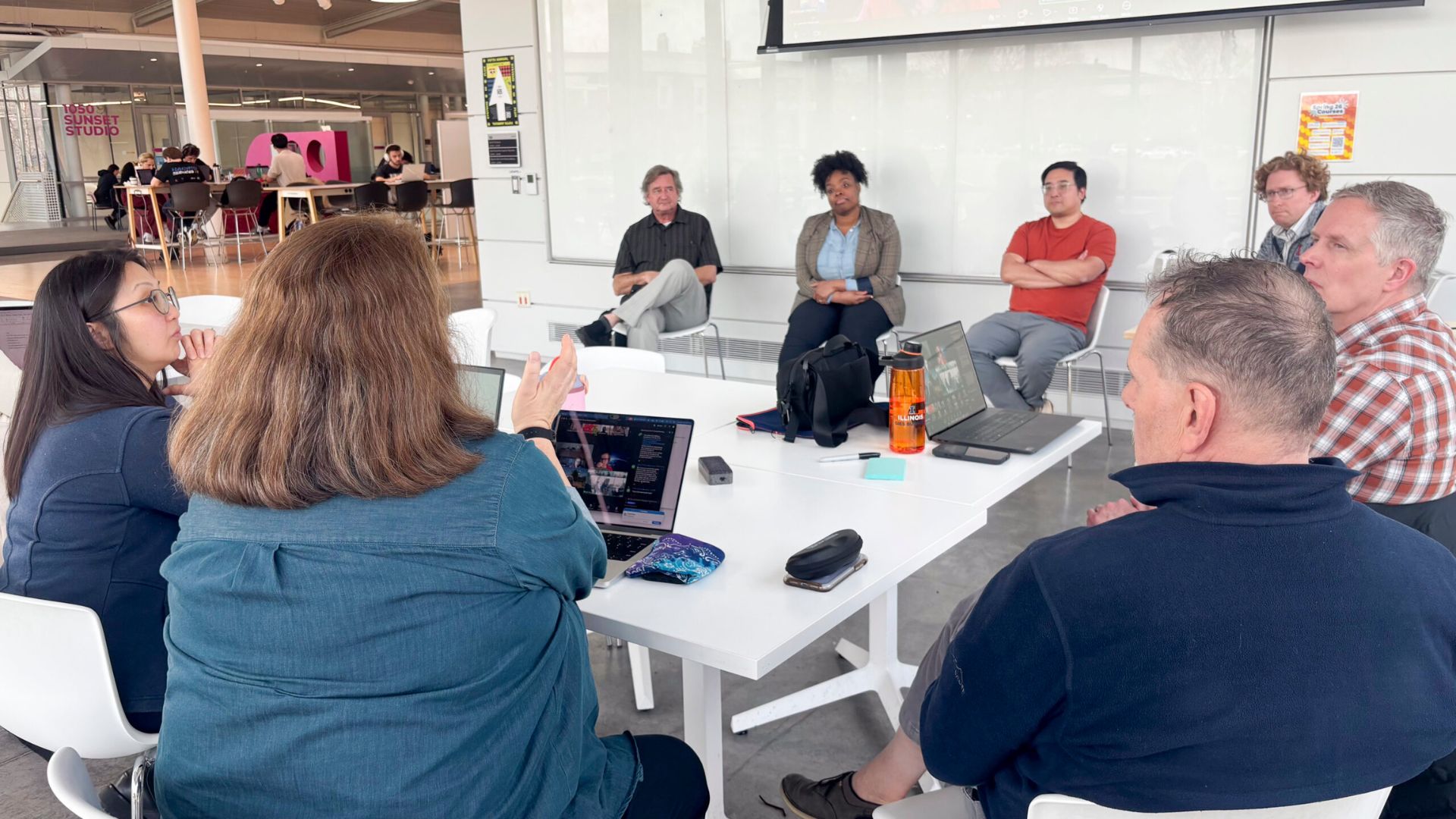
Within the Siebel Center for Design, students, faculty, and staff gather for GenAI Dialogue several times each semester. This is a series of public conversation sessions where we explore generative AI tools and discuss how we use them in our daily work and learning.
Saad Shehab, senior associate director of evaluation and research at the Siebel Center for Design, said these conversations are centered around curiosity and experimentation.
“We wanted to create something at SCD that is available and accessible to everyone. Anyone can join at any time. You can come and hear what’s going on, learn something, and even present something,” Shehab said.
In the group’s latest session on March 22, the conversation turned to teachers’ experiences with AI. Instructors shared how they interact with generative AI in their administrative and personal lives.
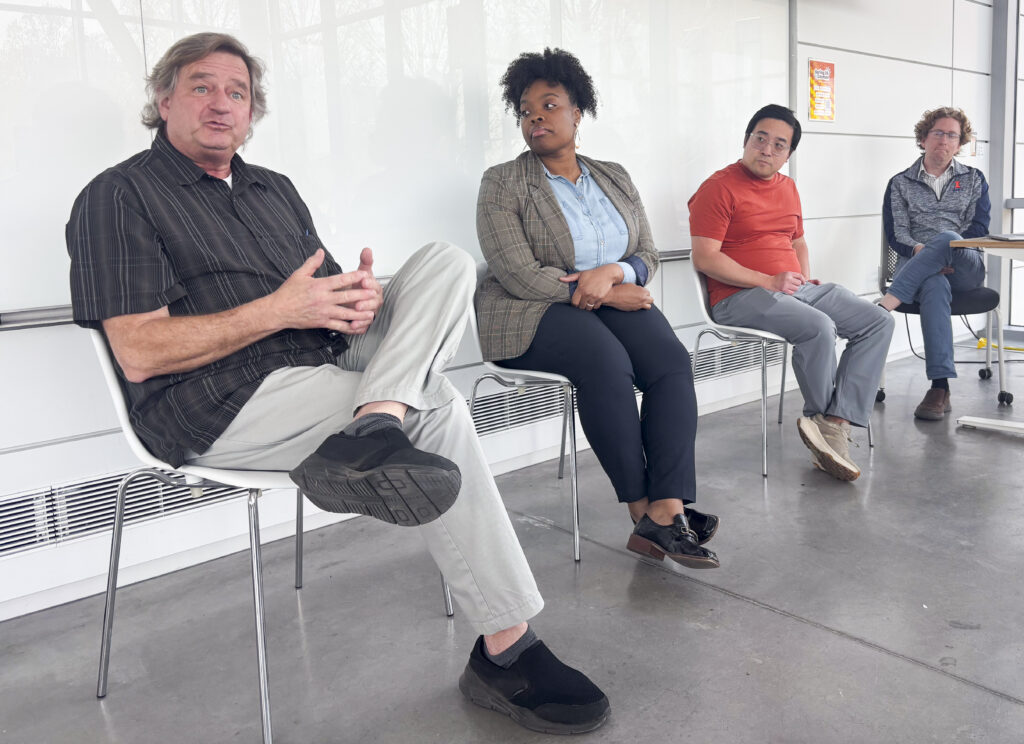
Mindy Chappell, assistant professor in the U of I School of Education, explained how she approaches AI in the classroom.
“Even if we don’t use AI to create the syllabus, we tell our students, ‘You can use generative AI to brainstorm.’ Now, do we know if they’re using it beyond that? No,” Chappell said. “But it’s part of helping them understand the ethical way to engage with AI.”
Another panelist, Christy Moss, spoke about her experience working as a part-time instructor in the School of Information Science during her doctoral studies. The students provided a broad perspective on the different ways AI is used across the university.
“I actively teach students how to use generative AI in this particular field and field of work,” Moss said. “So I encourage them how to think with AI, how to use AI, recognizing that as soon as they go into the workforce and get into the kind of positions that I’m training for, they’re absolutely going to be using AI and they need to know how to use AI well.”
Moss, who is also vice president of membership and marketing for the University of Illinois Alumni Association, said that when the team realized the importance of AI, they licensed the AI tool and began training the team to use it every day in the marketing world.
“After you test your language with your audience and establish your style, there’s no better tool than generative AI to quickly create the type of content you want,” she said.
The discussion then moved from the practical applications of AI to its broader impact, with Chappell returning to the conversation to highlight AI’s costs and potential risks, including concerns about its environmental impact.
“Some of us who integrate individual and collective responsibility must also think about these environmental issues,” she said. “What does history tell us? Years from now, we’ll be dealing with these huge environmental problems in a retrospective way, when we have the ability to be very proactive now.”
The next GenAI Dialogue session will focus on AI in industrial applications on April 22nd from 3:00pm to 4:00pm in the Siebel Center for Design’s Starlight Café with a virtual option via Zoom.


