

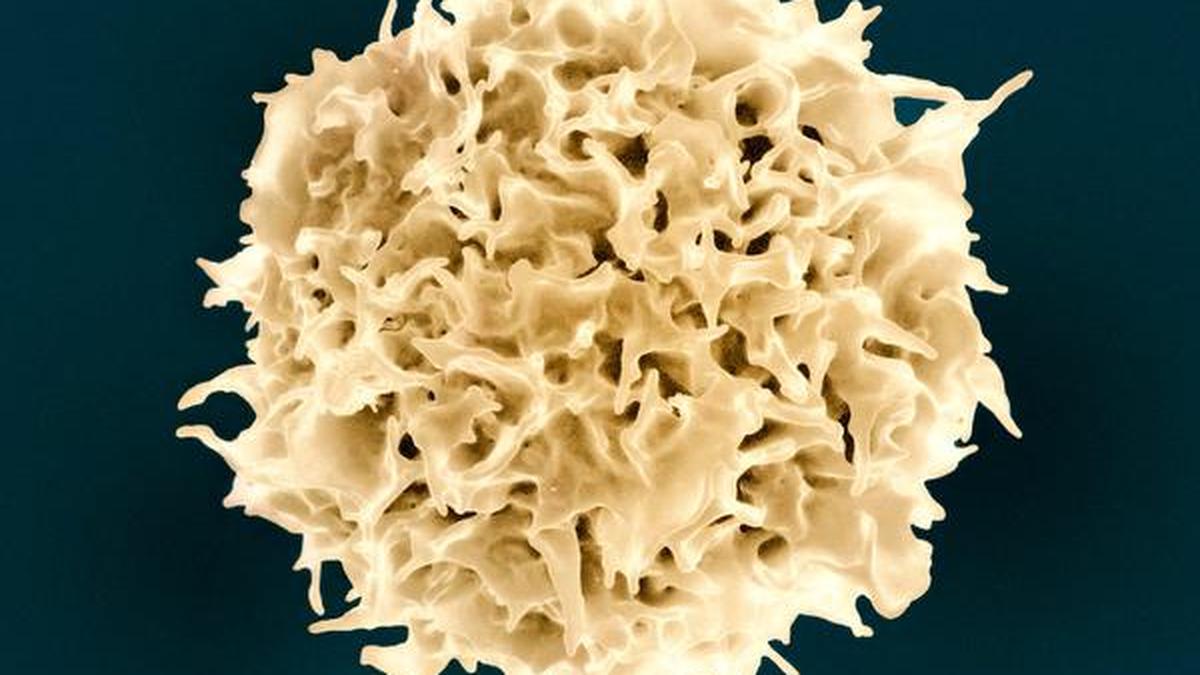
Scanning electron micrographs of T cells color. | Photo Credit: Niaid
A team of Harvard scientists used artificial intelligence (AI) in the form of AI-designed proteins to generate numerous immune cells, enhancing immunity to diseases ranging from cancer to viral infections. cell I said.
Scientists have designed a synthetic activator for a critical cellular pathway called Notch signaling, which plays an important role in cell differentiation and is essential for transforming human immune precursor cells into T cells.
Notch signaling is a cell-to-cell communication system essential for the various developmental processes and tissue homeostasis of multicellular organisms. Homeostasis is the body's way of keeping everything in balance and stable despite what's going on around it.
“In response to viral infections or cancer, the body requires higher production of T cells to achieve effective immune defense. However, this process depends on the activation of Notch signaling pathways where effective molecular activators are not available.”
Related to the Stem Cell & Regenerative Biology Program at Harvard Stem Cell Institute and Boston Children's Hospital, he is one of 24 scientists involved in the joint effort. It includes George Daley, dean of Harvard Medical College, and Nobel Prize winner David Baker.
Improved methods
According to this study, previous methods of activating Notch signaling in laboratory settings by immobilizing Notch ligands on tissue culture dishes do not apply to therapeutic use in humans. By exploring viable and soluble activators of Notch signaling that could function in vivo, the team developed a library of custom designed soluble Notch agonists and systematically tested its ability to activate the Notch pathway to support T-cell development and function.
AI-driven protein design technology was used to contribute to the innovation that Dr. Baker received 2024 Nobel Prize in Chemistry, Demis Hassavis and John Jumper, and addressed the challenges.
Using agonists, researchers demonstrated the large-scale generation of T cells in laboratory bioreactors. This is an important advance given the growing demand for T cell production in hospitals around the world for chimeric antigen receptor (CAR) T cell-based cancer immunotherapy.
Furthermore, when agonists were injected into mice during vaccination, the animals significantly improved the T-cell response and showed enhanced immune response. This treatment increased the production of memory T cells. This is important for the long-term impact of vaccines.
“Being able to activate Notch signaling opens up enormous opportunities in immunotherapy, vaccine development and immune cell regeneration,” Dr. Mout said.
“What excites me the most is to use this technology to simultaneously bridge T cells and cancer cells, boost T cell-mediated killing, and manipulate synthetic proteins that neutralize the immunosuppressive tumor microenvironment. Our goal is to develop next-generation immunotherapy and cancer vaccines,” he added.
Other collaborators in the study include Lendarl, the city of the Stockholm-based Karolinska Institute, and Stephen C. Blackrow, former chairman of the Nobel Committee on Physiology and Medicine, who is the chair of the Faculty of Biochemistry and Molecular Pharmacology at Harvard Medical School.
Published – August 2, 2025 10:42 AM IST


