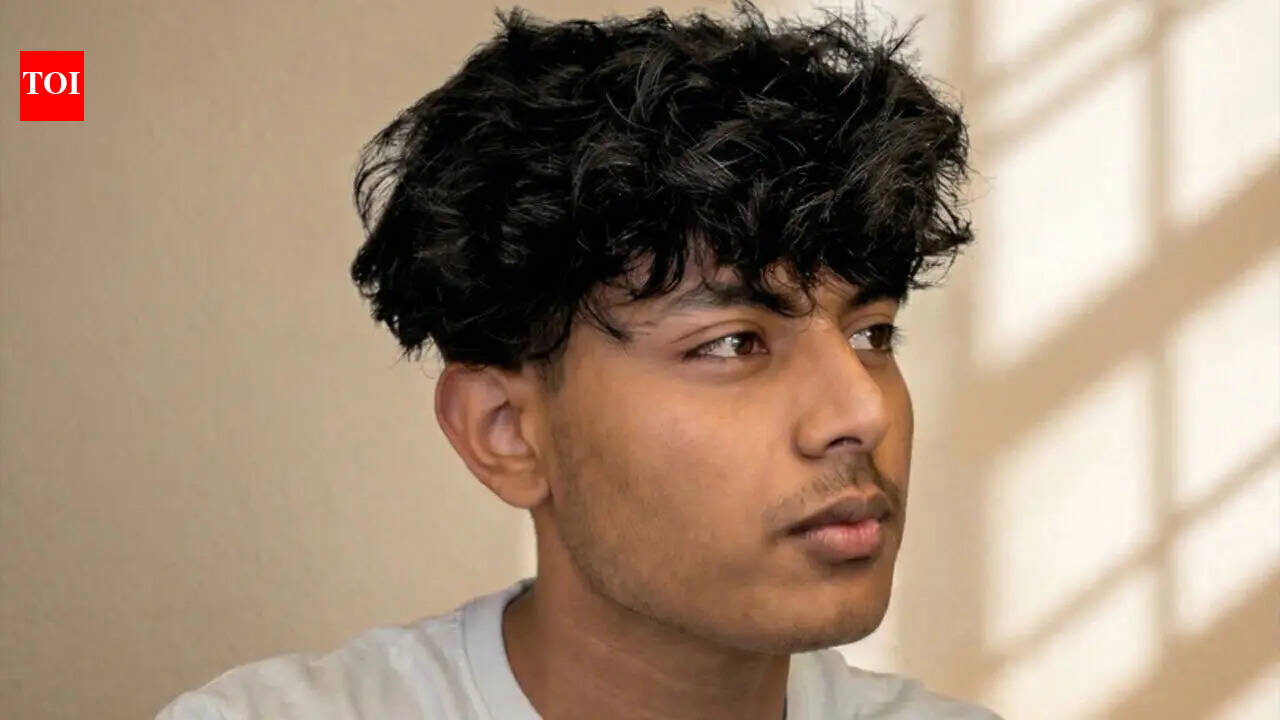

Ronit Kumar Choudhary, 21, a third-year student at Newton School of Engineering, is co-author of “RETROSPECT: RETROSynthetic via Sequential Prediction, and Chemically Transformed-ranking,” a research paper accepted at the AI for Science workshop at ICML 2026. This research is also available on arXiv and focuses on applying AI to retrosynthesis. Retrosynthesis is a core problem in chemistry that helps scientists determine how complex molecules can be constructed from simpler building blocks. This achievement is notable since Ronit is still an undergraduate student. His journey went from discovering AI and machine learning through coursework to building applied projects, securing a paid AI/ML internship at Mstack AI, and contributing to a global AI scientific research forum in a short period of time. His trajectory reflects a broader shift in which Indian engineering students are entering cutting-edge AI research faster than before.why is this important ICML (International Conference on Machine Learning) is one of the world’s leading venues for AI research. Its workshop track serves as a focused forum where new ideas are discussed and refined before being widely adopted by the research community. The AI for Science workshop will specifically explore how machine learning can accelerate breakthroughs in fields such as chemistry, biology, physics, materials science, and drug discovery. Ronit’s paper falls directly into this area. Retrosynthesis is a fundamental challenge in computational chemistry. Given a target molecule, researchers aim to determine the order of chemical reactions required to synthesize it. Simply put, this answers the question: how can you actually make your desired molecule in the lab? Efficiently solving this problem has major implications for drug development and materials innovation, where identifying viable synthetic routes can be time-consuming and complex.the study RETROSPECT proposes a two-step approach that combines a Transformer-based model to generate candidate synthesis routes with a ranking system to evaluate and prioritize the most promising options. According to the paper, the model shows excellent performance on the USPTO-50K benchmark, achieving top-1 accuracy of 55.00%, top-10 accuracy of 86.18%, and top-1 effectiveness of 99.86%. The re-ranking module further improved the top-1 accuracy to 59.4%. In practice, the system is designed to help chemists narrow down better routes to synthesize molecules, improving the speed and reliability of research in computational chemistry and related fields.Ronit’s journey Ronit’s interest in AI and machine learning began during his classes at Newton Institute of Technology. As he further explored the field, he began working on independent projects and actively explored opportunities in applied AI. I then joined Mstack AI, a company working at the intersection of artificial intelligence and chemistry, as a paid AI/ML intern. Although he initially expected to work on product-focused applications, he ended up facing deeper research challenges involving AI-driven molecular discovery. During an intensive 45-day internship sprint, Ronit contributed to the development of RETROSPECT under the guidance of the research team. This work involved experimentation, iterative model improvement, and discussions about chemical prediction systems, and gave me exposure to real-world AI research workflows early in my career.Global research status ICML’s AI for Science workshop operates within a broader research ecosystem that includes contributions from organizations and institutions such as Google DeepMind, Anthropic, Meta FAIR, Microsoft Research AI for Science, Isomorphic Labs, and leading universities such as MIT, Stanford, Harvard, Princeton, Cambridge, Caltech, Cornell, and EPFL. In this context, ICML approval at workshop level signifies participation in a competitive global research environment. Although these workshops are not part of the conference’s main track, they are peer-reviewed and serve as an important platform for new ideas in machine learning research. Ronit’s addition to the field reflects the growing prominence of undergraduate researchers in advanced AI domains, particularly in interdisciplinary areas such as scientific AI.Growing trends in AI research in India Ronit Chaodhary’s research highlights broader trends in India’s AI ecosystem. Students are increasingly engaged in frontier research during their undergraduate years, supported by startups, internships, and open research collaborations. His progression from classroom learning to applied internships to globally recognized research workshops shows how early exposure to real-world AI systems is reshaping traditional academic pathways in machine learning and scientific research.