
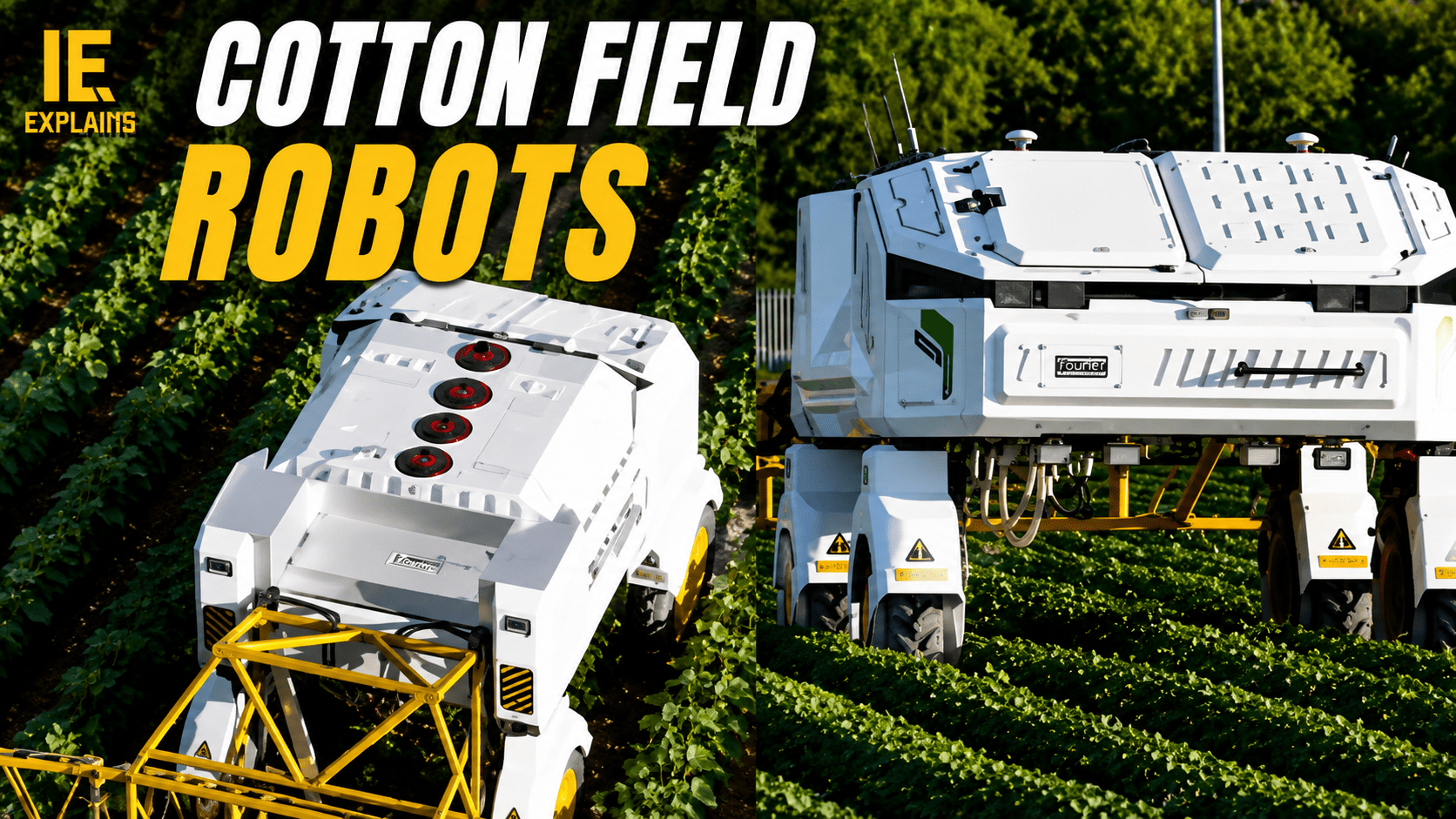
Across a cotton field in the city of Shawan in China’s Xinjiang Uyghur Autonomous Region, intelligent agricultural robots equipped with cameras, sensors and self-driving technology manage more than 100,000 hectares of cotton, collecting real-time crop data, calculating precise pesticide and fertilizer doses, and autonomously spraying them.
These are the cotton fields of today’s China. Robots are spraying, weeding, and topping the plants, but there is not a single human in sight.
This is Xinjiang in northwestern China, which is the country’s cotton capital and grows about 90% of all crops in China.
Intelligent robots manage more than 100,000 hectares of cotton fields in China.
Cameras, sensors, and autonomous driving allow it to scan crops in real time, calculate and apply exactly how much pesticide or fertilizer is needed for each patch.
One robot covers more than 6.7 hectares per hour. Additionally, one technician can run five systems at the same time.
It detects buds with 98.9% accuracy and works day and night, working up to 0.5 hectares per hour. This is about 10 times faster than humans.
Already, more than 90% of Xinjiang’s cotton is picked by machines, and the last remaining manual labor in the field is disappearing, with the future of agriculture beginning to become completely unmanned.


