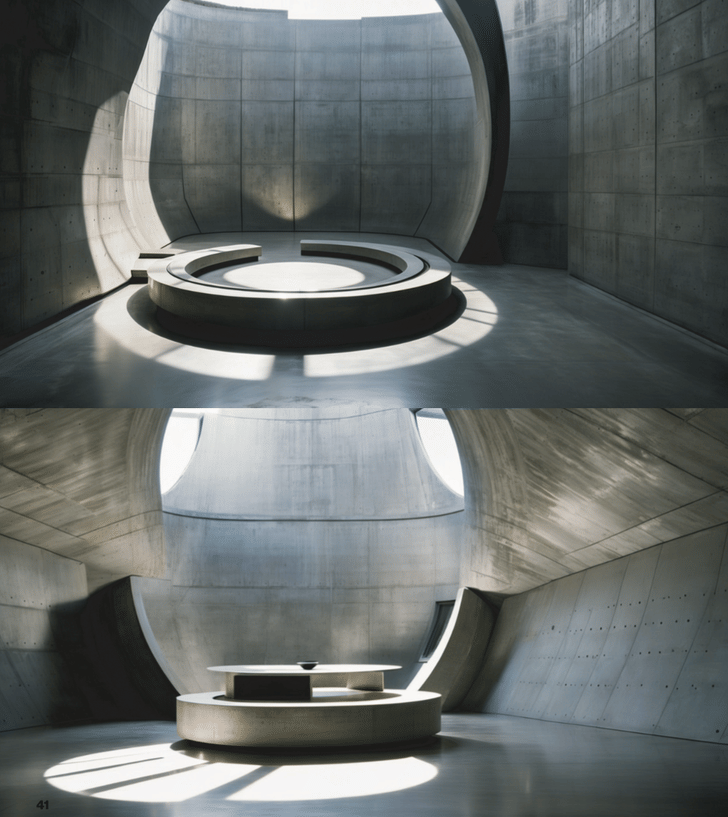
Sorapis Pod by student Abby Nogle. Image courtesy of Western Michigan University Richmond Design Innovation Institute
How should architecture schools teach students about artificial intelligence? A studio at Western Michigan University offers a case study on how to incorporate AI tools into familiar design processes to broaden students’ horizons, improve modeling skills, and build competitive portfolios that they can use after graduation.
In a recent conversation, faculty member Dustin Altschul provided insight into how he integrated Veras, Chaos’ AI-powered visualization tool, into his design studio.
Teach AI in the studio
Advances in AI present both opportunities and challenges for architecture professionals, as Archinect’s continued coverage of artificial intelligence shows. The same is true for architecture schools whose mission is to prepare students for future practice. How do departments take into account the fast pace of innovation in AI when building multi-year curricula? How can students with architecture backgrounds be introduced to AI through media and methods that they think will be relevant to their future careers? How can educators enable students to develop individualized design processes while leveraging AI tools that show the potential to transform that process?
At Western Michigan University’s Richmond Design Innovation Institute, faculty member Dustin Altschul uses Chaos’ AI visualization tool Veras to introduce students to the possibilities of technology. In Altschul’s courses, Veras not only helps students develop the modeling and visualization skills needed for graduate portfolios, but is also positioned as a concept-stage tool.
“We use Veras for a variety of purposes,” Altschul said in a recent conversation. “The first project I started with was a Design Communication 5 course that focused on photorealistic rendering and animation and pushing the boundaries of storytelling. AI gave us an initial concept to start working with.”
AI as concept exploration
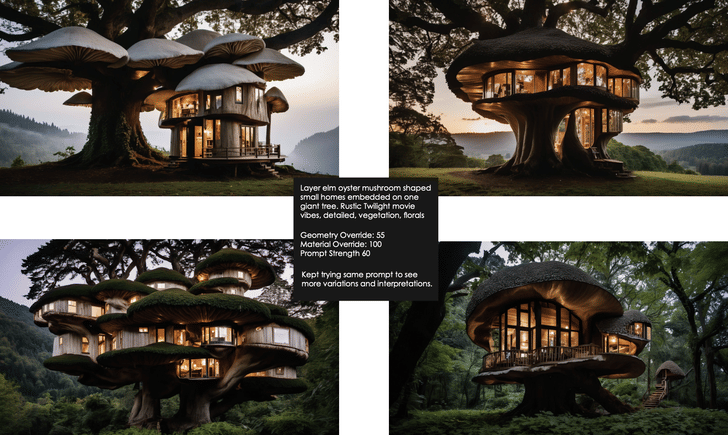
In Altschul’s studio, Veras is deployed not as a tool to create final renderings, but as a fast generator of reference materials that can inform later modeling and visualization decisions. For example, in one early project, students were asked to design a habitation pod and science fiction environment specifically chosen to challenge preconceptions.
For Altschul, Veras expanded the range of forms and atmospheres that students explored. “The application is primarily rooted in appearance development and concept exploration,” explains Altschul. “Basically, the use of Veras gave them very complex geometries that they wouldn’t normally be able to reach. It gave them a very rich set of materials that looked very much like the abstract world they were designing.”
Basically, using Veras gave us very complex geometries that we wouldn’t normally be able to reach.. — Dustin Altschul
Importantly, the AI result was not treated as the end of the challenge. Instead, they became prompts for deeper technical and design work. “Now that we’ve started working on it, we’re going to learn how to actually turn it into visualizations or create lighting effects,” Altschul added. “The first point was an in-depth study of AI. Each student was responsible for creating approximately 100 AI images within a week using Veras, then focused on how to manipulate geometry and how it lends itself to different visual outcomes, developing skills around prompts and the fundamentals of text-to-image AI generation.”
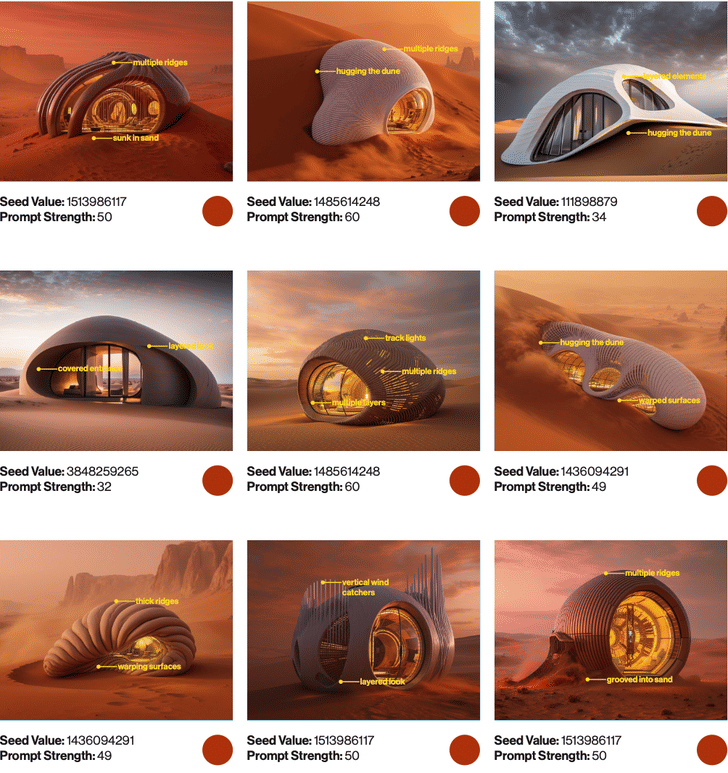
Throughout the process of generating AI concepts, the goal of requesting large amounts of material was to broaden the scope rather than repeat. Altschul encouraged students to broaden their horizons as much as possible before narrowing down to a concept that interests them. For Altschul, this exercise encouraged students to discover conceptual edges and risks that they might not have discovered otherwise.
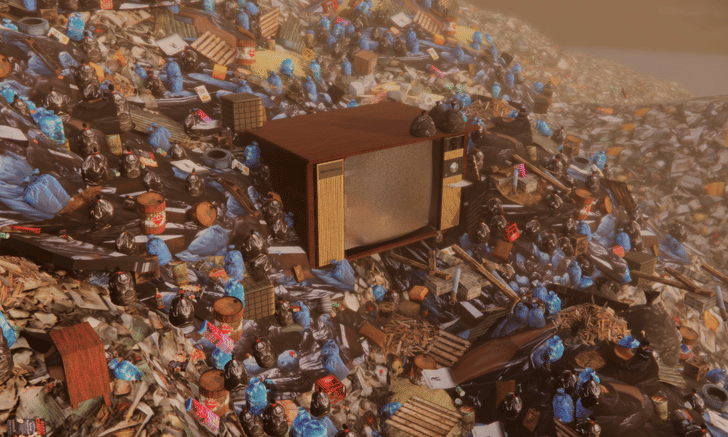
“I saw some things that looked really beautiful,” Altschul recalls. “One student wanted to explain about waste. She actually used Veras to create a landfill, and there were TVs and people living inside the landfill. This was amazing and a little different.”
I use AI research as a way to get my students excited about complex concepts before tackling the actual digital processes they model.. — Dustin Altschul
As the studio moved from designing abstract worlds to designing buildings, the use of AI as a means to expand students’ ambitions continued. Altschul said that by creating unexpected and exciting concepts through AI, students will be motivated to improve their digital modeling skills and capture, develop and realize promising beginnings.
“We use AI research as a way to get people interested in complex concepts before actually tackling the digital processes they model,” Altschul explains. “If they had been left to their own devices, they wouldn’t have reached this level of conceptual complexity. But after creating this reference material, they felt confident in pursuing it through a process of, ‘Okay, I have to learn a lot about Rhino, but I understand the concept and I’m happy to do it.'” If they had just sketched by hand, I don’t think the geometry would have been as rich in some of the designs. ”
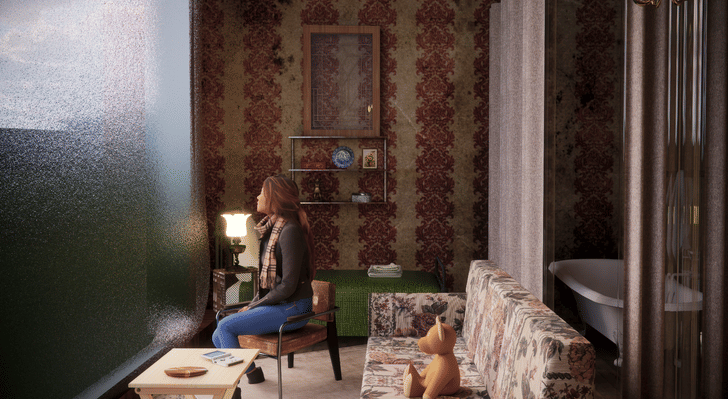
Relationship between students and AI
The students in Altschul’s course were relatively inexperienced with AI. Although students had previously used ChatGPT for information research, Altschul’s course was their first experience with AI text-to-image generation. Meanwhile, students had basic skills in SketchUp and Rhino, but were required to improve their digital modeling skills by developing ideas beyond basic geometry in Veras.
Despite the introduction of new paradigms through AI, many of the fundamental characteristics of the traditional design process still remain in the student experience at Altschul’s studio. As with any project, an idea begins in a broad, abstract form and is then refined into a scheme that is defined and developed through a series of tests, reflections, and iterations. Similarly, students still had to work across scales and zoom in and out on individual aspects of a design, such as internal and external approaches, rather than asking the AI to generate a comprehensive design in one operation.
“While some students felt that AI was a natural extension of the way they worked, others felt like oil and water for a few days,” Altschul recalls. “But we got through it.”
Student exploration of AI. Video courtesy of Western Michigan University Richmond Design Innovation Institute
While AI effectively introduces another creative agency into the student design process, Altschul also saw an opportunity to use the addition of AI as a means of teaching students the familiar architectural skill of judging and evaluating work. Presented with a plethora of potential avenues and design suggestions via AI, students were encouraged to view the material as a reference rather than an instruction, and to use their own design sensibilities to determine next steps.
“We’re thinking about it in the framework of precedents that have been cut out from magazines and even Pinterest,” Altschul explained. “The development of such a set of references has always been part of the practice of architecture and interior design for centuries.”
“I think AI is much more inspirational, but it also has a side benefit, because it makes students’ vocabulary more specific,” Altschul added. “Now people ask me, ‘How do I get these prompts?’” And I say, “I need to expand my vocabulary.”I need to read. You need to use a precise design language. ” That way, they can practice what they need to include in their prompts and use a broader vocabulary to talk about what their concepts are, so they can also better present their projects. ”
Build a strong portfolio for your future career
When thinking about how to introduce AI to students, Altschul decided to introduce the technology in the third year of the degree because he needed to first help students develop digital modeling skills and personal design judgment. “We don’t want all of our students to make decisions based purely on these images, but rather on their understanding of culture, society, and history as people of the world,” Altschul says.
But after graduating, Altschul realized there were several benefits to introducing students to responsible AI tools integrated into their design workflows. In addition to enhancing students’ portfolios through an extensive and engaging design process, Altschul points out that there is a growing demand from employers for students to be AI-savvy. Meanwhile, Altschul sees promise in the ability of graduates to implement AI in practice over the next decade.
I don’t want to say that AI will replace human imagination, but AI is expanding human imagination.. — Dustin Altschul
“A lot of things that happen in the built environment are about the effort of how long it takes to model or how long it takes to build,” Altschul explained. “I’m hoping that AI will start introducing efficiencies, such as suddenly having robots build buildings all around us, or actually allowing us to do repetitive tasks at a faster rate. We’re hoping that the result will simply be better-designed buildings, because we’ll have the ability and time to focus more closely on the things we really care about as humans.”
“It is a result of crossing a threshold,” Altschul concluded. “I don’t want to say that AI is replacing human imagination, but it is expanding human imagination. When you start seeing more complex shapes, richer material palettes, and interesting light effects that are realized visually, all of a sudden that architecture feels more concrete and more achievable. When you look at a photo like that, it’s inspirational: ‘Wow, we can design something like that!'”
You can download and try Veras for free here. Visit Chaos to learn more about how we empower the next generation of visual storytellers with professional tools and industry workflows.
Follow Archinect’s continued coverage of artificial intelligence here and learn more about AI features and experiments here.