Ignore the high-tech titan – ai is not your friend

Meta CEO Mark Zuckerberg and Openai's Sam Altman are actively promoting the idea that everyone, including children, should form a relationship with AI's “friends” or “people”; Meanwhile, multinational high-tech companies are promoting the concept of “AI agents” designed to support our personal and professional lives, handle everyday tasks, and guide decision-making.
But the reality is that AI systems are not, and never are, friends, peers, or agents. They are machines and remain. We should be honest about it and oppose misleading marketing that suggests it is not.
The most deceptive term of all is “artificial intelligence.” These systems are not truly intelligent, and what we call “AI” today is a set of technical tools designed to mimic certain cognitive functions. They are unable to truly understand and are not objective, fair or neutral.
They also don't become smarter. AI systems rely on data to function and will now contain data generated by tools such as CHATGPT. The result is a feedback loop that recycles the output without generating a deeper understanding.
More fundamentally, intelligence isn't just about solving tasks. It also concerns how these tasks are approached and performed. Despite technical capabilities, AI models remain limited to specific domains, such as processing large datasets, performing logical deductions, and creating calculations.
However, when it comes to social intelligence, machines can only simulate emotions, interactions, and relationships. For example, medical robots can be programmed to cry when patients cry, but no one claims it feels genuine sadness. The same robot can be easily programmed to slap a patient and executes its commands with comparable accuracy. The machine “don't care.” Simply follow the instructions. And no matter how advanced such a system is, that remains the same.
Simply put, machines do not have moral institutions. Their actions are governed by patterns and rules created by people, but human morality is rooted in autonomy. The ability to recognize and act accordingly with ethical norms. In contrast, AI systems are designed for functionality and optimization. They may adapt through self-learning, but the rules they generate do not have inherent ethical implications.
Consider self-driving cars. To get from point A to point B as quickly as possible, autonomous vehicles may develop rules to optimize travel time. If running through pedestrians helps them achieve that goal, then cars may do so unless instructed to do so, as they can't understand the moral meaning of hurting people.
This is because machines cannot grasp the principle of generalizability. This is the idea that actions are only ethical if they can be justified as universal rules. Moral judgments rely on the ability to provide a plausible rationale that others can reasonably accept. These are what we often call “just good reasons.” Unlike machines, humans can engage in generalizable moral reasoning, thus determining whether their actions are right or wrong.
Simply put, machines do not have moral institutions. Their actions are governed by patterns and rules created by people, but human morality is rooted in autonomy. The ability to recognize and act accordingly with ethical norms.
Peter G. Kirshuller
Therefore, the term “database system” is more appropriate than “artificial intelligence” as it reflects what AI actually can do. Generate, collect, process and evaluate data to observe and predict. It also clarifys the strengths and limitations of today's emerging technologies.
At the core, these are systems that use highly sophisticated mathematical processes to analyze huge amounts of data. Humans may interact with them, but communication is completely one-way. The database system is unaware that they are “doing” or what is happening around them.
This does not suggest that DS cannot benefit humanity or planets. On the contrary, abilities can depend on them in domains where we exceed our own capabilities. However, we need to proactively manage and mitigate the ethical risks they present. Developing human rights-based DS and establishing an international database system institution in the United Nations is an important first step in that direction.
Over the past 20 years, big tech companies have isolated us and broken society through social media. Given its addictive and corrosive nature, it is more accurately referred to as “anti-social media.” Today, these same companies are driving a fundamental new vision. It is about replacing human connections with AI's “friends” and “friends.”
At the same time, these companies continue to ignore the so-called “black box issues” of the infidelity, unpredictability and lack of transparency in the algorithmic processes behind automated assessments, predictions, and decisions. This opacity is combined with the likely biased and discriminatory algorithms, which inevitably results in biased identification results.
The risks posed by DS are not theoretical. While these systems already shape our private and professional lives in increasingly harmful ways and manipulate us economically and politically, the CEO of technology is urging DS tools to guide our decisions. To protect our freedom and dignity, and the freedom and dignity of future generations, we must not be allowed to be spoofed as something that is not: us.
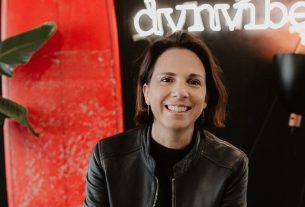
• Peter G. Kirschschlager, professor of ethics and professor of ethics at the Institute of Social Ethics at the University of Lucerne, is a visiting professor at S Zurich.
©Project Syndicate
Disclaimer: The views expressed by the writers in this section are unique and do not necessarily reflect the Arab news perspective