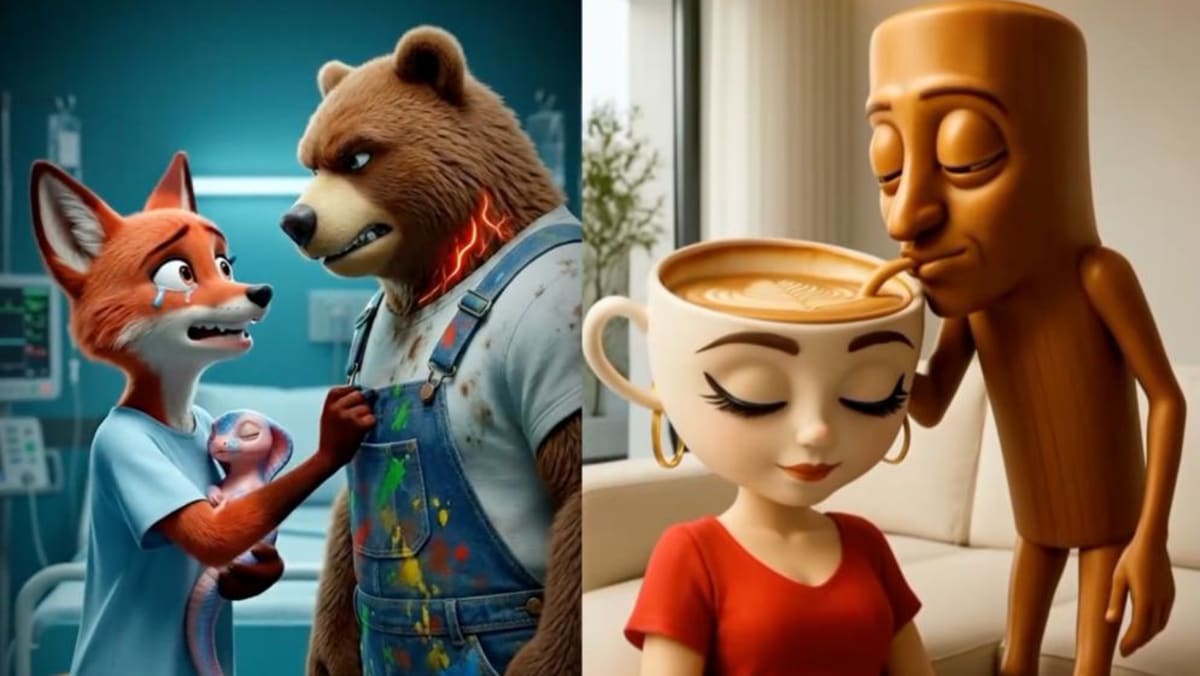
A female fox tricks a bear with a cobra and gives birth to a baby cobra. Cinnamon stick sucks the latte’s brain and poisons him. A cat who abandons her husband and child to dig for gold. After impregnating two sultry grapes, a banana abandons the baby and eats a shy papaya.
These four videos alone have garnered over 2 million likes on TikTok.
AI-generated slop is subverting and sexualizing children’s cartoons across social media platforms like TikTok and YouTube. And many of these clips are going viral.
If the idea of grapes, cats, foxes, and teacups with breasts wasn’t enough, these animated characters also play out misogynistic intrigue. Common themes include cheating, paternity testing, humiliation, and violence. Female characters are stereotyped as gold diggers, dishonest, or vain.
The combination of child-like cartoon characters and melodrama themes is so absurd that many netizens will watch it until the end. And this will cause the algorithm to feed you more such videos.
While it may seem like harmless scrolling, it’s more than just brain rot. Experts warn that these videos can shape gender dynamics and social norms over time.
Selling shocking content
Extremist content and divisive opinions on social media are not new. Algorithms promote such content because it elicits a stronger emotional response and leads to longer engagement. But the ease of AI content creation has taken this to a whole new level.
Before the advent of generative AI, creating a short animated video took days of scripting, storyboarding, illustration, animation, audio recording, and editing, and involved multiple content creators. Now, one person can create one in minutes using several AI tools, and the monthly subscription totals less than a few hundred dollars.
As a result, many content creators are flooding social media with AI content pushed out by algorithms. According to one report, more than 20% of the videos shown to new YouTube users are powered by AI.
“Most social media platforms focus on volume and visibility rather than content quality,” says Natalie Pan, dean and associate professor at the School of Communication and New Media at the National University of Singapore.
“Misogynistic tropes can provoke emotional responses that contribute to visibility[on social media]. Algorithms are often trained to recognize trending content, which often causes a lot of reactions, and as a result the content that is shared and discussed is often amplified,” explained Associate Professor Pan.