Companies are investing more in artificial intelligence than ever before and tracking how their employees are using AI in unprecedented detail. But many CEOs are hoping that their employees will be more productive, but they can’t tell yet.
According to a 2026 survey of 100 senior AI company leaders by ModelOp, an AI lifecycle management and governance platform, more than two-thirds of companies still rely on estimates such as time savings and projected cost savings rather than measured financial results when evaluating the return on investment of AI. ModelOp calls the gap between AI activity and measurable return on investment the “AI value illusion.”
“Nearly every Fortune 500 company tracks their overall AI usage,” said Jim Olsen, CTO of ModelOp. But very few track what boards actually care about: whether their spending is delivering a return on investment, he said.
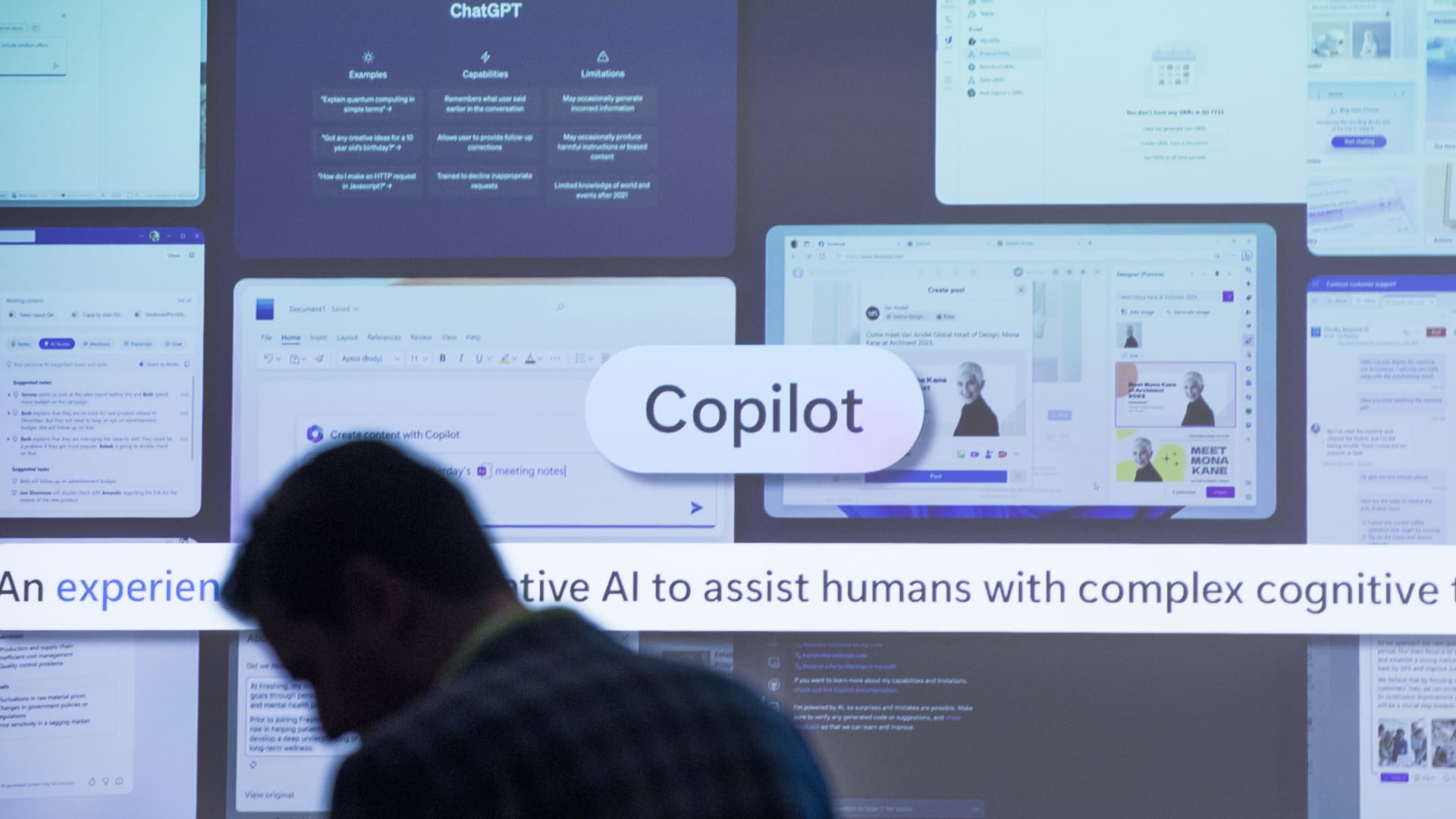
using the tools of microsoftbusiness customers can track how AI tools are being used across their organization over time, including active users, prompt volume, and agent activity. “Customers start with adoption and engagement metrics and gradually connect those insights to broader productivity and business outcomes,” a Microsoft spokesperson said.
Each interaction has a cost. That cost is measured in “tokens,” a unit that AI companies charge for each chunk of text or data they process, turning every prompt into a trackable cost. But while companies have detailed visibility into how much AI is being used and how much it costs, they are less clear about who is using AI effectively and whether it is improving performance.
Many organizations remain in the experimental stage rather than implementing AI at a meaningful scale. According to the McKinsey report, while many companies (64%) still say AI is driving innovation, only 39% report it is having a measurable impact on their bottom line.
Based on his experience, companies are still likely to measure AI usage at a group or role level, said Samir Gupta, EY’s US financial services AI leader. “The focus is on outcomes and effectiveness, not on monitoring individuals,” he said.
This typically means comparing patterns across teams or roles, rather than directly evaluating individual employees.
“The biggest challenge is not in measuring usage, but in proving attribution,” Mr. Gupta said. “Leaders can see where AI is being used and where productivity is being improved, but it is difficult to isolate AI as the primary driver.”
“Tokenmaxxing” and new items for AI labor
In some workplaces, using AI is starting to feel less like a tool and more like a contest to prove employee productivity. An internal system categorized employees into a leaderboard based on AI usage, and internal tracking revealed extreme spikes in usage for individual employees. This visibility is fueling a phenomenon known within the industry as “token maxing,” where employees seek to increase their use of AI to demonstrate productivity. But critics warn that more prompts do not necessarily improve the quality of work and increase the risk that AI becomes a proxy for activity rather than outcome.
“The use of AI is a very poor proxy for productivity,” said Rabin Jestasan, senior partner and global transformation leader at Mercer.
“They know how the tokens are being used, but they don’t actually know what those tokens were used for,” Olsen said.
Esteban Sancho, chief technology officer for North America at digital transformation consulting firm Globant, says there’s good reason why workers feel pressure to collect tokens as AI becomes more widely deployed across companies. “If you’re not using tokens, there’s a good chance it’s not working,” he said, referring to parts of the business where core processes are currently handled by AI agents.
The use of AI is embedded in the way work is delivered, priced and evaluated. “Token cost is now a standard item in our ROI calculations,” Sancho said. These costs are treated as part of a company’s cost of goods, along with labor and infrastructure costs. All AI activity flows through an internal platform that tracks token consumption, usage patterns, and costs across teams and projects.
“Project leaders have access to usage data broken down by team members,” Sancho said. He added that low utilization is not automatically treated as a performance issue, but is used to identify inefficiencies.
Token usage is factored directly into project budgets and return on investment, allowing businesses to continually adjust models, budgets, and workflows based on where AI creates the most value. You can also rebuild your team around AI and create what Globant calls AI pods, where the technology delivers the most tangible benefits.
These changes are already leading to profits for Globant. Sancho said the AI-driven service, which had no revenue a year ago, will reach an annual operating rate of $20.6 million in 2025, which the company expects to grow to $100 million.
Coinbase announced Tuesday that it will reduce its workforce by 14% and eliminate multiple layers of management. The restructuring includes the introduction of what CEO Brian Armstrong calls “AI-native pods,” which will further limit the human talent available to manage fleets of AI agents. This will include “experimenting” with one-person teams, he wrote in a post to employees. For example, combining engineers, designers, and product managers into one role.
AI agents are easier to measure than workers
One of the ironies in these uncertain days for the workforce in the early days of AI adoption is that it’s easier for companies to measure success when work is done by AI systems rather than humans.
Salesforce executives argue that the role of AI agents is moving the industry beyond simply tracking AI usage to measuring whether work is actually being done. Both of these metrics are important, but ultimately they need to map to measurable ROI, such as cost savings, increased revenue, and improved customer outcomes, says Madhav Tatai, executive vice president and general manager of Salesforce AI.
As agent adoption expands, tracking activities are moving from the employee level to assessing AI across the entire workflow. There are three layers to that measurement: how much AI is being used, whether tasks are being completed end-to-end, and whether that work is leading to real business outcomes. “Power comes from bringing them together, because only then can we get a complete picture of what it really means to ‘work’ in an agency company,” Thattai said.
Salesforce said its platform generated 2.4 billion of these work units, 771 million of which occurred in the first quarter, an increase of 57% sequentially. In customer service, the company announced that its AI agents handled 129 million tasks in one quarter, automating 96% of support cases internally and saving more than 50,000 sales hours.
The same change is underway in customer adoption. For example, travel company Engine deployed an AI agent in 12 days to handle 50% of chat volume while reducing processing time by 15%. At Salesforce itself, the Agenticforce system autonomously resolves 63% of customer support questions while maintaining customer satisfaction levels comparable to human agents. According to Salesforce, Heathrow Airport saw a 30% increase in digital revenue associated with AI-driven agents and a 40% increase in resolution rates with OpenTable.
Even with these more advanced metrics, the line between tracking work and tracking employees remains blurred.
Meta is testing an internal system that tracks mouse movements, clicks, and keystrokes to train its AI systems across different sites and apps, according to internal documents seen by CNBC. The effort is part of a broader effort to train AI systems on how employees actually work, capturing everything from navigation patterns to keyboard shortcuts. The company says the data will be used to improve its models, not to evaluate individual performance, but the level of surveillance has raised concerns about how far workplace tracking will go.
“While many employees have this awareness, a significant minority do not, and certainly should,” Jestasan said. “It is incumbent upon organizations to ensure that this is clearly communicated and widely understood,” he said.
Correction: Jim Olsen is CTO of ModelOp. A previous version of this article misspelled his name.