Federal agencies will report more than 3,600 artificial intelligence use cases in 2025, with adoption accelerating rapidly as agencies expand AI across numerous missions and enterprise operations, Nextgov/FCW reported Thursday.
The Office of Management and Budget’s latest Federal AI Use Case Inventory records 3,611 use cases across 56 government agencies, more than double the previous year’s total, highlighting how rapidly AI is being incorporated into government workflows.

Register now For Potomac Officers Club 2026 Digital Transformation Summit The event will spotlight the growing role of artificial intelligence in federal agencies and feature high-level discussions on how AI is expanding from pilot programs to mission-critical applications.
How fast is the federal government adopting AI?
The 2025 inventory reflects a significant increase from approximately 2,133 use cases across 41 government agencies in 2024. This is being driven by both expanded reporting and widespread deployment of AI tools across government agencies.
OMB streamlined reporting requirements in 2025 and introduced a new category of widely used commercial AI tools. This allows agencies to focus individualized reporting on more mission-specific and high-impact applications.
At the same time, government agencies are moving more use cases into production, with more than 1,800 systems reported deployed or piloted last year.
Which government agencies are driving the use of AI?
Recruitment remains concentrated in large mission agencies, particularly those managing health, scientific, and national operations.
The Department of Health and Human Services reported the most use cases, followed by NASA, the Department of Veterans Affairs, the Department of Energy, and the Department of Justice.
The Department of Veterans Affairs stands out as having a high concentration of high-impact AI, reporting more than 200 such use cases, far more than any other agency.
What are agencies using AI for?
Government agencies reported similar core applications in both years, but with greater size and maturity in 2025.
Common use cases include:
- Text analysis, summarization, document processing
- Data analysis and pattern recognition
- predictive modeling
- Chatbots and customer service automation
More advanced mission-specific applications are also emerging, including:
- Clinical data summary and health analysis
- Detection of operational anomalies in cybersecurity
- Satellite and scientific data processing
- Identity verification
How is policy shaping AI adoption?
This rapid growth is consistent with recent federal policies aimed at accelerating the use of AI while strengthening governance.
OMB’s April 2025 guidance directs agencies to expand AI deployment to low-risk use cases, establish oversight of high-impact systems, conduct AI maturity assessments, and improve acquisition practices to avoid vendor lock-in.
The policy also encourages agencies to more efficiently deploy commercially available tools.
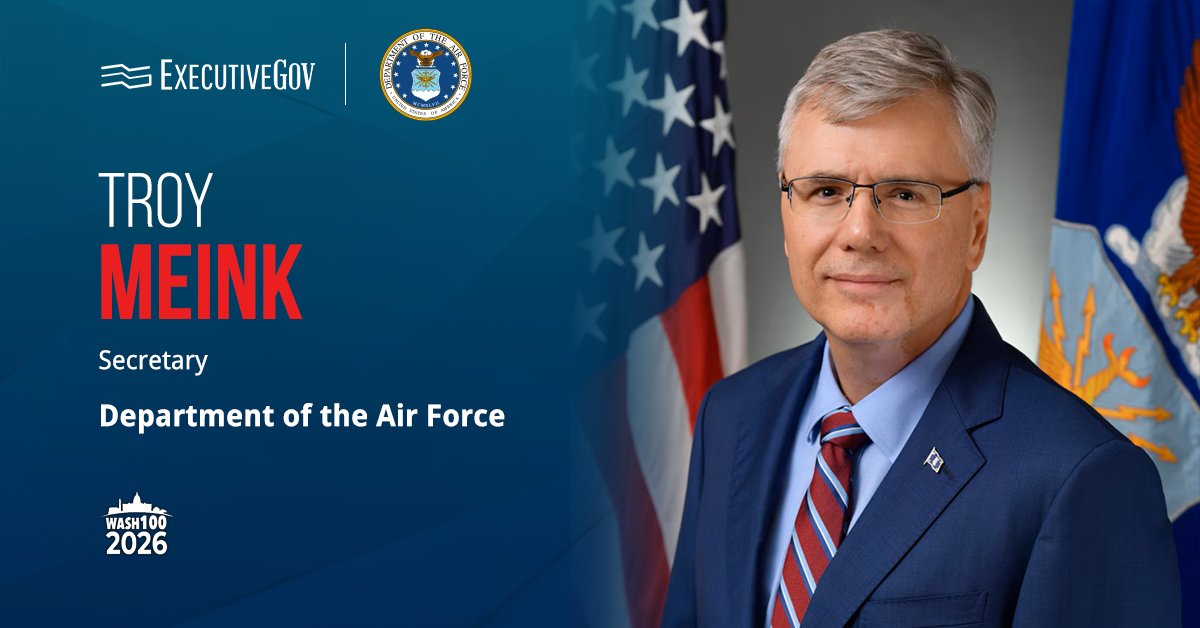
Air Force Secretary Troy Meink said acquisition reform will play a central role in strengthening the Department of the Air Force’s ability to compete and maintain an edge in an era of rapid technological innovation, U.S. Space Command reported Thursday. As defense leaders continue to emphasize acquisition reform and workforce priorities, forums like the 2026 Aerospace Summit provide an opportunity to stay informed on evolving priorities across the sector. Register now for the July 30th event to hear experts discuss the capabilities and trends shaping national security innovation across two critical areas. What about DAF?
The National Science Foundation has begun soliciting proposals for national data infrastructure projects as part of its Integrated Data Systems and Services (IDSS) program. NSF’s new request emphasizes the federal government’s continued focus on improving cyberinfrastructure and research capabilities. As governments and industry players track these trends, the 2026 Cyber Summit on May 21 will consider topics such as artificial intelligence in cyber defense, zero trust, quantum computing, and post-quantum cryptography. Register now! What is the NSF IDSS Program? Launched in August 2025, the IDSS Program supports nation-wide operational cyberinfrastructure systems and services designed to enable open, data-intensive, AI-driven science.
The U.S. Air Force has appointed Megan Rosso, Marcus Green and Jennifer Robaina to functional roles within the Cyber Networks Directorate, the Air Force Lifecycle Management Center announced Thursday. This appointment aligns with efforts to unify leadership across program management, contracts and human resources. “We are fortunate to have such a talented team in these important roles,” said Brig. Gen. Joshua Williams, Program Executive Officer, Cyber Networks Directorate; “Their collective experience and leadership will enhance the way we deliver capabilities, support our employees, and fulfill the Department of the Air Force’s mission.” Who is Megan Rosso? Green