
Physical AI leverages improvements in artificial intelligence (AI), such as chatbots and large-scale language models (LLMs), and incorporates advances in hardware and software for advanced robotic solutions such as cobots. It’s not uncommon to see robots wandering around supermarkets these days, but many of them are autonomous mobile robots (AMRs) that move around quietly. AMR is also showing up in warehouses and hospitals.
The move to physical AI will allow robots to become more interactive and better understand their environments and how to work with humans. However, handling human interaction requires more advanced hardware and software. Using the cloud is an option, but the reality is that you need AI on the edge.
Achieving this level of AI functionality requires low-power, high-performance computing (HPC). This means high-performance chips, and that’s where chiplets come into play. Chiplets are already heavily used in cloud-based AI.
Physical AI Chiplet Platform
In the video above, we talk with Michael Posner, group director at Cadence, about the company’s physical AI chiplet platform, which is part of an ecosystem from chiplet specifications to packaged parts. Ecosystem partners include Arm, Arteris, eMemory, M31 Technology, proteanTecs, Silicon Creations, and Trilinear Technologies. The Chiplet platform provides a pre-integrated solution for developers of chiplet-based packages.
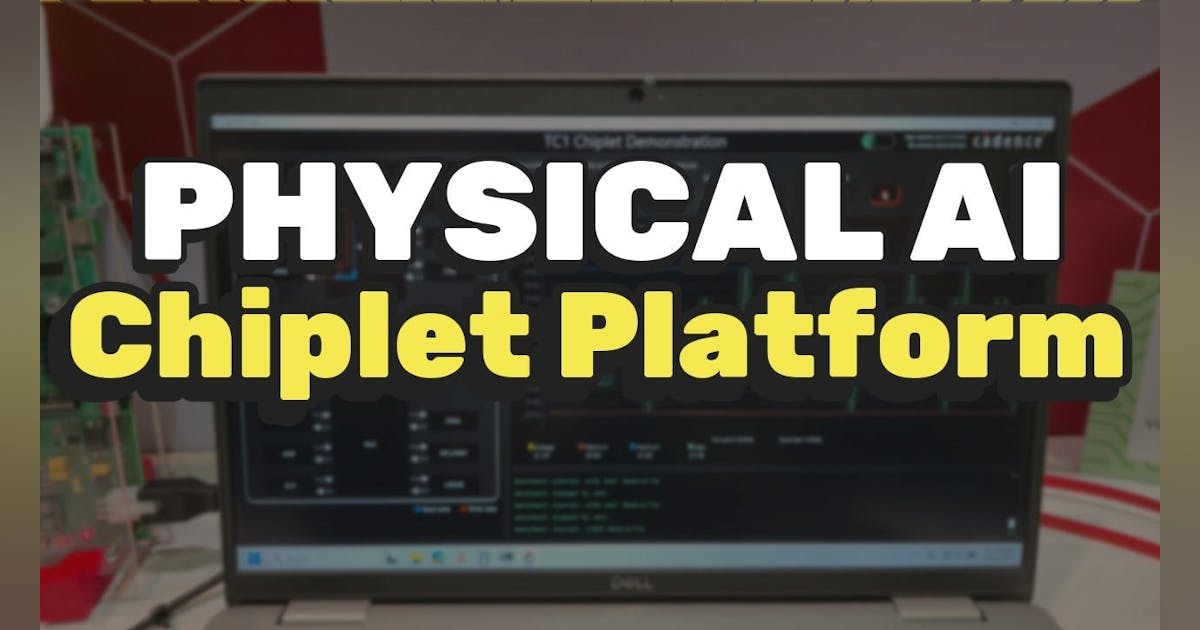
Michael highlighted the TC1 chiplet demo hardware, which has a number of UCIe-connected chips that share data through an AXI-based memory interface. (Figure 1). Design tools and IP allow developers to leverage existing designs by connecting to other chiplets that employ standard interfaces such as UCIe. Using AI-based chiplet solutions with supporting memory options such as high-bandwidth memory (HBM), designers can quickly integrate the hardware needed to support physical AI models in the field.


