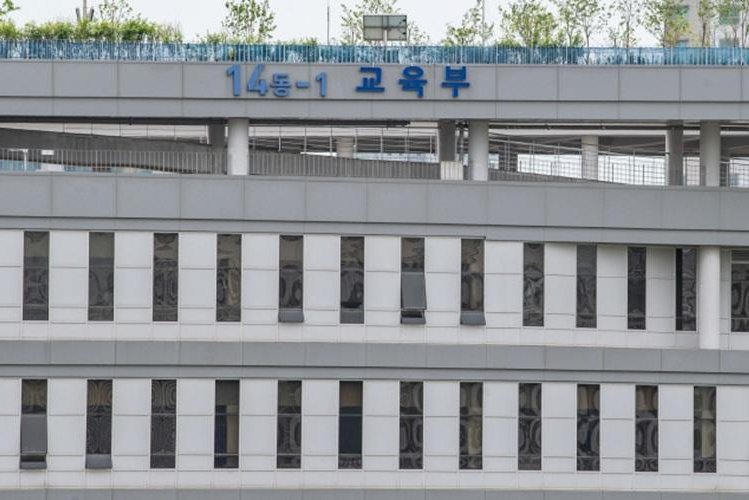
A Ministry of Education complex located in Sejong, South Korea. The ministry and UNESCO-affiliated education centers will receive prospective teachers from South Korea, China and Japan on Saturday. Photo courtesy of Asia Today
July 24th (Asia Today) — Written by Asia Today, translated by UPI
SEOUL, July 24 (Asia Today) – Teacher candidates from South Korea, China and Japan will share how they teach peace, coexistence and respect for cultural differences by adapting traditional stories with generative artificial intelligence.
The Korean Ministry of Education and the Asia-Pacific Center for International Understanding and Education will hold the “2026 Korea-China-Japan Global Citizenship Education Lesson Research Presentation” in Seoul on Saturday.
Approximately 50 future teachers, professors and other participants will be in attendance.
South Korea will be represented by teams from Jeonju University of Education, Gwangju University of Education, and Sungshin Women’s University.
Students and professors from Beijing Normal University in China and Teikyo University in Japan will also participate.
Each team will present a global citizenship education lesson plan using picture books, novels, and other literary works from each country.
This lesson is designed to help students understand peace and coexistence, recognize differences between people, and consider how those values relate to their own lives.
Add AI and role-playing to your lessons
This year’s presentations include teaching methods that combine generative AI with activities that encourage direct student participation.
The Teikyo University team will develop classes using picture books that are traditional folk tales rewritten using generative AI.
A team from Jeonju University of Education uses the picture books “The Enemy”, “How to Turn War into Peace”, and “The Child from a Strange Land” to discuss war, peace, refugees, and cultural diversity.
After reading the book, students also participate in role-playing exercises.
Professors from the three countries will review each team’s presentations and advise future teachers on lesson structure and classroom management.
The feedback is intended to help participants adapt their lesson plans for use in schools.
The Ministry of Education and UNESCO Associated Centers are organizing an annual conference from 2021 with the aim of harnessing the power of storytelling to promote empathy in global citizenship education.
These organizations compiled the lessons they developed into the Elementary and Secondary Editions of Learning Global Citizenship Through Stories, published in 2024 and 2025.
Global citizenship education aims to develop human resources who understand and put into practice universal values such as peace, human rights, and cultural diversity.
Through UNESCO, Korea has been promoting the expansion of global citizenship education as a major educational issue.
“This will be an opportunity for aspiring teachers from South Korea, China, and Japan to explore the importance of peace through stories and grow together,” said Lee Nan-young, director of the International Education Planning Bureau at the Ministry of Education.
“We will continue educational exchanges between the three countries so that global citizenship education takes root in classrooms throughout Northeast Asia,” Lee said.
— Asia Today reported. Translation by UPI
© Asia Today. Unauthorized reproduction and redistribution is prohibited.
Korea original report: https://www.asiatoday.co.kr/kn/view.php?key=20260724010008959