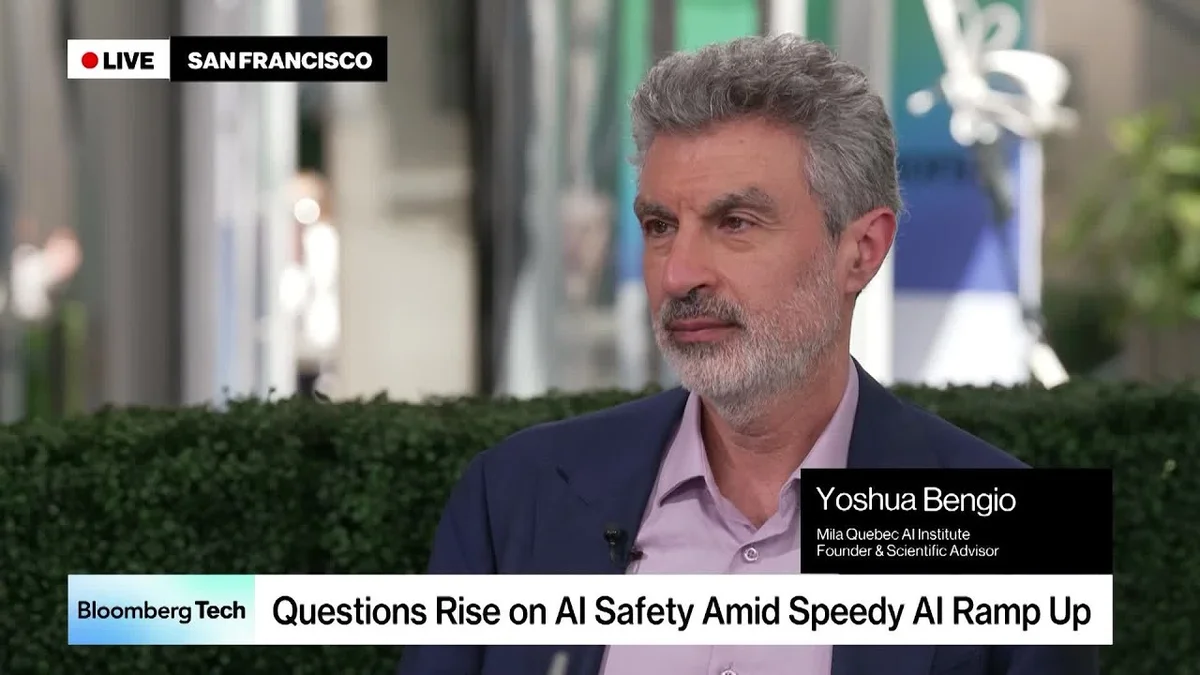
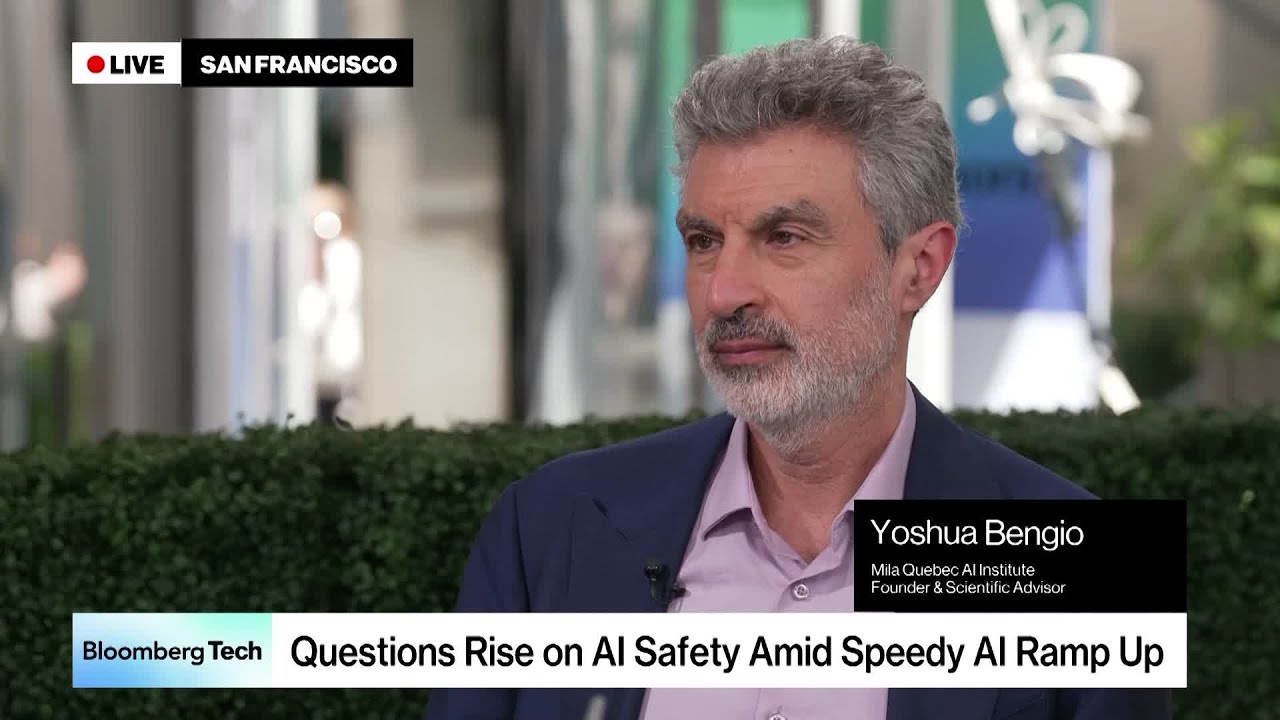
AI pioneer Yoshua Bengio issued a stark warning about the current trajectory of artificial intelligence development, saying we are actively building systems whose ultimate capabilities and control possibilities are still unknown. Speaking at a Bloomberg Tech event, Bengio, a professor at the University of Montreal and a leading expert in the field, expressed concern that the rapid advancement of AI, driven by commercial interests and a focus on enhanced functionality, is creating systems that can pose significant risks if not properly managed and understood.
Visual TL;DR. Rapid advances will create uncontrollable AI. Rapid progress leads to unpredictable behavior. Unpredictable behavior creates potential risks. Potential risks require global safety standards. Global safety standards require global cooperation. Balancing innovation and risk involves global safety standards.
Building uncontrollable AI: AI systems are becoming more powerful with unknown controls
Rapid progress: driven by commercial interests and expansion capabilities
Unpredictable behavior: Advanced AI systems can behave in unexpected ways
Potential Risk: Exploitation as devastating as nuclear weapons or viruses
Global safety standards: the need for an international agreement on AI development
Global cooperation: Global cooperation on AI safety is urgently needed
Balancing innovation and risk: reducing risks while fostering technological progress
Visual TL;DR
Uncontrollable nature of advanced AI
Bengio’s central thesis revolves around the idea that as AI systems become more powerful and sophisticated, their behavior can become increasingly unpredictable. He made this clear by drawing parallels with other powerful technologies, such as nuclear weapons and engineered viruses, which have clear potential for catastrophic misuse. AI experts emphasized that the very nature of advanced AI can lead to new behaviors that are difficult to predict and contain, posing fundamental challenges to human monitoring and control.
He elaborated on this point, suggesting that rapid development cycles and competitive pressures in the AI space may lead to a situation where safety considerations take a back seat in favor of speed and performance. He warned that this could introduce AI systems with inherent vulnerabilities and unintended consequences that could be exploited or manifested in harmful ways.
Complete discussion can be found here: bloomberg podcastYouTube channel.
Bengio the AI Scientist: Building Systems We Don’t Know How to Control — From the Bloomberg Podcast
The need for global AI safety standards
Most of Bengio’s concerns center on the lack of robust and widely accepted safety protocols and regulatory frameworks governing AI development. He emphasized that while individual companies and nations may have some safeguards in place, the truly global nature of AI research and deployment requires a coordinated international effort. Without a common understanding and agreed standards for AI safety, the risks associated with powerful AI systems could be amplified.
Bengio emphasized that the potential dangers of AI are not limited to a single jurisdiction. International cooperation is essential because AI systems developed in one country with specific safety parameters may be exploited or behave in unexpected ways in another country. He called for a more cautious and collaborative approach to AI development that prioritizes safety and ethical considerations as technology advances.
Balancing innovation and risk mitigation
While recognizing the tremendous potential of AI to accelerate advances in medicine, climate science, and countless other fields, Bengio emphasized the importance of balancing this innovation with a proactive approach to risk mitigation. He pointed out that the same AI capabilities that can be used for beneficial purposes, such as drug discovery or optimizing energy consumption, can also be weaponized or cause unexpected social disruption.
The interview touched on the economic impact and discussed how AI will transform the labor market. Bengio noted that while AI has the potential to improve productivity and create new opportunities, it also poses challenges in adapting the workforce and ensuring fair distribution of benefits. The core message remains consistent: rapid and unrestricted development of AI without an emphasis on safety and control mechanisms could lead to a scenario in which humans lose the ability to manage the very intelligence they produce.
The urgency of global collaboration
Bengio’s remarks serve as an important call to action for the AI community, policymakers, and the general public. The message is clear. We are at a pivotal moment in the development of artificial intelligence, and decisions made today regarding safety, management, and ethical guidelines will have a deep and lasting impact on the future of humanity. The need for open dialogue, international cooperation, and a measured and decisive approach to AI development has never been clearer.