The Church of Jesus Christ of Latter-day Saints and many of its members use artificial intelligence every day, but there should be clear lines around its limits, one of the church’s leaders said Wednesday.
Elder Gerrit W. Gong of the Quorum of the Twelve Apostles said the church has set boundaries on whether AI should be used to create an image of God or whether it should be used to prepare talks for general conference or sacrament meeting.
“We know that artificial intelligence cannot replace revelation or generate truth from God, and we should not allow it to interfere with our personal relationship with God,” he said.
Elder Gong spoke for 40 minutes on the second and final day of Organized Intelligence, a conference on Latter-day Saint perspectives on AI. The event was held in the 26th floor conference hall of the Church Office Building in Salt Lake City.
Other presenters talked about research on church members using AI, suggested the potential positive impact that closed-system AI tutors could have on Latter-day Saint students, and shared examples of questions people have asked the AI chatbot, LDSBot.
Elder Gong said that misuse of AI can distort or disrupt humans’ contractual relationships with God, society, the natural world, and self.
“Even if we achieve AGI (artificial general intelligence) or ASI (artificial superintelligence), let me be clear: God is God,” Elder Gong said. “AI is not and cannot be God. Humans are not God, and of course God is defined only by knowledge and reasoning.”

While he voiced caution about some aspects of AI, he asked people not to assume that AI is inherently evil or should be avoided.
“The fact that technology can be misused does not mean it should never be used,” Elder Gong said. “AI has many contributions to human prosperity and the common good.”
In fact, departments at church headquarters are exploring ways to leverage AI in their work supporting approximately 32,000 congregations in 195 countries. But he said individual Latter-day Saints should be intentional about how they incorporate AI into their lives.
“Yes, we will have conversations and interactions with AI systems, but AI algorithms will not love, bless, and relate to us through a divine covenant. In no fundamental way will AI be able to enter into a contractual relationship or bring about the blessings of a covenant,” he said.
“God, our Eternal Father, His Beloved Son, and the Holy Spirit are our ultimate reality. By their very nature, artificial intelligence is always artificial in some sense. God is never artificial at any time.”
Latter-day Saints believe that humans are eternal intelligences, literally organized as spirit children of God before the creation of the world.
“In the theological sense of light and truth, God and human intelligence are not and cannot be artificial,” Elder Gong said.
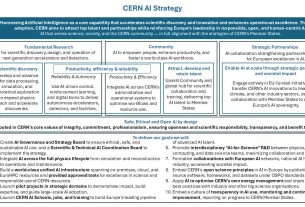
Last year, Elder Gong was asked to share guiding principles regarding AI with church general authorities, general officers, and employees. These principles can be found at AI.ChurchofJesusChrist.org.
He shared some examples of the application of these principles during his talk Wednesday at church headquarters. There was a talk and guidance on preparing AI-generated images.
“Those attending general conference can be confident that all general conference messages to Church leaders are inspired by God,” Elder Gong said. “AI cannot replace divine inspiration or the personal work of invoking it, so we ask that general conference speakers do not use AI to prepare early drafts or final versions of their messages.”
He did not set guidelines for Church members, but said the talks and lessons prepared for weekly Latter-day Saint services are best done without human help.
“We teach our members that having an AI write their sacrament meeting stories or do their seminary homework will not help them grow spiritually,” Elder Gong said. “AI cannot replace the personal effort and spiritual preparation with which we prepare our lessons, prayers, and blessings.”
The church also generally refrains from using AI-generated images, he said. You can request an exception, but it will always be labeled. The same goes for the use of AI-generated voices.
He drew bright lines around two specific areas.
“The church does not use AI-generated images depicting Heavenly Father and Jesus Christ,” he said.
Nor do we replicate the voices of church leaders.
He said the church will be careful about the language it uses to describe AI to keep its limits clear.
“The Church will seek to avoid language that suggests that AI has emotions, judgment, moral agency, spiritual abilities, or divine authority,” Elder Gong said.
Latter-day Saints, like the Church itself, are certainly using AI, speakers said at the conference, which was sponsored by the Future of Life Institute, Faith Matters, Utah Valley University, Clarion AI Partners and others.
A Study of Latter-day Saint Use of AI
Matthew Miles of BYU-Idaho and Peter Kardon of the University of Southern California drew Latter-day Saint responses to the AI survey from a larger sample of Americans and said Church members fell into three buckets.
- silicon saintsThese are people who fully integrate AI into their religious lives and see it as a tool for spiritual improvement.
- compartmentalizerThey use AI, but generally separate it from their religious life.
- spiritual skepticThere are pros and cons regarding the church’s activities, but I have deep concerns about the use of AI.
Miles and Cardon said at least 75% of each group were concerned that AI would provide inaccurate information, but three-quarters of each group also said AI was an appropriate support for family history work.
Half to 88% of respondents said AI is appropriate for studying the gospel, and 48% to 80% said AI is appropriate for preparing talks and lessons.
Chatbot instructors, partners, and coaches were also the subject of several presentations at the conference. Miles and Cardon said 69% of Silicon Saints believe it is appropriate to use an AI coach to support spiritual growth, but that number drops to 30% for compartmentalists and 19% for spiritual skeptics.
How church education systems can provide students with AI tutors and coaches
Elder Kim B. Clark, an Honorary General Authority Seventy and former member of the Church Educational System, suggested that customized AI coaches and tutors could help each CES student achieve deep personal learning.

He likened the safe and appropriate system for CES students to the Liahona, the compass given to the Book of Mormon prophets. It will be, he said, “another divinely inspired technology for guidance, feedback, counseling, correction, and instruction that will be used by righteous people with righteous principles for the purposes of justice.”
Any AI system for Church students must be a custom development created in a private space open only to CES students and managed by CES, Elder Clark said. The system is trained based on CES educational objectives, gospel principles, specific courses, and educational goals. AI training will also include boundaries around what is appropriate.
Elder Clark said that within these conditions, it is possible to help students achieve deep human learning.
With an AI tutor, students have to read books on their own, complete their own assignments, and write their own essays. The AI tutor provides feedback, support, additional questions, and guidance. Tutors help students think carefully and critically, track their interactions with students, and evaluate their progress.
The AI coach system will provide individualized support as practice and learning occurs during internships, applied projects, and the flow of work, Elder Clark said. Again, the coach is only available after the student has taken action to practice the concept in a real-life situation, but the coach can help plan intentional practice structured to help the student build skills, provide feedback, suggest improvements, coach on specific techniques tailored to the student’s needs, and guide the student with appropriate encouragement.
“AI has the potential to be extremely powerful in our pursuit of deep learning,” said Elder Clark. “But it also presents significant traps, pitfalls, and challenges. Reaping the benefits and avoiding the traps will depend on the relationship we build with the tools of AI.”
Latter-day Saints use secure chatbots about church
Josh Coates, executive director of the BH Roberts Foundation, created LDSBot two years ago.
LDSBot is an AI tool that answers questions about the Church of Jesus Christ. It uses a database consisting of the Church’s comprehensive handbook, general conference talks, scripture, Come, Follow Me lessons, and more.

Coates said LDSBot is church-friendly and has had 900,000 conversations with hundreds of thousands of people. AI allows the bot to operate in 84 languages.
He shared dozens of examples of questions people ask.
“More than 90% of users are looking for honest information about faith, scripture, policy and doctrine,” Coates said. “As far as I’m concerned, this is incredibly good news.”
The top categories are Doctrine/Theology/Scripture (78%), Lectures/Lessons (17%), and Church Administration/Policy (11%).
Coates said many of the questions are very personal questions from real people dealing with real life.
One person asked Bott, “I want to fulfill my mission, but what if I don’t know that God and Jesus Christ are real, but I believe and hope that they are real? Is that enough to fulfill my mission?”
Coates said these questions indicate people are looking for a safe place to find preliminary answers before speaking with church leaders and counselors.