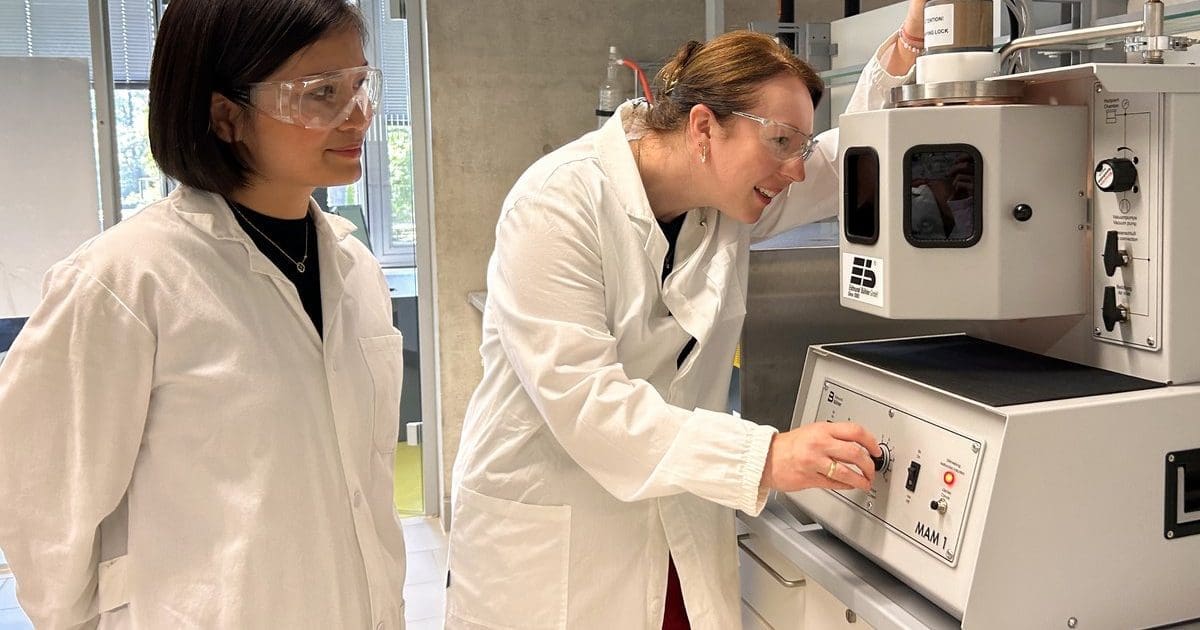
Alqem AI is launching a project to identify new magnetic materials independent of rare earth elements to address increasing geopolitical vulnerabilities in critical raw material supplies. The company reports that around 90% of high-performance permanent magnets, which are essential for electric cars and wind turbines, are currently produced in China. Although bronze, iron, steel, and silicon have driven past technological eras, hundreds of millions of theoretically possible crystalline compounds remain undiscovered, prompting Alqem AI to leverage artificial intelligence in the search for alternatives. This effort is supported by Claudia Felser, director of the Max Planck Institute for Solid State Chemistry and Physics, and benefits from unique connections. Julia Krez, vice president of operations at Alqem AI, completed her PhD under Felser and is also a member of the board of directors. Hanh Nguyen, CEO of Alqem AI, said: “We are starting where the need is greatest: rare earth-free magnets. Rare earths have been irreplaceable for decades, so this is a product the world urgently needs.”
The DEEPtech startup has just closed an €8 million pre-seed funding round and is leveraging AI to accelerate materials discovery, initially focusing on a critical need: rare earth-free magnets. The project addresses growing geopolitical concerns as around 90 percent of high-performance permanent magnets, which are essential components of electric vehicles, wind turbines and defense systems, are currently produced in China, and recent export restrictions have highlighted supply chain vulnerabilities. Alqem AI’s approach is centered around two unique data foundations. One is an extensive database of predicted materials and high-quality training data on material properties, a combination that the company believes bridges the gap between computational prediction and real-world synthesis. This collaboration builds on the Max Planck Society’s many years of research in quantum materials and established partnerships with industry.
Collaborative research on quantum materials with the Max Planck Society
Alqem AI addresses this complexity with an innovative platform that integrates an extensive materials prediction database with high-quality training data and laboratory synthesis capabilities to effectively translate digital predictions into tangible materials. At the heart of this partnership is a project focused on identifying new magnetic materials that circumvent the need for rare earth elements, an important consideration given that approximately 90% of high-performance permanent magnet production currently occurs in China. Recent export restrictions have elevated the security of critical raw material supplies to a key geopolitical issue, prompting the search for alternative materials. Claudia Felser leads this project and is also a member of the board of directors of the Max Planck Institute for Solid State Chemistry and Physics. This dual role emphasizes the deep integration between startups and research institutions.
This collaboration doesn’t just focus on computational predictions. Claudia Felser’s team has a history of synthesizing and characterizing rare earth-free magnets, and is currently applying rigorous experimental testing to candidates identified by Alqem AI’s platform. “The discovery of truly new permanent magnets is one of the most difficult problems in materials science,” Felser said, adding, “The last real breakthrough was made more than 40 years ago.” She emphasizes the power of combining large-scale computer-aided screening with systematic synthesis and believes this approach has great potential for materials discovery.
For the latest advances in qubits, hardware, algorithms, and industry deals, check out Quantum Zeitgeist’s quantum computing news today.