Some experts and technology enthusiasts who participated inAI is in action nowThe conference, held at the Lagos Oriental Hotel, called on AI founders, builders and students to chart the course for Nigeria’s digital future.
The AI in Action Now 2026 conference, which attracted over 500 attendees, served as a rallying cry for Nigerian innovators to move beyond passive consumption of global technology and start building contextual AI designed specifically for the Nigerian environment.
The central theme of the conference was the urgent need for local sovereignty in the age of artificial intelligence.
While the early stages of the AI boom were dominated by global tools, participants argued that the next frontier must be built on home soil.
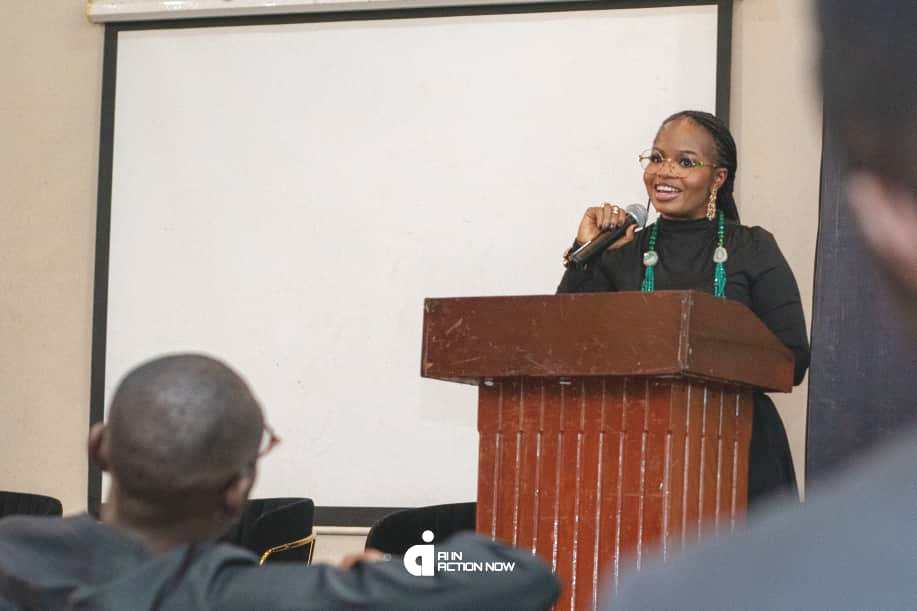
Conference convener Deborah Ibiyode opened the event by highlighting creating a chain of productivity by bringing founders, builders and students together in a single ecosystem. According to her, the conference aims to revolutionize how Nigeria tackles systemic challenges.
“Contextual AI is about building AI based on your own local context. Gone are the days of using European products built for that context. We need to leverage that and get solutions that suit us better and faster. The countries that win will be the ones that build responsibly and scale locally,” Ibiyode said in his keynote.
She particularly appealed to the audience to apply these tools to critical sectors such as healthcare and finance, where local nuances such as linguistic diversity and unique trade patterns often make foreign models less effective.
Adding a layer of strategic caution to the excitement, Dotun Adeoye, co-founder of AI Nigeria, said: It provided a reality check regarding the current state of adoption. While he noted that around 90% of Nigerians are already interacting with AI through tools such as ChatGPT and MetaAI, he maintained that the business sector has only scratched the surface of its true potential.

Adeoye highlighted the huge opportunity for investors to optimize local logistics and business operations, but also stressed the importance of ethics and human-centered design.
“There is a gap in the market, but that doesn’t always mean there is a market in the gap,” Adeoye said while speaking to journalists on the sidelines.
He appealed to construction companies to develop AI that empowers rather than disenfranchises the workforce, pointing to the one million graduates Nigeria produces every year.
The public sector also demonstrated a strong desire to move into the future. Representing the government’s position, the Lagos State Commissioner for Energy and Mineral Resources, Mr. Biodun Ogunleye, maintained that data-driven intelligence is the foundation of modern public administration.
“What is governance without AI? It’s just humans filling up and stuffing papers,” Commissioner Ogunleye said.
He pointed out that from managing complex transportation networks to optimizing revenue collection, AI is no longer a luxury but a necessity for nations.
He also clarified the role of government as an enabler rather than a competitor.
“Government is not in business. We want to work with the private sector and people with the right structures to handle data to ensure an outcome that the public is happy with,” he added.
At the conclusion of the conference, the message for Nigeria’s “Silicon Lagoon” was clear. The tools are available, the talent is there, and the problem is clearly defined.
The “AI in Action Now” conference laid the foundation for a new era of innovation in Nigeria, where solutions to local problems are scripted in local code.