AI-generated content promoting the Trump administration’s war on Iran has amassed more than 2 billion impressions on social media, while factual reporting on civilian casualties, military losses, and escalating regional conflicts attempts to cut through the algorithmic noise.
The White House has intentionally created meme-style videos splicing airstrike footage with video game clips such as: call of duty and grand theft autodesigned to dominate social feeds rather than inform the public.
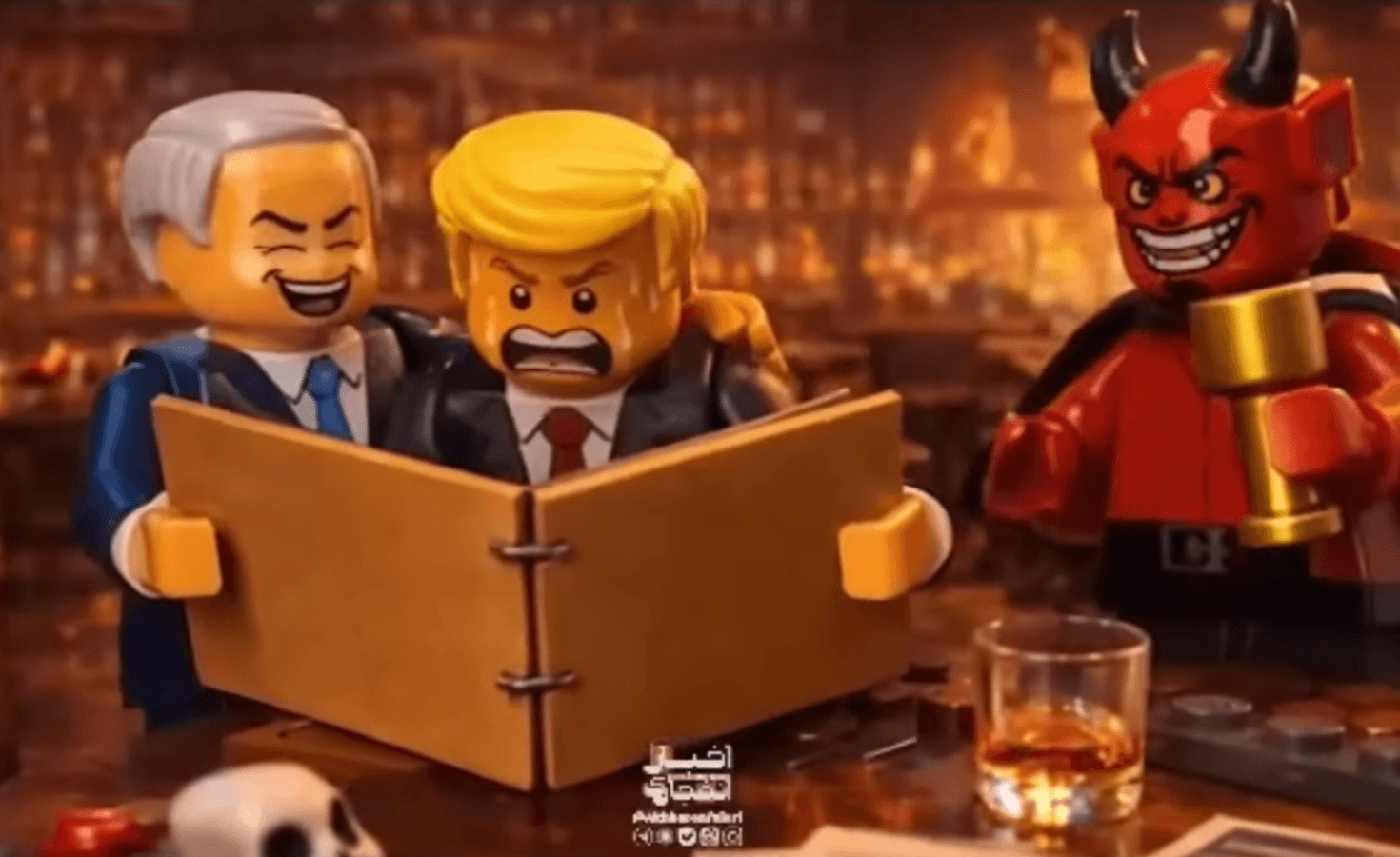
At the same time, Iranian state-linked propaganda machines flood the same platforms with AI-generated Lego animations and viral satire targeting Trump personally, creating a two-sided information environment where the loudest content drowns out on-the-ground reporting.
Researchers and information warfare analysts warn that this is a hallmark of the first major armed conflict in the age of generative AI, with viewers encountering war as entertainment and only later as news.
White House video strategy and scope
White House press secretary Caroline Levitt acknowledged the administration’s social media influence. Statement reported by NBC News Early this month. “Over the past few days, White House videos have generated more than 2 billion impressions,” she said. “People talk about the incredible success of the war and the elimination of Iranian terrorists by the U.S. military, and that’s exactly the point.”
The video itself is a mixture of government war footage and government footage. Grand Theft Auto: San AndreasNFL tackle highlights, and audio cues. top gun and mortal kombat.
Operation Epic Fury
• Destroy Iran’s missile arsenal.
• Destroy their navy.
• Make sure they never acquire nuclear weapons.Trapped. pic.twitter.com/ika3MMJmZT
— White House (@WhiteHouse) March 6, 2026
The administration described this as a “non-traditional and traditional media strategy that has been highly successful.” The 2 billion figure has not been independently audited and is the White House’s own calculation of impressions across social media accounts.
Mr. Levitt’s claim that this measure shows public support for the war is as disturbing as public opinion polls. A Reuters/Ipsos poll shared with X by journalist Glenn Greenwald showed that nearly 60% of Americans disapprove of Operation Epic Fury. Leavitt was also issued a community note on X for claiming that “Americans agree” that the war was “overwhelmingly successful,” separately citing an internal White House poll surveyed only among MAGA Republicans.
New poll from CBS News (run by the Ellison family and Bari Weiss) and YouGov:
60 to 40 percent of Americans disapprove of U.S. military action in Iran.
57% of Americans believe the war is going (very/somewhat) badly, but only 43% believe the war is going (very/somewhat) well. pic.twitter.com/VK8hV9bC4t
— Glenn Greenwald (@ggreenwald) March 22, 2026
Iran’s LEGO campaign and the question of attribution
Iranian anti-propaganda rivals White House videos in reach and surpasses them in novelty. Since the war began on February 28, 2026, the Lebayat-e-Fas Institute, a media organization linked to the Iranian state, has produced a series of AI-generated Lego animations depicting President Trump and Israeli Prime Minister Benjamin Netanyahu as miniature puppets in the face of Iranian military retaliation.
One video evokes the Shajare Tayebeh girls’ school bombing in Minab, while another shows block-shaped American soldiers walking through rivers of blood. Some were broadcast on Iranian state television and later spread on X, TikTok and Instagram.
Emerson Brooking, Director of Strategy and Senior Resident Fellow Atlantic Council Digital Forensics Laboratoryhe told Axios. Report published on April 14, 2026 Lego was simply an efficient delivery mechanism. “Lego was an easy way to get their point across, but they decided to give it a consistent aesthetic,” he said. He added that Iran has been a pioneer in decentralized propaganda since its 1979 revolution, and current achievements prioritize volume and proliferation over factual accuracy.
Attribution is still really difficult to determine. Multiple actors, including state agencies, proxy groups, and anonymous independent accounts, are producing nearly identical content, making it difficult for platforms and researchers to identify sources. Renee DiResta, a disinformation researcher and former Stanford Internet Observatory analyst, noted in an essay for TIME that generative AI has made sophisticated propaganda cheap enough that the line between official state messages and opportunistic imitations has effectively dissolved.
The Iranian embassy’s own X account also contributed to this wave, posting an AI animation mocking President Trump, modeled after a Pixar movie. inside out. Other content depicted Trump sitting in the Oval Office as a Teletubby dressed in an American flag costume and playing with a toy fighter jet.
Real casualties invisible to algorithms
The human cost of the conflicts behind memetic warfare has been documented, but that documentation rarely reaches comparable scope. According to NPR reporting from Tel Avivthe US-Israel war in Iran led to retaliatory attacks on Israel and its Gulf neighbors, sparking an escalation of regional conflict. The Pentagon has ordered thousands of additional troops to the Middle East, and prospects for the ground phase are increasing.
tell the truth, refer to it Report citing the New York Timespointed out that since February 28, 2026, “a chain of AI fakes about the war with Iran” has flooded social media. One widely shared clip showed a missile attacking Tel Aviv. It was a deepfake. Another depiction depicted an attack on a high-rise building in Bahrain. It was generated by AI and traced to accounts associated with the Iranian government. Both went viral before fact-checkers intervened.
The core arguments developed in DiResta’s book Invisible rulers, people who make lies reality And then The Ink interviewpropaganda has been democratized by social media. Now governments, proxy groups, and anonymous accounts compete for the same audiences on the same platforms, and the most entertaining content wins, regardless of its relationship to the truth.
The propaganda battle may be most clearly recorded in history in the first wars of the AI era. That’s because most of what was being spread was true.