
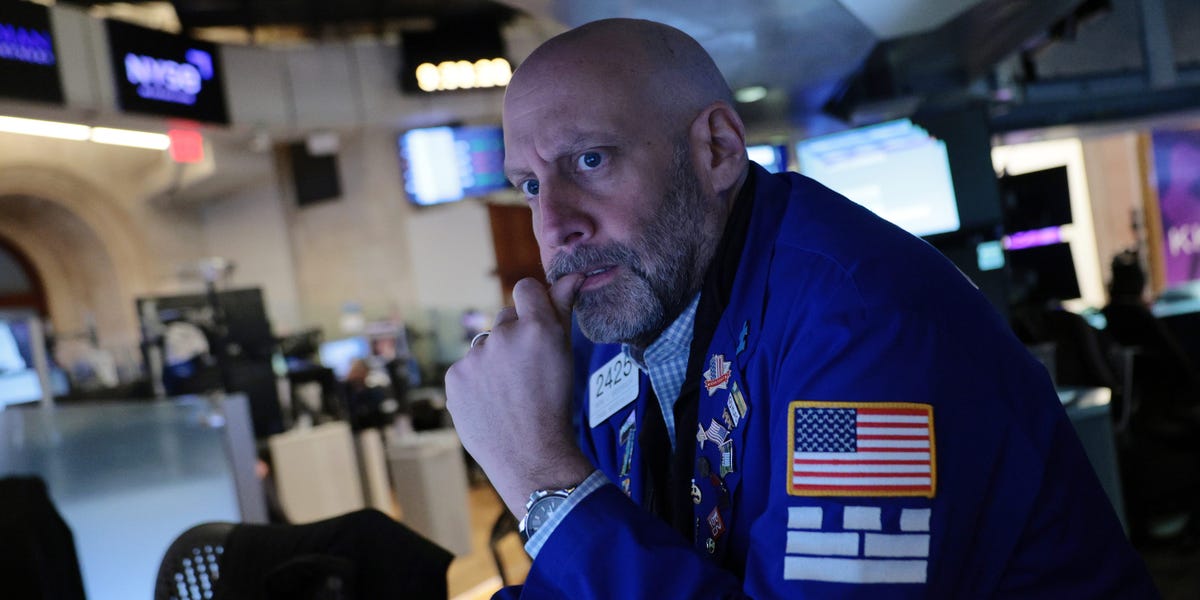
Global stocks fell on Friday as investors turned away from tech stocks and worried that energy prices would rise again.
While AI companies have reported impressive profit growth in recent days, they have also pledged to spend hundreds of billions of dollars building out AI infrastructure, leaving some investors wondering whether they will see a return on their huge outlay.
Meanwhile, Iran has threatened to shut down a vital Red Sea oil route if the United States attacks Iranian infrastructure, which would further disrupt global energy markets that have been disrupted by the closure of the Strait of Hormuz in recent months.
“The sell-off has spread across the market and the crisis of confidence in tech valuations has intensified,” Susannah Streeter, Wealth Club’s chief investment strategist, said in a morning note.
Streeter added: “This tension is tied to concerns about escalating conflict in the Middle East, as energy prices look set to rise in earnest.”
Here are the major market locations as of 6 a.m. ET Friday:
- S&P 500 futures: -0.9%
- Nasdaq 100 futures: -1.8%
- Dow Jones Futures: –0.7%
- German DAX: -0.8%
- Euro Stoxx 50: -1.3%
- Hang Seng in Hong Kong: -1.8%
- Shanghai General: -3.1%
- West Texas Intermediate Crude: +2%
- Brent crude oil: +1.8%
In a morning note, Russ Mold, investment director at AJ Bell, highlighted growing concerns about memory chips and other AI infrastructure.
“With volatile market conditions, investors are becoming increasingly wary of valuations in the AI and technology sectors, particularly memory chips, where stocks have soared to unprecedented levels this year,” he said.
Asia’s chipmakers have seen monster AI-powered stock rallies this year, but some of the region’s biggest winners are falling as investors question lofty valuations and South Korea moves to rein in speculative trading in one of the year’s hottest stock markets.
Nowhere is the reversal more evident than in Japan’s Kioxia.
The memory chip maker was the second-best performing non-U.S. stock in the MSCI All Country World Investable Market Index in the first half of this year, soaring 631%. Last month, the company became Japan’s most valuable listed company.
That momentum quickly crumbled.
Kioxia shares fell 16% on Friday following overnight declines in U.S.-listed memory stocks. Stock prices have halved since their peak in June, wiping about 30 trillion yen, or about $185 billion, from its market capitalization.
Taiwan Semiconductor Manufacturing Co., the world’s largest contract chip manufacturer, fell more than 5% despite reporting massive second-quarter results on Thursday in which profits jumped 77% from a year earlier.
Mr. Streeter said the adverse market reaction was due to investors becoming “more concerned about the huge spending by hyperscalers and the risks associated with committing such large sums of money to technology that is evolving at breakneck speed.”
South Korean markets were closed on Friday, but Samsung Electronics and SK Hynix are already down about a third from this year’s highs. SK Hynix’s Nasdaq-listed shares closed down 14% on Thursday.
The drop followed weeks of wild market volatility and South Korea’s decision to tighten regulations on single-stock leveraged exchange traded funds (ETFs). Regulators said the move was aimed at quelling excessive speculation.
South Korea has been one of the world’s hottest stock markets this year, with gains driven in part by heavy retail participation and leveraged bets focused on AI stocks.
Mohamed El-Erian, a top economist and former PIMCO CEO, said South Korean authorities face a delicate balancing act of tackling inflation while avoiding excessive financial volatility that could lead to “disorganized deleveraging.”
“It will be interesting to see how this unfolds in the coming weeks. This combination will not be easy to manage. The latter, if mismanaged, could have cross-border ramifications,” he wrote in X on Thursday.