
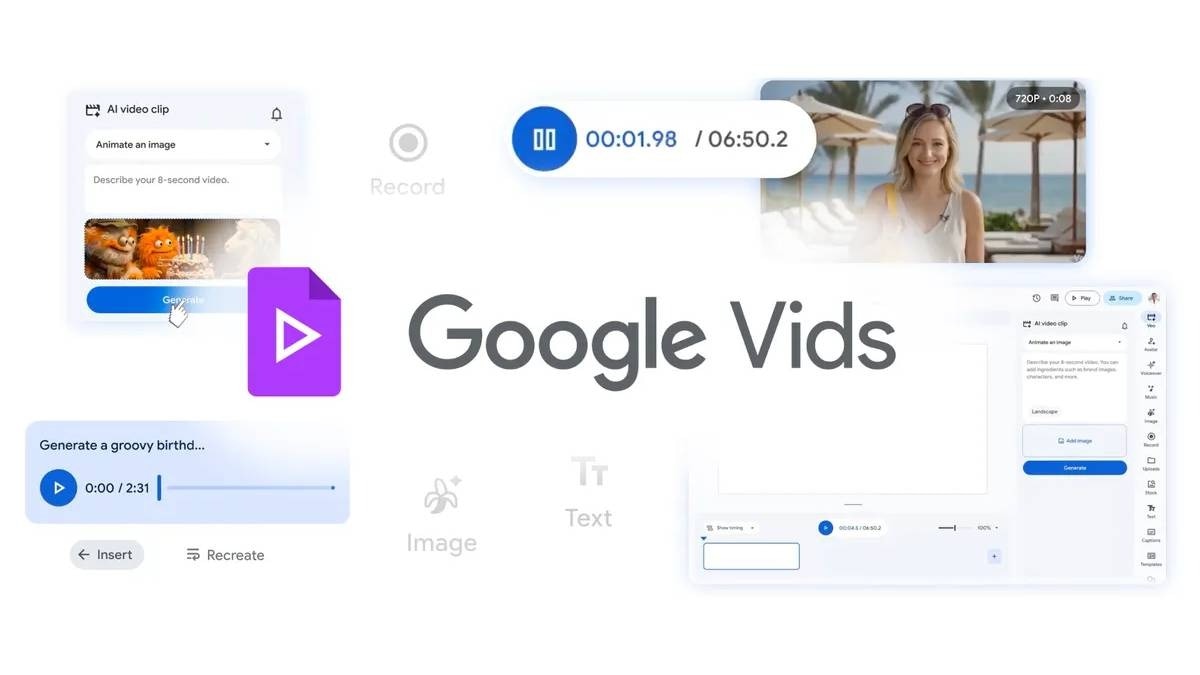
Google is introducing two major updates to its AI-powered video creation platform, Google Vids, expanding capabilities in the AI video space that big players like OpenAI’s Sora have shut down. Additionally, the company brought Gemini Omini, a new AI-powered video generation and editing tool, to Google Vids, along with Personal Avatars, a feature that allows users to create digital versions of themselves for videos without ever getting in front of the camera.
This update moves Google Vids beyond its role as a workplace presentation tool and closer to a complete AI video creation platform. This new feature is currently available to Google AI Pro, Google AI Ultra subscribers, and eligible Google Workspace business customers.
Create and edit videos using simple prompts
At the heart of the update is Gemini Omni, Google’s multimodal AI model designed for video creation. Instead of manually editing clips, users can now use everyday language to describe what they want and optionally upload a reference image, such as a photo or sketch. Gemini Omni combines these inputs to generate a video that matches your prompt.
Google says the AI can also edit existing videos. Users can request to replace backgrounds, improve lighting, add visual effects, and make other changes by simply entering instructions. Unlike many AI tools that require users to restart the process after each edit, Gemini Omni supports step-by-step editing, allowing creators to adjust their videos without having to regenerate the video from scratch.
Google Vids now lets users star in AI videos
The second major addition is personal avatars. The feature allows users to create an AI-generated digital avatar that looks and sounds like them by uploading a selfie and short audio recording. Once the avatar is created, the user just needs to enter the script and the AI avatar will deliver the message without the need for live recording.
Google says the avatar is linked to the account holder’s Google Account and can only represent that user’s likeness. Access to this feature is currently limited to users 18 years and older in supported regions.
To increase transparency of AI-generated content, all videos created using these tools will include an invisible SynthID watermark to help identify AI-generated videos.
The latest update strengthens Google’s commitment to AI-powered content creation, bringing Google Vids into more direct competition with platforms like HeyGen, Synthesia, Captions, and D-ID by combining AI video generation, editing, and digital avatars within the Google Workspace ecosystem.
– end


