
Chinese startup Moonshot AI’s new artificial intelligence model is making waves in Silicon Valley, intensifying the global AI race.
Announced Thursday, Kimi K3 is a low-cost, open-weight model that Moonshot AI says rivals some of the best systems from OpenAI and Anthropic.
The company plans to release model weights by July 27, allowing developers to download, modify, and build on model weights.
Like DeepSeek, another Chinese AI model that shook Silicon Valley last year, Kimi K3 is fueling debate about whether China’s more open approach to AI is closing the gap with the closed models offered by US tech companies.
Here’s why Kimi K3 has become such a hot topic.
1. Powerful – especially in coding
Kimi K3 has 2.8 trillion parameters (internal values that help the AI model learn and generate responses), making it the largest open-weight AI model ever published. A single prompt can process hundreds of pages of text, making it suitable for analyzing long documents and large codebases.
Early benchmark results suggest that Kimi K3 is particularly good at coding, one of the most commercially valuable AI applications. Arena.ai, which ranks AI models based on blind human evaluations, ranked it higher than Anthropic’s Claude Fable 5 on the Frontend Code Arena leaderboard.
Industry leaders are taking notice, too.
Vercel CEO Guillermo Rauch said in a Friday post on X that Kimi K3 is “the first time an open model outperforms all proprietary models in this comprehensive web engineering benchmark,” but cautioned that “benchmarks don’t always tell the whole story.”
Wharton professor Ethan Mollick called it “the closest we’ve ever come to a frontier” and advised users not to rely solely on headline benchmark scores.
On a wide range of benchmarks, the Kimi K3 remains competitive with leading US models, but it still falls behind Anthropic’s Fable 5 in some overall ratings.
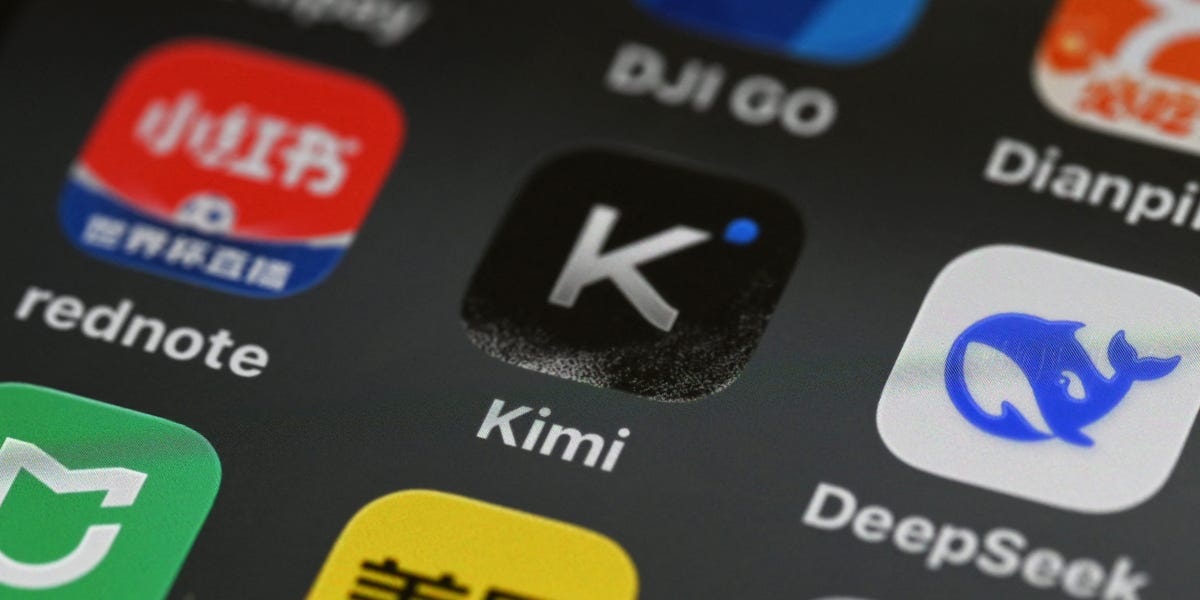
Kimi K3 raises new questions about the AI race. Future publication via CFOTO/Getty Images
2. Competitive price
Moonshot is also trying to attract developers through pricing.
Accessing Kim K3 via the API (the tool companies use to integrate models into their software) costs $3 per million input tokens and $15 per million output tokens, while cached inputs cost significantly less.
By comparison, OpenAI’s GPT-5.6 Sol costs $5 and $30, while Anthropic’s Claude Fable 5 costs about $10 and $50, making Kimi K3 one of the cheapest Frontier AI models available.
As frontier AI labs concentrate their capabilities, price is becoming a key battleground.
Pricing becomes almost as important as benchmark scores for startups deploying AI at scale, as companies can save significantly on computing costs by choosing cheaper models that offer comparable performance.
3. This is another sign that China’s indiscriminate strategy is working.
Perhaps the biggest reason Silicon Valley is paying attention to Kimi K3 is what it means for the broader AI race.
While OpenAI and Anthropic have kept most of their flagship models proprietary, Chinese labs including DeepSeek and Moonshot have increasingly adopted open-weight releases that allow developers to inspect, modify, and deploy models themselves.
This strategy has helped Chinese-made models gain traction among developers, while putting pressure on U.S. companies to justify the premium prices for closed systems.
“On the other hand, OpenAI and Anthropic are only performing close to it. What does it mean for the US to maintain its technology dominance?” Xiaoyin Qu, a former senior product manager at Meta, wrote in X on Friday.
Technicians will now have a better understanding of whether the Kimi K3 lives up to the initial hype following the release of Indiscriminate Weight.
However, the combination of frontier-level coding performance, competitive pricing, and open-weight releases suggests that Chinese AI labs continue to close the gap with large U.S. AI labs.