
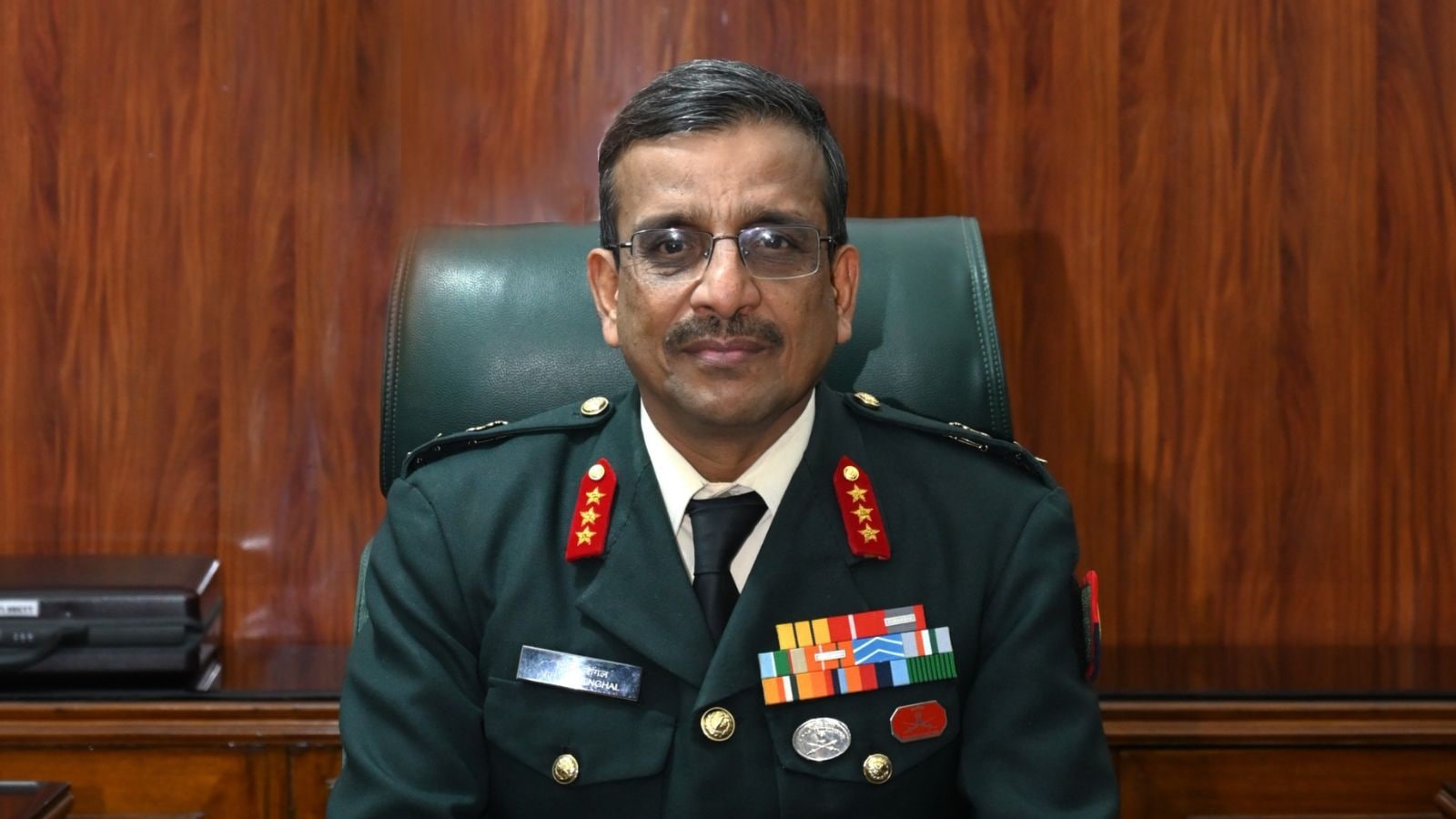
While the Indian military is well aware of the “transformative” power of artificial intelligence (AI) and is working to incorporate it into decision support systems and other capabilities, the country must take a responsible path to deploying AI-enabled systems in this area, including institutionalizing human oversight and control and subjecting AI-enabled systems to the same rigorous testing as other critical weapons systems, said Lt. Gen. Vipul Singhal, deputy chief of the Army Staff (Information Systems and Training).
give a speech at a session at India AI Impact Summit 2026 In his speech in the capital, he also highlighted that India has the potential to lead the world in the responsible use of AI in military conflicts and expressed hope that regulation of the use of AI for military purposes will be achieved, similar to other successful international treaties on arms and conflict.

“The question is never whether we should introduce AI-enabled systems, but how? And it is clear that this transition must be done responsibly. So what does a responsible and effective approach look like? First, we must institutionalize human control as the law, not a slogan. This requires a clear definition of which functions will be supported by AI, which functions may be recommended by AI, and which may always remain human decisions. Second…AI-enabled systems need to be treated as weapon systems and tested accordingly,” he said. he said.
According to Lt. Gen. Singhal, the battlefield is the most chaotic data environment, and an AI system “trained on clear satellite imagery in a computer room” can fail when it encounters images of the actual battlefield, leading to incorrect decisions with potentially devastating effects. “Are we subjecting AI-enabled systems to the same rigor that we subject new weapons systems to, testing them, fielding them under competitive conditions, and then applying them? After all, AI-enabled systems are weapons, not software,” he said.
Lt. Gen. Singhal emphasized the need to prioritize human control and judgment over AI-enabled systems in military operations, saying that while AI can inform decision-making, only humans can exercise judgment and take responsibility for it. Given the unprecedented speed, scale, and efficiency of AI systems, it is worth thinking more deeply about the “new burdens that AI places on leadership, command, responsibility, and strategic stability,” he added.
Lt. Gen. Singhal also emphasized that military leadership development must evolve to ensure that commanders who are “going to be examining the systems, interacting with them, and making decisions about them” are aware of the potential pitfalls and challenges of AI-enabled systems and how best to use such systems effectively and efficiently, as “the moral responsibility rests with commanders.”
“Are we preparing commanders and staffs to lead a world where machines can recommend, predict, and act faster than humans without replacing their judgment? Command and control by commanders, who make life-or-death decisions, can be given to machines. “If the machine recommended an attack with 90% accuracy, and the decision the commander made was wrong, that would give him the moral buffer to say it was the machine that recommended it. But is that correct? These are the questions we need to answer.”
Story continues below this ad
Lt. Gen. Singhal said that the Indian Army and Armed Forces are “well aware of the transformative power of AI to improve government efficiency.” “We are making every effort to ensure the embedding of AI in decision support systems, surveillance and reconnaissance, and other capabilities. We are actively collaborating with industry leaders, startups, and academic institutions to harness AI for military applications with the help of India’s vibrant innovation ecosystem and growing group of uniformed innovators,” he said.
He said India’s ethos that “shakti (power) must go hand in hand with dharma and justice” gives it the ability and credibility to lead the world in using AI “responsibly in conflict situations.” “India stands today on the cusp of three powerful realities: we are a military power, we are a rapidly growing AI nation or ecosystem, and we are a civilization that has long understood that power must be governed by restraint,” he said.
General Singhal also expressed confidence that international regulations on the military use of AI will eventually be established, drawing on “human wisdom” and historical precedent. He noted that the international community has been successful in developing frameworks for other complex crises, such as the rules governing NBC (nuclear, biological, and chemical) weapons, landmines, and the Geneva Convention on Conduct against Prisoners of War. He said AI, as a “new technology coming to the forefront”, will similarly find its own “ways and means to be regulated”.


