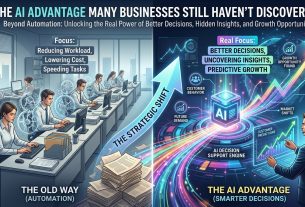
The shift from digital transformation (DT) to AI transformation (AIT) has already begun as Indian companies accelerate their digitalization efforts. While the former is primarily about human-machine connectivity, the latter is a demand that requires not just replacing old technologies, but rethinking entire strategies around talent ecosystems and governance.
Changing landscape: data and direction
Deloitte predicts that the use of generative AI will grow significantly in 2026 as more mainstream applications incorporate AI capabilities directly into everyday digital experiences. AI engagement among both consumers and professionals. Additionally, industry research suggests that 93% of Indian companies believe that investments in AI will deliver desired results within three years, demonstrating strong belief in the impact of AI on business.
These numbers show that on the one hand, there is a lot of excitement, but on the other hand, challenges of strategic integration and scaling still exist.
Why you need to change your strategy
AI transformation will completely change business models and decision-making. AI systems not only automate operations, but also make predictions, personalize services, and optimize processes all at the same time and minute by minute. Generative AI alone could create a total of 38 million jobs in India by 2030 and increase overall productivity by more than 2.6%, according to an EY report.
Rewiring skills for the AI-driven enterprise
The biggest barrier to AI adoption is the lack of qualified talent and skills. In this regard, organizations need to change their approach to people.
- Develop your current workforce through AI knowledge and data proficiency.
- Focus on hiring specialized roles such as AI ethicists, machine learning engineers, and data scientists.
- We partner with schools and universities to ensure a stable supply of human resources.
- Governance: the new strategic frontier
AI governance without a strong framework can expose companies to bias, data breaches, reputational damage, and compliance issues. Companies will need a governance model with multiple layers that cover:
- Ethical AI standards
- Description and monitoring mechanism
- Data management and ownership
- Clear accountability structures
- This requires involvement of IT and legal experts, as well as board participation in AI strategy responsibility and risk management.
infrastructure is the foundation
The foundation of digital transformation requires a strong digital infrastructure. Gartner estimates that India’s IT spending is expected to reach $176.3 billion by 2026, with investments in data center expansion, cloud migration, and AI-friendly environments being key drivers of this huge number. The shift from traditional on-premises systems to hybrid cloud architectures is already driving significant adoption of AI. An astonishing 90% of Indian companies agree that cloud transformation has enabled their AI initiatives by providing scalable computing and data storage solutions.
Leadership vision is the main driver of this change. Initially, digital transformation was all about cost reduction. However, AI transformation focuses on rethinking business models. The path to success is not just about:
- Incorporate AI into your long-term business goals.
- Develop expertise in-house rather than relying solely on outsourcing AI tasks.
- Implement a governance framework that fosters innovation while addressing risk.
- Foster a mindset where experimentation, learning, and responsibility are key.
What lies ahead?

India is now at a critical juncture. This country has the potential to become a leader in AI, but that transformation will not come easily. This will require having the right strategy in place, addressing human capital issues, and putting in place a disciplined governance framework. These are the very things that differentiate digital winners from AI pioneers.
Thinking about AI as a game-changer and not just a technological checkbox will be a key factor in determining whether Indian companies simply adapt or thrive in the coming era of competitive advantage.