January 12, 2026
soul – South Korea is just weeks away from enacting the world's first comprehensive artificial intelligence law, sparking anxiety in the country's technology industry. Although a one-year grace period has been promised, many businesses still feel unclear what the law specifically expects of them.
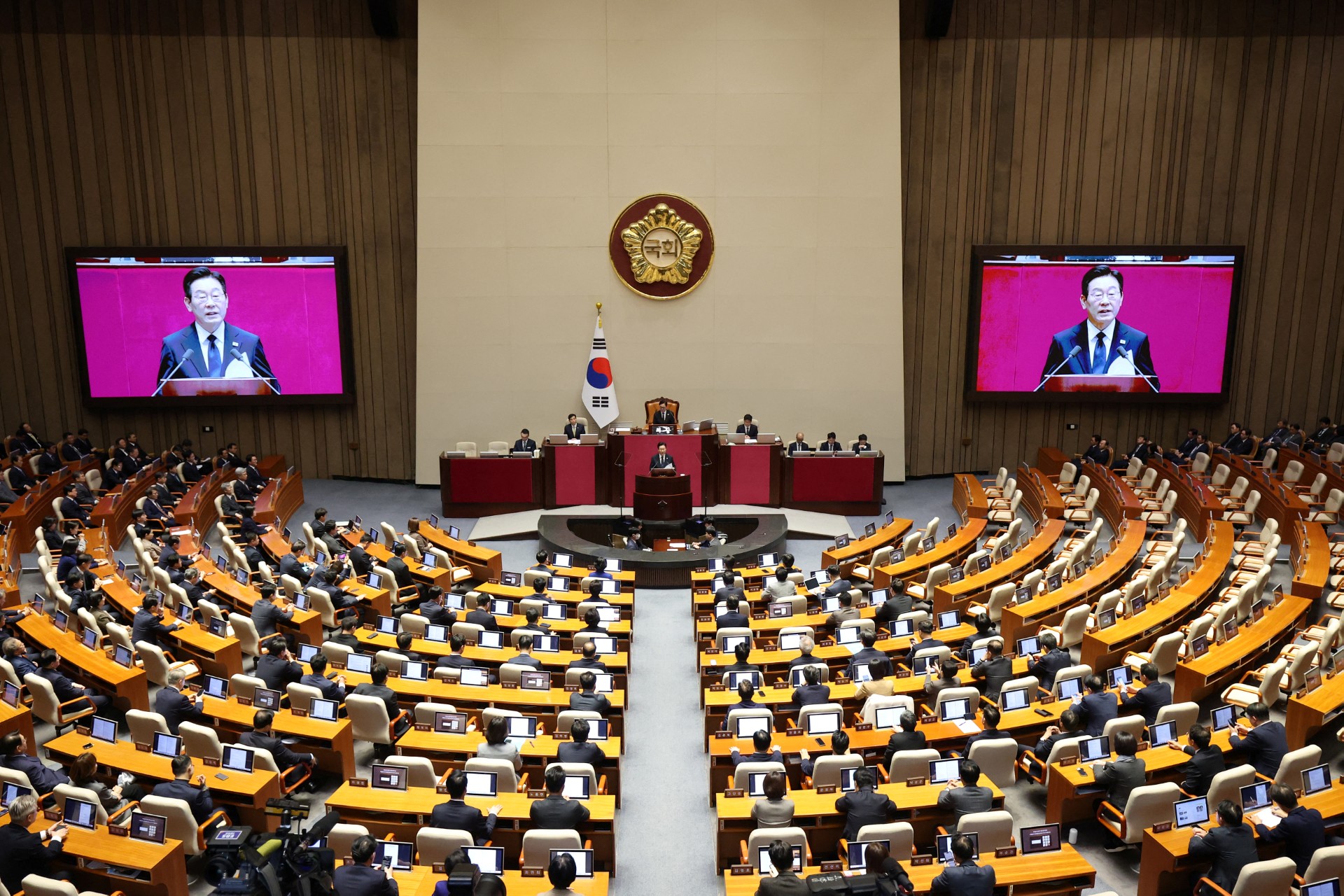
The AI Framework Law, passed by Parliament in December 2024 and scheduled to come into force on January 22, is the first attempt to regulate and promote AI under a single, unified legal framework. This shows South Korea's ambition to join the AI G3 along with the US and China.
This timing is no coincidence. The European Union passed its AI law first, but key provisions will not come into force until 2027. South Korea, by contrast, is ready to take action not just in law, but in practice.
While Washington remains locked in a partisan impasse over the AI bill and Brussels is busy rejigging the rulebook, South Korea is not waiting to smell an opportunity. By intervening early, they argue, South Korea can shape global norms from the front row rather than from the sidelines. It aims for influence that far exceeds the size of the country.
Policymakers say it's more than just symbolism. They argue that by acting early, South Korea can help shape the international conversation on AI ethics and safety, especially at a time when global rules are in flux. With the US focused inward and the EU moving slowly, South Korea is betting on first-mover advantage.
Still, not everyone is convinced. Critics warn that this may have more to do with headlines than governance. Some warn that companies could be caught off guard by vague standards and rushed timelines.
“It feels more like a policy race for headlines than sustainable governance,” said an international law professor at a Seoul-based university on condition of anonymity. “To establish international credibility, it is not enough to start from the beginning; we need consistency and comprehensiveness.”
At the heart of South Korea's approach is the principle of “innovation first.” The law allows companies to develop and deploy AI systems without prior government approval. This is a clear shift away from the precautionary model and a deliberate attempt to eliminate the regulatory bottlenecks that have long slowed innovation.
But promotion comes with obligations. The law mandates state support for advances in AI, including funding for specialized data centers, standards programs, and workforce training.
Importantly, we are defining a new category: high-impact AI. These are systems used in sensitive areas such as medical equipment, energy infrastructure, employment algorithms, and nuclear facility control. This means that areas of failure can carry significant risks.
Companies operating such systems are required to conduct internal risk assessments and ongoing monitoring. They must also report their safety protocols to government agencies. This obligation is not voluntary. They are legally supported.
However, this law leaves many things unsaid. High-impact AI is defined as a system whose failure could adversely impact life, property, or fundamental rights. However, how exactly it is determined remains unclear. Implementation details are still being worked out and will be outlined in an executive order. The Ministry of Science, Information and Communications will take the lead in collaboration with other regulatory authorities.
One feature that's gotten a lot of attention is transparency rules. All AI-generated content (images, video, audio) must have visible labels and watermarks. Machine-readable watermarks, which are invisible to the human eye, are also required to prevent misuse. The goal is to prevent deepfakes and misinformation from slipping through.
The government hopes the new law will strengthen South Korea's position as one of the world's top three AI players. We have officially designated AI as a national strategic industry and created a legal foundation for accelerating innovation.
Officials say the early implementation is aimed at reducing uncertainty. By clarifying legal standards up front, they argue, the law can prevent future service disruptions caused by gray areas, or punitive measures applied after the fact.
But the message is not being delivered evenly. Many in the industry say they are still in the dark.
Some people point out that the definition is vague. Some have expressed concerns about the compliance burden. There seems to be a lot of confusion among startups and developers.
“There's no way to know if what we're building qualifies as high-impact AI,” said an industry official, speaking on condition of anonymity. “We have contacted the ministry, but so far the answers are vague.”
As a result, some companies are on pause. Product launches and updates have been delayed, not because of protests but because of uncertainty. A recent study by Startup Alliance found that 98% of local AI startups have yet to initiate formal compliance procedures, citing unclear guidance.
One particularly onerous requirement is watermarking of AI-generated content. Technically, developers say this is not an easy task, especially when using a combination of open source and proprietary tools.
“From a public trust perspective, it makes sense,” said a project leader at a mid-sized AI company. “But no one knows how to apply this consistently across platforms and file types.”
Civil society groups are also sounding the alarm. Without independent oversight and meaningful penalties, they argue, the law risks becoming more symbolic than substantive. Algorithmic bias and biometric monitoring have been flagged as areas that require more stringent checks.
Officials acknowledge the rollout has not been seamless. But they stress that the law is evolving.
“It cannot be postponed indefinitely,” said Lim Moon-young, permanent vice chair of the President's National AI Strategy Council. “It will only undermine South Korea's competitiveness in the global AI race.”
To ease the transition, the government has introduced a one-year grace period. During this period, fines of up to 30 million won ($20,800) will be suspended. Officials say the goal is not to punish, but to help the industry prepare.
“This is just the beginning,” said Choi Kyung-jin, chairman of the Korea Artificial Intelligence Law Association. “The real test is how these principles work in real-world scenarios.”