Almost every other week there’s a new “breakthrough” in AI video, but most are forgotten by the following Monday. So when a release actually gets talked about, and creators, studios, and skeptics are all still discussing it days later, it’s worth asking what’s different. The launch of Seedance 2.5 does just that, and why it’s gaining attention says a lot not just about the platform itself, but also about where AI video is heading.
Solved a structural problem rather than a superficial problem
The first reason Chatter has legs: This wasn’t a quality issue. Most AI video announcements promise sharper frames or slightly better motion. This is a real improvement, but it’s incremental and doesn’t change what you can actually do.
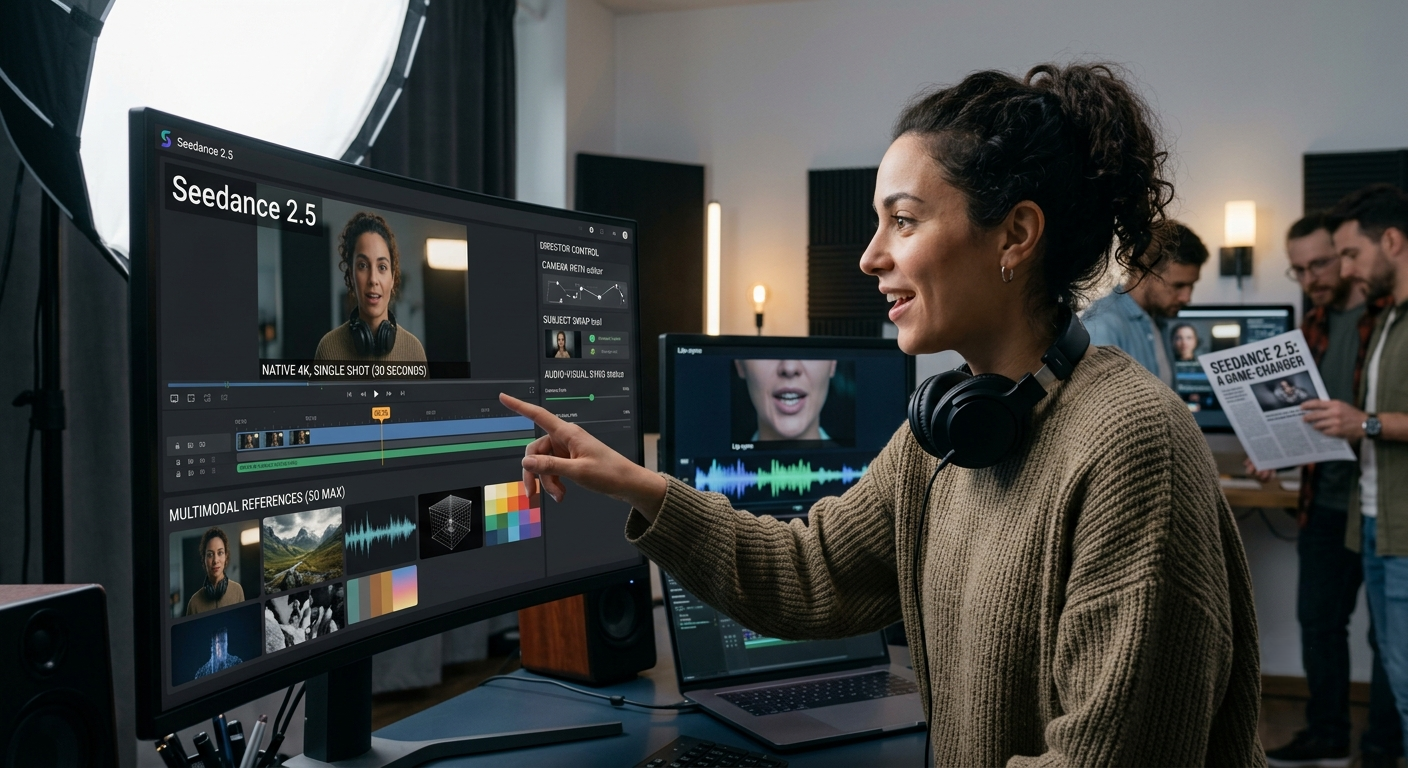
Seedance 2.5 instead pushed the limits of construction. The 15-second clip limit was not an elegant issue. It limited the scope of the category as a whole. By producing continuous 30-second shots natively (in one pass, without stitching), we removed the constraints that defined the awkward adolescence of AI video. People are talking about it because structural fixes change the conversation from “this is a little bit better” to “this allows us to do things that weren’t practical before.” That’s a different order of news.
Reference numbers that people can’t stop repeating
The second topic is one statistic that’s been bouncing around the discussion. It’s 50. The platform reportedly accepts up to 50 fully modal reference materials in a single generation, including images, videos, audio, and style references. This is an approximately 4x increase from the previous limit of approximately 12.
This number caught our attention because anyone who has used AI video can immediately understand what it means. References were a way to control consistency, and consistency was the wall. Going from 12 inputs to 50 inputs is not “about the same.” It’s the difference between fine-tuning a model and specifying what you actually want. That’s why even careful observers pointed to this as the most important part of the revelation. If you want to understand this topic directly rather than indirectly, the easiest way is to feed several references on the same subject into the free Seedance 2.5 and observe how closely the results hold. The moment it becomes your own image, the numbers cease to be abstract.
Thanks to the demonstrations, skeptics have less to object to.
There is a lot of professional skepticism surrounding the AI video debate, and with good reason. The gap between carefully selected demos and real-world credibility has burned people before. The reason this conversation continued is that the demo was unusually specific. A single 30-second shot that follows one character through six rooms in six art styles. Reference images ensure consistency. Edit to add elements to existing clips while preserving faces, camera, and action. A match that ran through eight scenes in one generation.
Certain demonstrations invite certain scrutiny, but that in itself is a kind of confidence. “Look how consistent this character is across six styles” is harder to dismiss than a vague montage. The discussion was lively, partly because there were concrete topics to discuss.
Healthy skepticism is part of the conversation
It’s worth being honest that the story isn’t all praise. That’s also why the conversation feels trustworthy and not hyped. The most sensitive part of the discussion is timing. This was a preview and not a public release. The platform is in enterprise beta with general availability scheduled for early July. In other words, the numbers in circulation are vendor numbers and stage demos, and are not the results of independent benchmarking. The actual measured data still represents the predecessor.
Experienced observers also note that there is usually a gap between polished stage demos and day one production credibility. None of this is a denial. This is normal and healthy friction in a category that has learned not to take launch claims at face value. The very fact that skepticism is so widespread is a signal that people are taking this release seriously enough to properly scrutinize it.
Reframed the cost debate
There are quiet reasons why experts are discussing this issue. That’s economics. If a usable 30 second result comes from a single clean generation rather than multiple clips stitched together and an hour of cleanup, the way costs are evaluated changes. The relevant numbers are no longer the price per clip, but the price per finished product. This has led to a lot of questions: “Isn’t this actually cheaper than real work?” It’s debatable, but the honest answer is that it depends on your workload. That’s why people are running their own numbers against Seedance 25 AI rather than accepting verdicts from others. Conversations that let people do the math for themselves are conversations that actually get results.
the real story
If you take a step back, the chatter isn’t really about one platform. It’s about the threshold. For two years, AI video was “impressive, but not very useful for real-world work.” The announcement of Seedance 2.5 has people talking because it looks like the moment that gap finally closes: longer shots, controllable consistency, surgical editing, real direction, arriving together rather than one at a time.
Whether that fully materializes is a matter of early July, and skeptics are right to wait. However, the conversation continues because everyone feels the same way. If the production version lives up to the preview, the discussion will no longer be, “Look at this cool demo,” it will be, “This is how the work is made today.” That’s a worthwhile conversation. That’s why this conversation continues.