
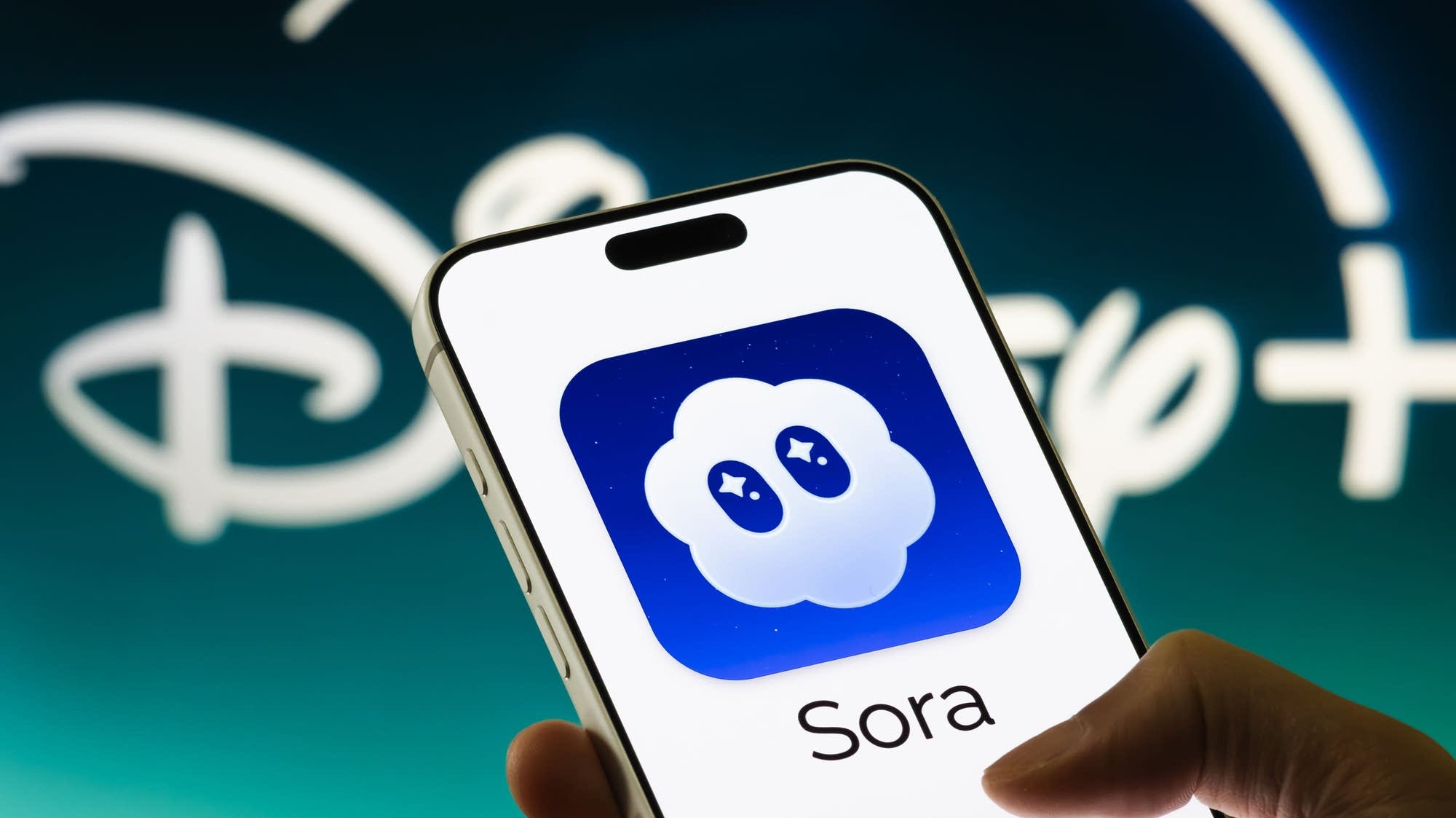
About a week ago, Disney became the first major media company to sign a content licensing agreement with OpenAI's short-form video platform Sora.
This means Sora users can start creating videos with Disney characters.
“Marketplace Morning Report” host Sabri Ben Akour spoke with Cornell University School of Industrial and Labor Relations Professor Virginia Delgasto about what this means for all your favorite comic book characters and the artists and writers behind them. Below is an edited transcript of their conversation.
Sabri Ben Akour: So what happens as a result of this transaction?
Virginia Delgast: Well, first of all, Disney is making this $1 billion equity investment in OpenAI. So this is a clear win for OpenAI, which has been struggling financially lately. They also license hundreds of Disney-owned characters to OpenAI's short-form generation AI video platform, Sora. Therefore, Disney owns the rights to user-generated videos created on Sora, and some of these videos can be streamed on Disney+. But also, as part of the deal, Disney is going to be a customer of OpenAI, right? So they're going to buy ChatGPT Enterprise for their employees.
Ben Ashour: As part of this, Disney will also be able to stream this fan-based content on Disney+. Do people want to see fan-generated content created randomly by other people?
Delgast: do they want this? Having a son who watches YouTube all the time, I can tell you that the audience for these types of short clips continues to grow. And while Disney+ viewership appears to be declining, platforms like YouTube are seeing an increase in the number of viewers, especially younger viewers.
Ben Ashour: Yeah. Now, two years ago, when both the Writers Guild of America and SAG-AFTRA were on strike, they wanted guardrails on the use of artificial intelligence in the entertainment industry. Can you briefly remind me what those protections are?
Delgast: yes. So SAG-AFTRA won a series of AI protections in deals with studios including Disney. One is that a digital replica of a performer's voice or likeness cannot be created unless the studio provides advance notice and obtains written, informed consent. And some of those protections appear to have implications for the agreement between Disney and OpenAI. This Agreement expressly does not include the use of images, likenesses, or voices of any human performers.
Ben Ashour: At present, trade unions have not responded particularly positively to this. The Writers Guild of America has admitted to stealing a member's work. What do you think about it? And does this agreement conflict with some of the protections that currently exist?
Delgast: Well, I think that's going to be an even bigger problem. If Disney is putting user-generated videos on Disney+, does that mean there will be less original material produced by their own writers, animators, and actors? Does that mean they're replacing something they would have done in-house and paid their own employees to produce? Will they need fewer employees as a result? Does having user-generated content reduce the need for animators?


