
It wasn’t until the widespread adoption of ByteDance’s Seedance 2.0 that many realized for the first time that the Chinese model of AI video trucks was not just catching up, but seemed to be leading the way.
Seedance 2.0 didn’t become popular for its one-shot surprises, but for the first time, it brought about a more subtle and profound change in which AI video became something like an industrial product that could be reliably distributed.
The combination of multimodal input, automatic camera movement, and long-term consistency allows creators to avoid the pain of repeated attempts and instead fosters a reusable production process.
However, a look back shows that Chinese companies’ rise to a leading position in AI video did not come out of the blue.
In fact, even before that, the Chinese model had already achieved a clear advantage in the field of AI video.
For example, in April of last year, Kuaishou’s Keling 2.0 achieved a 367% win/loss ratio compared to Sora in text-to-video generation, with overall superiority in character consistency, generation stability, and reproducibility, making it the first commercially viable AI video production capability.
Stability is extremely important for AI videos, such as whether the text is consistent, whether the pictures are broken midway through, and whether the generated results can be reproduced repeatedly.
These indicators accurately determine whether the video can participate in the production of reality.
After that, we see that Chinese business groups continued on the same path.
ByteDance continues to enhance the narrative and camera logic of the Seedance system, and some small startup teams have even integrated video generation directly into their e-commerce, advertising, and gaming user acquisition workflows.
Taken together, these phenomena lead to a conclusion that is often overlooked.
The gradual lead of the Chinese model in AI video is not to make the model smarter, but to solve video-related problems early as an engineering problem.
To understand this, we need to trace the origins of AI video generation methodologies.
As recently as 2015, AI researchers proposed what appeared to be a roundabout approach.
Since it is very difficult to generate complex data directly, can we first “destroy” real data into noise step by step, and then gradually restore the noise to the real world through training and learning?
This approach originates from stochastic modeling and statistical physics, then became the origin of diffusion models, and was introduced into deep learning before gradually dominating the field of image and video generation.
It wasn’t until 2020 that it really became mainstream.
With improvements in computing resources and maturation of training methods, this approach has demonstrated strong stability and detailed expressiveness in image generation.
Even today, most high-quality, stable production effects, whether images or videos, rely on underlying diffusion.
Dispersion is obviously good at one thing: making things look real, but that’s about it.
Although we are highly sensitive to light, texture, and style, we do not truly understand the order and causality of things before and after they are recombined.
As a result, early AI videos often had a strange sense of fragmentation, where each frame was delicate, but when connected together it looked like a dream, where characters were never exactly the same before or after, or their movements lacked continuity. Because the underlying logic is a patchwork of entropy increases followed by entropy decreases.
Meanwhile, another technological route was rapidly maturing. It is the well-known Transformer architecture popularized along with GPT. It doesn’t solve generational problems, it solves interpersonal problems.
For example, how to coordinate information, understand the overall timeline, and understand long-range dependencies. From a functionality perspective, Transformer focuses on understanding structure rather than producing images like Diffusion.
In this way, the division of important roles has gradually become clearer.
While Transformer is good at planning structures and sequences, Diffusion is good at actually generating images.
The problem is that this division of labor has not been systematically exploited for a long time.
For a long time, overseas teams have tended to continue to push the viral ceiling when working on AI videos.
For example, we sought longer durations, more complex worlds, and more realistic physical effects.
The results were certainly very impressive. For example, Sola demonstrated the great potential of models in understanding the real world.
However, the costs of this route are very obvious: high production costs, high failure rates, and low reproducibility. It’s more suited to showcasing the future than supporting current productions.
In contrast, the Chinese model team took a lower profile but more practical path.
They may have realized earlier that the essential difficulty of video is not whether it can be produced, but whether it can be completed.
Who appears first, how the camera moves, when to switch perspectives, and which details must remain consistent – these implicit processes, which rely heavily on traditional film and television experience, were broken down in advance into model constraints.
In this system, the Transformer is responsible for planning the structure and rhythm of the video, rather than taking on the grand mission of “understanding the world.”
Diffusion is not required to play freely, but rather to complete a specific image under clear instructions.
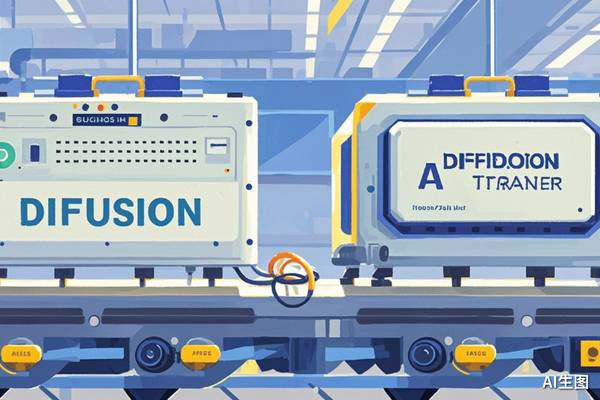
In this methodology, the video is no longer considered an artistic miracle, but a production line whose success rate must be controlled.
This goal of solving problems rather than simply pushing the upper limit is more similar to the logic of engineering.
In fact, the core function of China’s Internet for the past decade or so has centered on extreme optimization of the content production pipeline.
Industries such as short-form video, e-commerce live streaming, information flow advertising, and gaming user acquisition have long followed a similar logic. This means decoding large amounts of data, calculating posterior probabilities, and breaking it down into standard components for replication according to creative needs.
When the same idea was introduced to AI video, diffusion was no longer a key part of generative models, but a key component in industrial processes.
The significance of Seedance 2.0 and similar products is to take this path to a new level.
Even if we could make the prompt-generate-finished path stable enough to use as an everyday tool, it would represent a new moment in terms of user value.
We must admit that in the cognitively intensive field of large-scale language models, Chinese models are still catching up overall.
However, under the guidance of engineering thinking, the Chinese model is likely to gradually take leadership in the “process-intensive” field of AI video.
This is because the former depends on knowledge boundaries and upper bounds on inference, and the latter on engineering judgment, efficiency controls, and the ability to implement at scale.
If Diffusion and Transformer are properly divided and organized into reusable production lines, AI video will no longer be a technological marvel but a true industrial capability.
In this regard, the Chinese model is leading the way.
This article is from WeChat official account “All – Weather Technology” (ID: iawtmt), author: Song He. Posted with permission from 36Kr.


