WASHINGTON (TNND) — Lawmakers debating how Congress should regulate the burgeoning artificial intelligence industry are demanding answers from the White House about its vision for moving ahead with the plan amid safety concerns and pushback from the expanding footprint of tech companies promoting the industry.
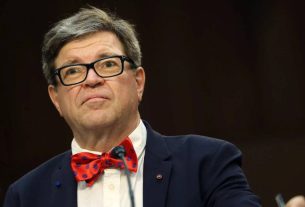
White House Office of Science and Technology Policy Director Michael Krastios appeared before a House subcommittee on Wednesday to tell lawmakers how the administration is working to implement the AI Action Plan announced last year and where Congress needs to intervene.
President Donald Trump has signed a series of executive orders on artificial intelligence as his administration puts every chip in its place to accelerate the proliferation of artificial intelligence as the next economic titan and stay ahead of China in the race to become world leader.
Some of the executive orders signed by President Trump are controversial as they attempt to rein in a vast list of state-by-state laws enacted without action from Congress. By 2025, all 50 states will have introduced AI laws, and 38 of those states will have enacted at least one. Critics of state-level laws argue that they stifle companies’ ability to innovate by requiring them to devote more resources to compliance.
The order also directed White House AI czar David Sachs and Krastios to create a “federal framework” with Congress. Krastios said at the Consumer Electronics Show last week that the White House would provide that framework “later this year.”
“We want to create a regulatory environment that provides a level of clarity and a level of understanding for all innovators,” Krastios said at the hearing. “Creating one-size-fits-all regulations for AI is not the best way to deal with all these new AI technologies.”
Supporters of the moratorium say it will help small tech companies compete with big tech companies that are pouring billions into research and new AI products.
“When you have this incredible patchwork of laws across the country, the ones that are actually most successful in that system are the big, well-funded tech companies. Forcing small innovators, entrepreneurs, people who want to start a new business, to try to figure out how to follow 50 different AI rules is actually anti-innovation,” Crastios said.
Lawmakers have balked at passing an AI moratorium despite multiple opportunities to do so. Earlier this year, the 10-year moratorium clause was stripped from the “Big and Beautiful Act,” and despite President Trump’s strong urging, lawmakers failed to include the language in the National Defense Authorization Act, which must be passed.
States across the political spectrum also oppose the moratorium, with governors and attorneys general regularly speaking out against the federal ban. This concern is shared by several members of Congress.
“What we shouldn’t do is pre-empt the states from taking the necessary actions to protect their people, while here in Congress we ourselves do nothing to pass legislation,” Rep. Zoe Lofgren, D-Calif., said during the hearing. Her home state has played a leading role in introducing technology-related regulations.
How exactly to regulate AI, and the specifics of the law, has been a difficult balance for Congress to find over the past few years, despite repeated pushes to put in place some kind of guardrails. The potential implementation of the AI Act also carries concerns that overlap with social media, which similarly lacks the long-promised regulation on issues such as data privacy and the protection of child users.
Lawmakers also questioned how the administration will work with states, power companies and Big Tech to ensure data centers, the lifeblood of the AI industry, do not harm people living in sprawling towns across the country. Data centers provide the computing power and storage to power AI models.
But it’s not without its downsides, as data centers have huge power demands, putting a strain on the power grid and raising concerns that already rising utility bills will soar to power AI models. Amid community opposition to the proliferation of data centers across the United States, power demand has become one of the biggest issues facing the industry’s future.
The Trump administration is trying to take steps to minimize obstacles faced by tech companies looking to expand their operations.
“We want to develop a regulatory environment that allows us to kind of ramp up these products, this AI infrastructure, and to do that in a way that doesn’t necessarily negatively impact U.S. ratepayers,” Kratsios said.
President Trump said in a Truth Social Post this week that his administration will require technology companies to ensure their data centers don’t drive up electricity bills in neighboring countries. Microsoft announced this week that it is committed to ensuring that its data centers do not become a burden on nearby residents.
“We are the ‘hottest’ nation in the world and number one in AI. Data centers are key to that boom and keep Americans free and safe, but the big tech companies that build them ‘must pay for themselves,'” Trump wrote.
The issue has already begun to surface on the campaign trail ahead of the midterm elections, with some lawmakers wanting to put a moratorium on new data center construction.