
Policy announcements in Washington rarely feel like real-time validation of a thought experiment I ran. But that’s exactly what happened last week when the Trump administration announced a Ratepayer Protection Pledge that urged the nation’s largest artificial intelligence companies to build or procure their own power supplies for the data centers that power their AI.
The non-binding pledge requires hyperscalers such as Alphabet, Microsoft, Amazon, Meta, Oracle and xAI to pay the full cost of energy generation and grid upgrades needed to operate their facilities, rather than passing them on to consumers.
For anyone modeling the economics of AI infrastructure, this proposal is shocking. Interestingly, in one of my previous columns, I ran something of a Monte Carlo-style exercise examining the “Century Bonds” of the alphabet. One plausible long-term scenario that emerged from that exercise was that hyperscalers slowly evolved into quasi-utilities with competitive advantages not only in algorithms and data, but also in power generation, transmission, and physical computing power. The Trump administration’s pledge appears to be nudging the industry in that direction.
The reason is simple. Because AI is an energy revolution disguised as a technological revolution.

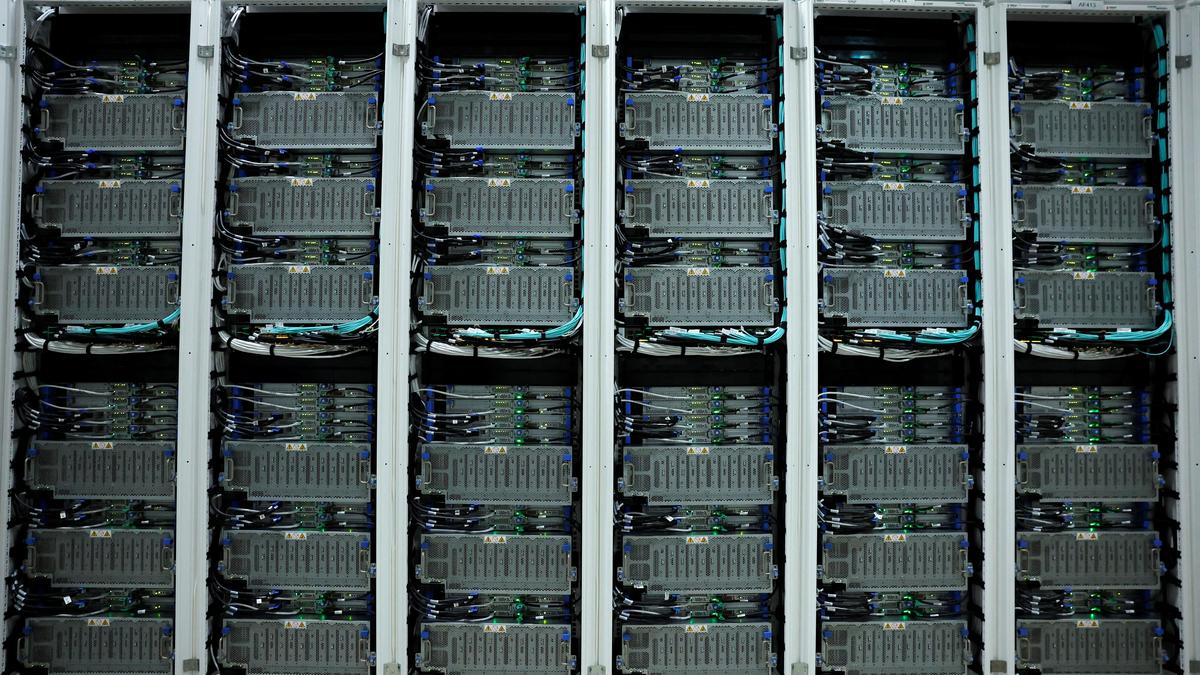
Training and running large-scale AI models requires huge compute clusters with thousands of GPUs running continuously in industrial-scale, power-hungry data centers. In the United States alone, data centers currently account for approximately 4-5% of the nation’s electricity demand, and it is predicted that this share could rise to 9-17% by 2030 as AI infrastructure expands.
This growth has sparked a political backlash, as communities that host large data centers complain of rising electricity prices and strained power grids. This commitment is therefore both economic and political. By the way, this is non-binding and the operational details are sketchy at best. So let’s not get into enforcement mechanisms. Still, the pledge signals something significant about the next phase of the AI race.
The constraints are no longer about the chip. Let’s talk about energy.
If this promise becomes reality, hyperscalers could resemble a hybrid between a technology company and an independent power producer. These big tech companies may end up building and controlling the energy supplies needed for computing.
As AI infrastructure evolves into a capital-intensive energy business with vast fixed assets, regulated pricing structures, and predictable demand, issuing “century bonds” – as in the case of Google’s long-term debt financing – will start to look less fanciful and more logical.

The power generation industry has been able to sustain long-term debt for a long time, but it is now being disrupted by hybrid technology companies that are building massive data centers around the world.
The heads of these AI companies have signed non-legally binding commitments to build and operate their own power supplies in the United States, but are actively seeking tax incentives from the Indian government.
In the Union Budget earlier this year, the government announced tax incentives until 2047 for foreign cloud providers offering global services through data centers located in India. The government’s pitch fails to fully account for the downstream effects of such incentives.
In effect, India risks subsidizing capital-intensive infrastructure where the largest resource costs, such as power, water and land, are ultimately borne by local ecosystems and utilities.

Unlike the software companies that India has sued in the past, hyperscale data centers are heavy industrial facilities that consume gigawatts of electricity, large amounts of water for cooling, and vast tracts of land. Once construction is complete, the economic benefits generated locally in terms of employment will be relatively modest.
Providing a decades-long tax break to attract such facilities could further strain already stressed urban ecosystems. There is also the issue of grid financing, as hyperscale data centers require dedicated power lines, substations, and network upgrades. This cost is often added to the utility bill unless explicitly recovered from the operator. These concerns are beginning to surface at the state level.
For example, the state of Tamil Nadu is trying to lapse its data center policy. In 2021, the state government offered various benefits to encourage investments in data centres. Officials are now openly acknowledging the trade-offs, especially the high electricity demand and water consumption associated with Chennai’s AI data center.
This divergence between states such as Tamil Nadu and the federal government highlights the depth of the policy gap. The physical impacts of installing these facilities, such as electricity demand, water stress, land use, and grid upgrades, are primarily borne by state governments. And as AI workloads grow, these pressures will only increase.
While the US government’s approach – at least rhetorically – is that hyperscalers should ultimately fund their own electricity supply, India’s current approach appears to be the opposite, offering generous incentives without fully considering the potential damage to the country’s power infrastructure and water resources. If AI is indeed becoming the next layer of the world’s industrial infrastructure, the question India must face is not just how to attract data centers, but who will ultimately pay for the energy systems that support them.
issued – March 14, 2026 8:12 AM IST


