highlights
- The difference between edge AI and cloud AI is primarily in the processing location. Edge AI runs on-device and provides instant, real-time responses, while cloud AI uses powerful remote servers to perform massive data processing and model training.
- Edge AI offers speed, privacy, and offline performance, while cloud AI offers massive storage, collaboration, and continuous learning from big data.
- The future belongs to a hybrid ecosystem of edge AI and cloud AI, powered by 5G. There, devices work locally with edge AI while being improved through the intelligence of cloud AI.
Artificial intelligence (AI) is impacting the world more than ever before. From smartphones to surveillance cameras to hospitals and factories, AI enables machines to think and act smarter. But have you ever wondered where all this thinking is happening? Is it all happening on your device, or in some far-off place on the internet?
These are the two key terms: edge AI and cloud AI. Both have an impact, but there are also differences. Let’s start understanding what they are, how they differ, and which one will take the lead in the future of technology.
What is cloud AI?
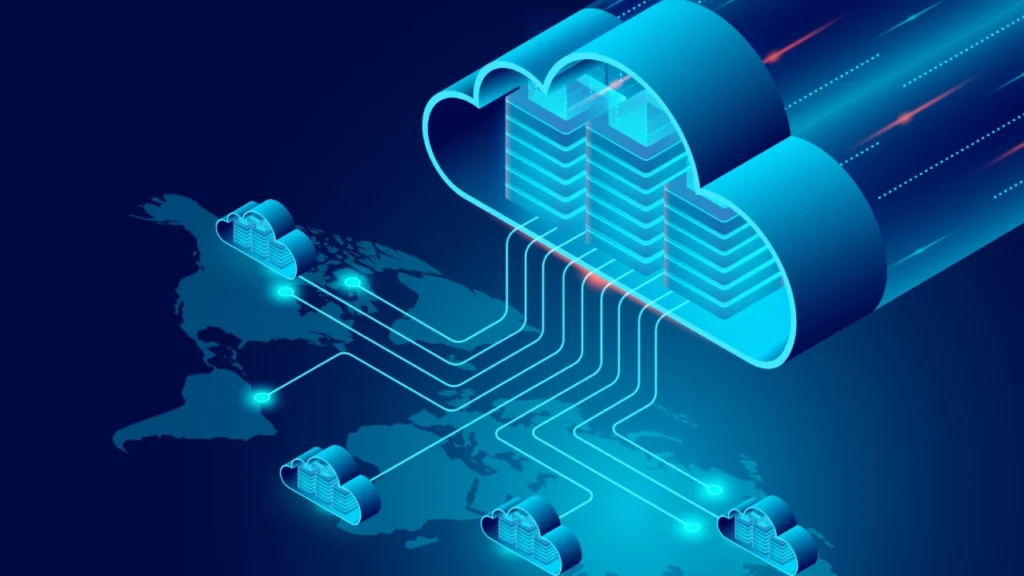
Cloud AI refers to artificial intelligence that runs on powerful computers “in the cloud.” The cloud essentially refers to a group of servers on the Internet owned by large companies (Google, Amazon, Microsoft, etc.).
Here’s how it works: When you leverage an AI feature (e.g. Google Photos recognizes your face or your voice assistant responds to your commands), your phone sends data to the cloud. The cloud computes the data, uses machine learning to process the data, and sends the results back to your device.
Because cloud computing servers have superior storage and computing resources, cloud AI can handle highly complex tasks and can digest and learn from large datasets. This makes cloud AI suitable for tasks such as recommendation systems, data analysis, and AI tools that need to digest constantly updated data.
Cloud AI has one drawback. That said, Cloud AI relies on the speed and stability of your internet connection. If your connection is weak, slow, or unreliable, Cloud AI’s efficiency benefits diminish. Additionally, transmitting data over the Internet raises data privacy and security concerns.
What is Edge AI?
Well, if your device can think independently and does not need the help of the Internet. This is exactly what Edge AI does. With Edge AI, processing occurs locally on the device at the “edge” of the network, rather than in the cloud. So Edge AI comes into play when your phone’s camera quickly identifies your face or when your smartwatch measures your heart rate in real time.
The main advantage of Edge AI is speed. When data does not need to be sent to a remote server for processing, processing is instantaneous. This ensures low latency, which is important for applications such as self-driving cars, medical surveillance, and industrial robots, since a one-second delay can cause problems. Edge AI is also important for privacy because data is processed locally on the device. It works regardless of your internet connection, making it useful in remote locations or during internet outages.
Cloud AI vs. Edge AI: Key Differences
The main difference between cloud AI and edge AI is the location of the processing. Cloud AI utilizes remote servers, while edge AI utilizes local devices. Cloud AI has access to huge data centers and incredible processing power, making it ideal for training sophisticated AI models. Conversely, Edge AI is well-suited for quickly deploying models to real life.

To illustrate this concept with a real-world example, consider the concept of self-driving cars. Self-driving cars can’t wait for clouds to tell them to brake. Decisions need to be made instantaneously, which necessitates edge AI. Later, all those car data can be uploaded to the cloud to develop better models, or cloud AI. Simply put, cloud AI provides the brains and edge AI provides the reflexes.
Advantages of cloud AI
Cloud AI has many benefits, making it a popular choice for large-scale AI systems.
1. Massive computing power
Cloud servers can store billions of data points and can train highly complex AI models at high speeds.
2. Collaboration
Developers and businesses can collaborate effectively on shared data and continue developing AI tools.
3. Always improve
Connecting to the cloud allows AI systems to constantly learn from new data, even if the amount of data is small. That aside, cloud AI requires connectivity to the internet, which can be expensive and has data privacy issues, especially for large data transfers.

Edge AI benefits
Edge AI focuses on “real-time” intelligence. This is why it is becoming more popular.
1. Speed and Latency
Data is processed on the device itself, so results are immediate.
2. Privacy
There’s no need to send sensitive data like health or location data to external servers.
3. No internet
Edge AI works well even without an internet connection.
4. Reduce costs
Edge often reduces network and data transfer costs.
For these reasons, Edge AI is an ideal solution in healthcare, automotive, security, and wearables where reliability and privacy are more important.
Why not have one?
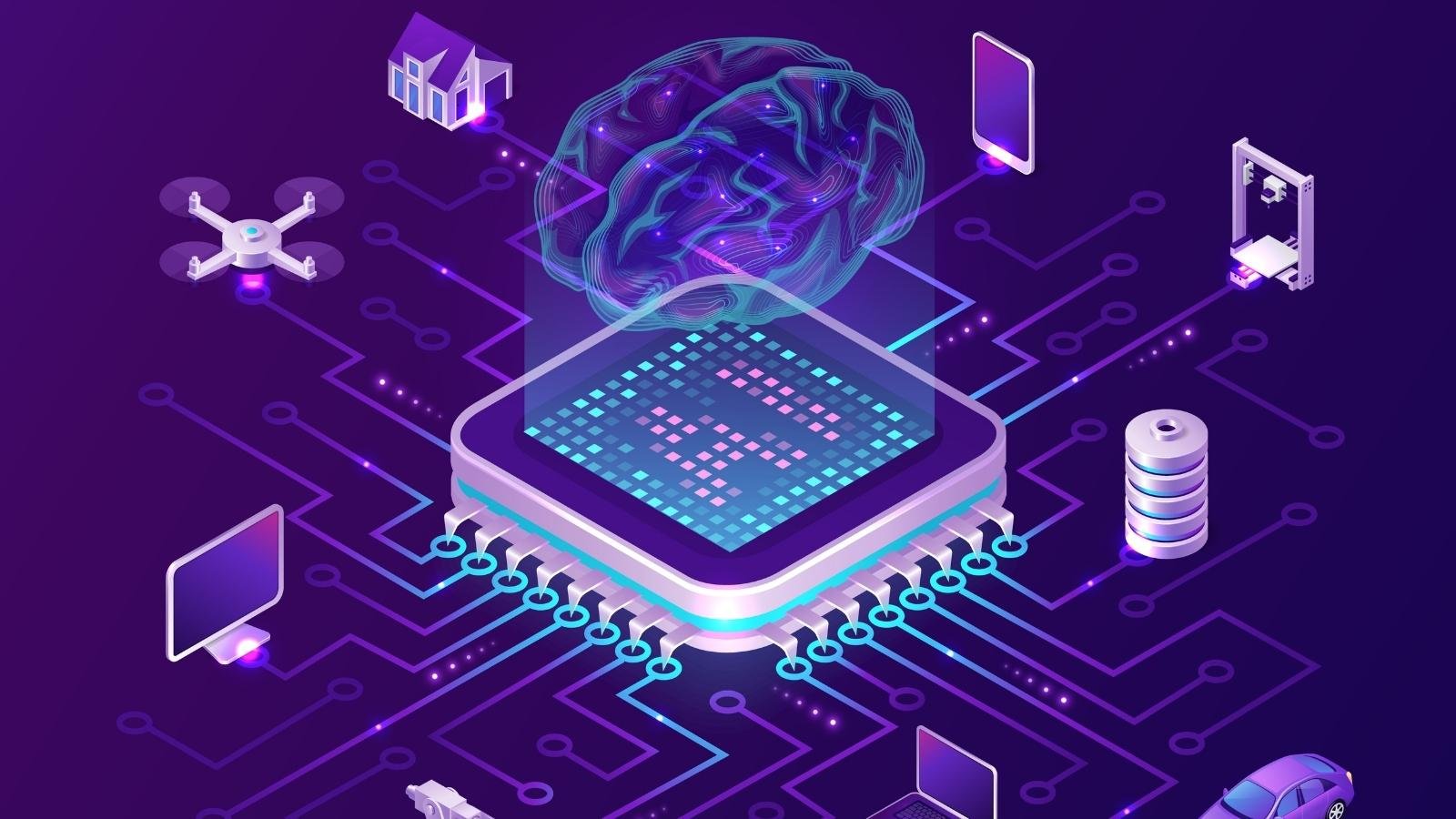
While it may seem like a simple choice between the two, the future actually depends on a combination of both. Cloud AI and edge AI fundamentally have two aspects as components of smart systems. For example, consider a mobile phone. With Edge AI, when you request a voice command, your phone responds instantly. Cloud AI improves speech recognition accuracy by learning from millions of voice queries from around the world.
Similarly, in factories, edge AI sensors can monitor machinery in real-time, while cloud AI uses data from thousands of other factories to analyze potentially required maintenance. This is what experts call a hybrid AI system, working together for a better future of smart technology.
The role of 5G in the future
As 5G networks spread around the world, the bond between edge and cloud will become stronger than ever. 5G provides ultra-fast internet and low latency to devices, allowing them to share and process data in near real-time. This will improve the reliability and efficiency of hybrid AI systems to power smart cities, driverless cars, healthcare, robotics, and more. India is currently investing heavily in this ecosystem and either edge or cloud is the right question for the country.

Future challenges
Of course, there are challenges with both cloud and edge AI. Data security and compliance issues are big challenges for Cloud AI. Combine sensitive data with other organizational data. This may comply with EU or other global privacy laws. Data must be encrypted.
A common challenge with Edge AI is hardware limitations. Local devices may not have enough memory or processing power to run large-scale AI models. Downloading and uploading these models to millions of devices is also a technical challenge. To meet the challenges of edge AI, technology companies are now developing AI-optimized cloud-based software with lightweight machine learning models and secure frameworks for edge computing.
So what does the future look like?
The future of AI will not be strictly cloud AI or edge AI, but a smart mix of both. Cloud AI powers learning, big data analytics, and collaboration at scale. Edge AI processes rapid, real-time decisions with data on the edge.
They build an ecosystem that allows devices to be faster, more secure, and more independent while connecting to more intelligence. By 2026, as the world becomes more immersed in AI, the world will have artificial intelligence that is learning in the cloud and operating at the edge.

final thoughts
Simply put, edge AI and cloud AI work together, not against each other. Cloud AI provides the heavy processing and storage, while edge AI handles instant response and privacy.
Whether it’s our phones, our cars, or our cities, tomorrow’s AI will be powered by both to deliver the seamless, safe, and smart experiences we expect. And with India’s increasing focus on AI and 5G, we are not just moving towards a hybrid intelligence future.