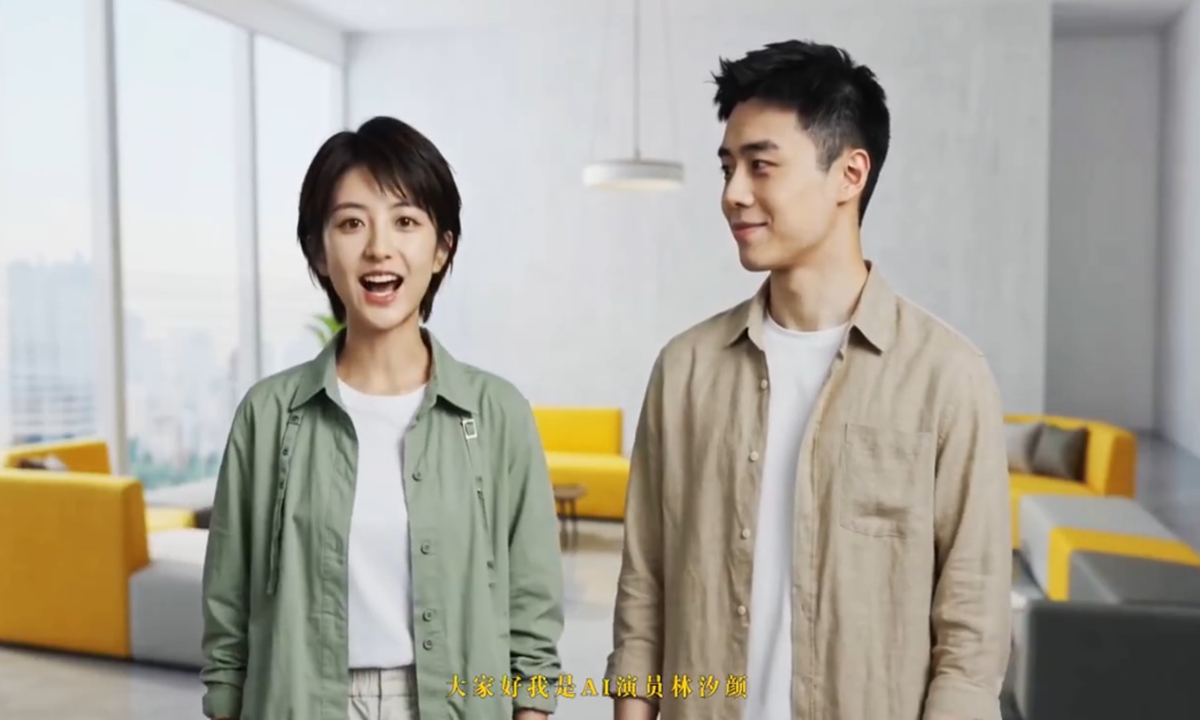
Two AI-generated performers, male character Qin Lingyue and female character Lin Xiyan. Photo: Screenshot from Youhug Media’s Weibo account
Recently, a media company unveiled two AI-generated actors on Weibo and cast them as the leads in an AIGC drama series, sparking a heated debate. Amid growing fears that AI will threaten the industry’s survival and squeeze job opportunities, the topic “Netizens boycott AI actors” has rocketed to the top of trending lists. This is a development worthy of deep reflection by industries and companies implementing AI.
If you take a wrong turn, even the most efficient path can lead you astray.
Why do netizens boycott AI-generated actors? The main reason is their lack of “human touch” and the prevalence of artificiality. Despite the lack of a high-tech, smart stage, the Beijing People’s Art Theater continues to captivate audiences of post-1990s and post-2000s generations precisely because the emotional exchange between actors and audience is instant and reciprocal. This reflects true market demand. Today, while AI applications are thriving and industries are competing against each other, a failure to target real demand means that even the flashiest innovations can end up ineffective supply. Producing more content like this only creates another form of “overcapacity.”
Human preferences determine market trends. Whether in the cultural sector or manufacturing, AI applications must revolve around human needs to ensure sustainable development.
The real advantage is not “doing old things faster,” but “doing new things in new ways.”
Some companies are now realizing the efficiency-enhancing potential of AI and are rushing to implement AI systems, but resorting to downsizing to reduce costs fails to create real business value. They fail to realize that turning points in technological evolution often mean changes in development paradigms. Blindly pursuing newness and speed for the sole purpose of efficiency is tantamount to using “tactical efforts” to hide “strategic failures.” Improving efficiency is important, but it doesn’t mean that “replacing humans with AI” is an inherent advantage. The real strength lies in adopting new organizational models to unlock new quality productivity.
Take Gree Electric Appliance as an example. Intelligent welding lines run at high speed in the company’s workshops, but experienced welders are not replaced. Instead, they transitioned to AI trainers, translating years of craftsmanship and precise judgment into data parameters that “teach” machines to weld more reliably and accurately. AI should replace outdated development models, not employees. Only by maximizing the synergy between humans and machines can companies increase both efficiency and effectiveness.
Looking to the future, tighter integration of AI across all sectors is an inevitable trend. AI does not make market competition easier. In fact, it will become more complex due to AI efficiencies. Companies that fail to implement AI will fall behind, but so will companies that fail to leverage it successfully. The ultimate trajectory of development will still be determined by the mindset, strategic vision and innovative drive of those at the helm.
The more widespread AI applications become, the more the value of human agency and creativity will be emphasized. Only companies that better understand human nature, get closer to real demands, and excel at leveraging core human strengths will truly win the future and benefit society as a whole.
This article was originally published by the editorial department of People’s Daily. opinion@globaltimes.com.cn