


Content creation is essentially the new “physical labor” of the digital age. If you run an e-commerce store, a dropshipping brand, or are just trying to build your personal brand, you know the drill. Video required. We need yesterday, and we need a lot of video. Specifically, UGC (User Generated Content) is required. This is a raw, authentic video that converts amazingly because it doesn’t look like an ad.
Typically, to get this content, you have to send influencers free products, wait three weeks, and hope they don’t get photographed in a dark closet. I recently spent a weekend testing Vmake AI Video Agent, a tool that claims to avoid all that trouble. I’m generally skeptical of “one-click” wonder tools. They usually produce content that screams, “The computer made me.” But after throwing some test cases at Vmake’s agent, I have a few thoughts. If you’re tired of wasting your budget on creators who ghost you, you might want to read this.

The concept of “video agent”: what is it?
Vmake is selling something different with its “Agent.” Think of it more like a creative intern than a tool. You give it the raw asset (product photo or URL) and it automatically calculates the rest: the “hook” (the critical first three seconds), the selling point, the script, and the voiceover. To test this out, I wasn’t going to give it an easy win. I didn’t use high gloss photos of Nike shoes. I used a photo of a generic and slightly boring ergonomic office chair.
Test: Sell boring chairs
Moved to Vmake Agent interface. It’s so clean and refreshing. Complex timelines won’t clutter your screen right away. I have uploaded a photo of the chair.
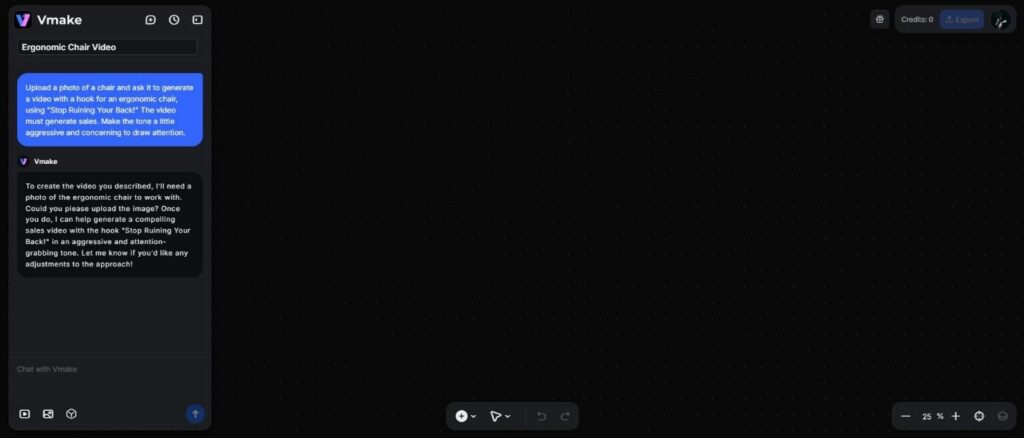
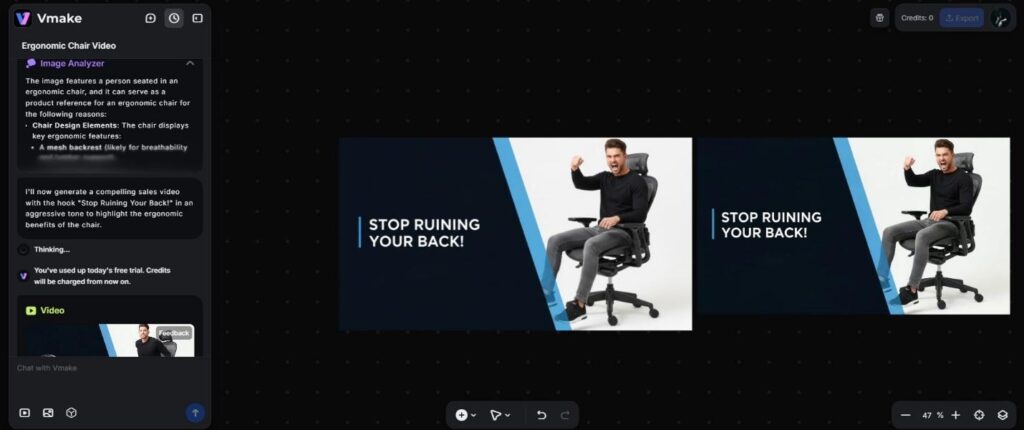
The generated video began with a “hook,” a visual and audio interruption designed to stop scrolling. It featured a dynamic text overlay that read, “Stop messing with your back!” (A little offensive, but hey, I’ll leave it at that).
The narration was the biggest surprise. We’re all used to the standard TikTok “text-to-speech” lady stuck in a vending machine. The Vmake agent used an inflected voice. It speeds up during exciting parts, and slows down when there are significant “health” effects. It wasn’t a 100% human voice. If you listen closely with headphones, you can hear the digital seams. But what about mobile users who scroll? It was indistinguishable from a typical creator’s narration.
Under the hood: The “brain” of editing
One thing that bothered me during testing was pacing. Editing is usually where AI falls apart. A static shot is too long.
Vmake’s agents appear to be trained in high-performing social advertising. Cuts quickly. Zoom in as soon as the script mentions a product detail (such as lumbar support on a chair). Since 80% of people watch social videos on mute, we automatically added subtitles and highlighted important keywords in yellow and bold.
Ecosystem: More than just generations
Video Agent is a shiny new toy, but its broader platform solves another big problem in content marketing: reuse.
Let’s say you actually received a great video from an influencer. They posted it on TikTok and it went viral. Now you want to run it as an Instagram Reels ad or use it on your Amazon product page. problem? The TikTok UI has you covered, including the username, Like button, and bouncing logo watermark.
This is where the video watermark remover comes to your rescue. I shot a video downloaded from TikTok (with the creator’s permission of course). The text and logos on the screen were cluttered.
I did it using Vmake’s remover tool. Typically, these tools are “dirty tools” in nature. All it does is blur the logo and leave a weird, ugly blob that looks worse than the watermark itself. However, Vmake’s AI uses repair. It looks at the pixels around the watermark and tries to reconstruct what’s behind it.
On complex backgrounds (busy streets) it struggled slightly and left small artifacts. But what about a standard indoor background? It was as if the logo never existed. For dropshippers who source content from a variety of suppliers, this video watermark removal tool is probably worth the price of admission alone. Convert unusable branded footage into clean assets that you can paste your own logo on.
The “human” touch (and where it’s missing)
Since I promised to be honest, here are the shortcomings.
AI agents are great at “sales” content, but they lack the nuance of storytelling. If you want a video that tells a deep, emotional story about the founding of your brand, this is not the tool for it. Designed for conversion. You want your audience to click “Buy Now.”
Who is this for?
After spending a few days with Vmake, I realized that Vmake is not trying to replace Steven Spielberg. It seeks to replace the boring, repetitive, monotonous work of social media management.
If you’re a UGC author, you can use this to churn out 10 variations in the time it takes to edit one hook. Keep the best and discard the rest.
If you’re a business owner, this is your “minimum viable video” machine. In one afternoon, you can test 10 different products from 10 different video angles. See which ones click and end up investing in high-budget human productions for the winners.
final verdict
The world of marketing is noisy. You don’t necessarily need a “better” video to break through. We need more videos and they need to be relevant. Vmake provides shortcuts that actually work. It automates the tedious tasks so you can focus on strategy. Is it 100% perfect? no. But it’s fast and effective. Considering the high volume of TikTok and Reels, that’s often exactly what you need.


