The University of Chicago is crack down on the use of artificial intelligence As part of a new strategy.
The university released what it called a strategic statement about the impact artificial intelligence is already having on higher education and the legal profession.
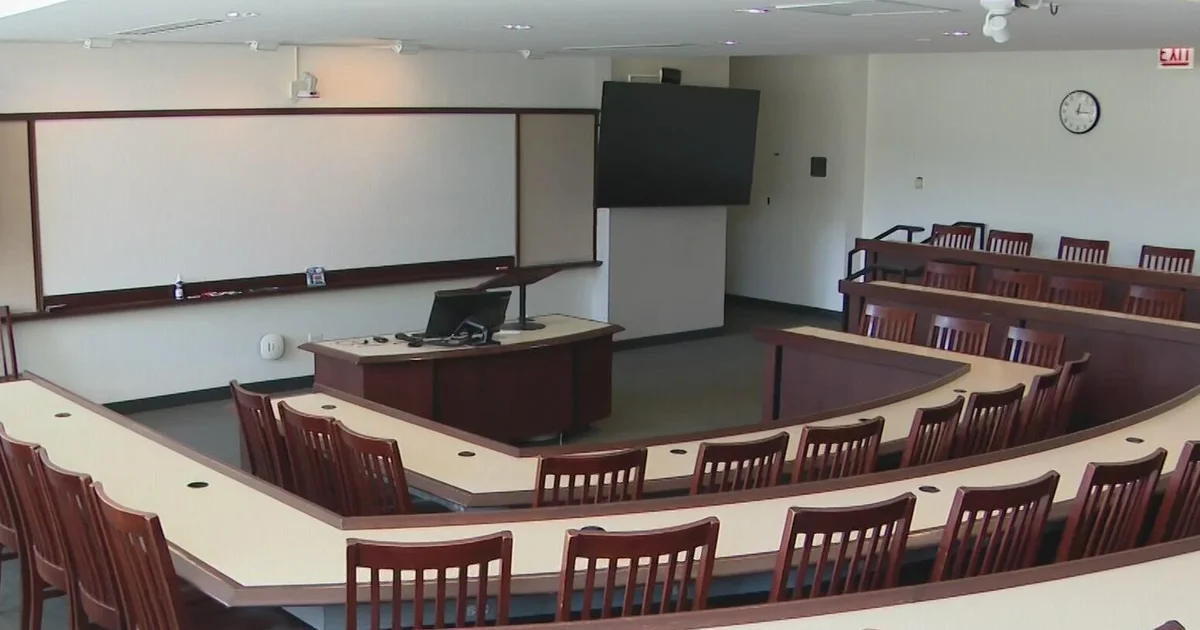
Are there any noticeable changes for students? There is no technology in the classroom, and first-year law students have no phones or computers.
“Students come in there with notebooks and pens and take notes,” said Adam Chilton, dean of the University of Chicago Law School.
Mr Chilton made it clear that there are two aspects to the new policy.
“We want to ensure that students learn to think for themselves in rigorous and critical ways, without relying on AI shortcuts that may provide immediate answers but actually slow down the learning process,” he said.
Chilton says it’s also important for students to learn how to properly utilize AI.
“At the same time, we want to produce graduates who can go on to the world knowing how to use new technologies in the most efficient way possible,” he said.
For now, the new policy is only relevant to law schools, but it raises a larger theme about how everyone is approaching artificial intelligence in classrooms from universities to kindergartens.
“We need to have an honest conversation about how we can help students at all levels not only think without machines, but also think with machines,” Chilton said.
How are others dealing with this issue?
A Chicago Public Schools spokesperson said the school blocks certain AI products from its networks, has an acceptable use policy for AI and a guidebook for educators and students, and recommends certain applications. However, students are also required to mention the use of artificial intelligence in their work and identify how they have used it. Failure to do so will violate the Code of Conduct.
Chicago Teachers Union Treasurer Dr. Diane Castro, referring to the use of AI in schools, said in part in a statement, “…CTU members recently announced a ban on AI for students in elementary school classrooms and AI chatbots that simulate relationships for students under 16; “We passed a resolution that requires student data to be protected under FERPA and that educators are not forced to use AI tools or enter student data. This resolution draws a clear line between AI as a tool and AI as a replacement for education.”
At the University of Illinois at Chicago, students using AI must approve the school’s code of conduct before using the tool.
The Chicago announcement comes as the Illinois State Board of Education releases new guidance on AI, saying it hopes to provide “a framework for how schools can thoughtfully integrate artificial intelligence into teaching, learning, and operations while preserving the central role of educators and prioritizing student growth.”