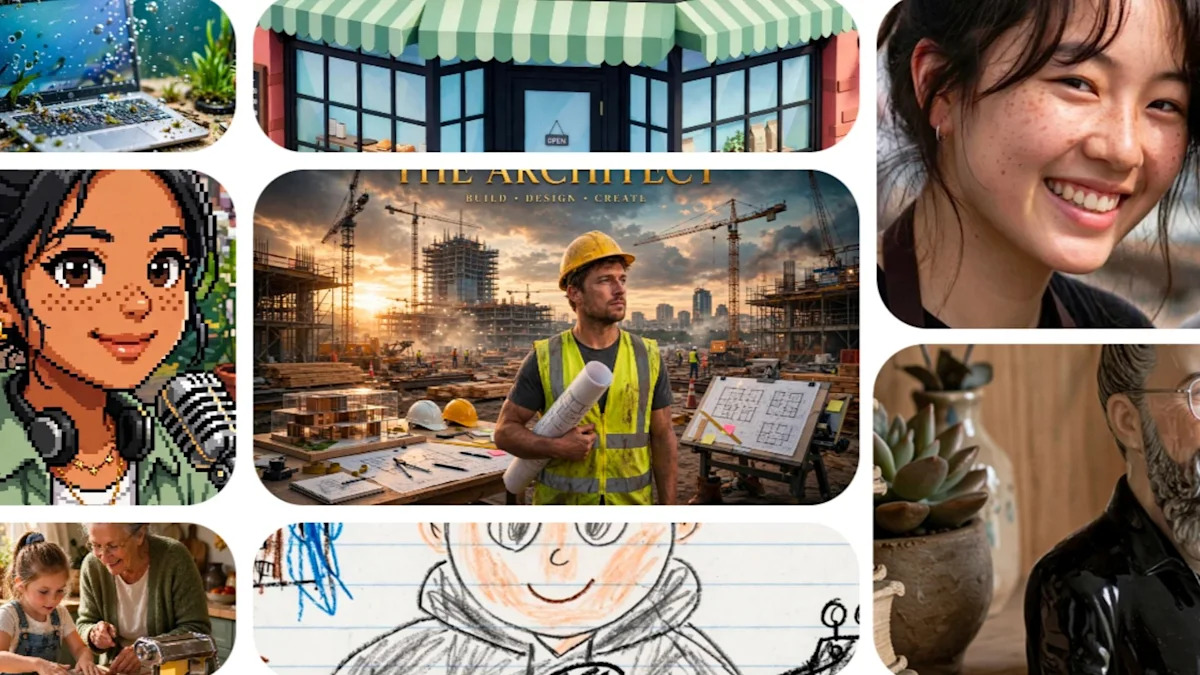
Meta has been cooking something up and today he finally put it on the table. On July 7, 2026, Meta Superintelligence Labs launched its first in-house media generation models, Muse Image and Muse Video (in preview).
This rollout comes with some truly indisputable features.
Introducing Muse Image and Muse Video, the first media generation models developed by Meta Superintelligence Labs.
Muse Image is the most advanced image generation model ever. Follow instructions closely, edit accurately, compose from multiple references, and draw. pic.twitter.com/byNpQZO1RW
— AI at Meta (@AIatMeta) July 7, 2026
What actually makes Muse Image different?
You can directly mention a public Instagram account (using “@”) in your prompt, and Muse Image will use that profile photo as a visual reference for your design.
advertisement
advertisement
So if you want a custom event invitation that features your brand’s aesthetic, or you’re building a creative concept with a collaborator, all you need to do is tag the accounts you want.
This is a truly novel feature, directly tying image generation to the social graph that meta has dominated for two decades.
Additionally, Muse Image works more like an agent than a traditional text-to-image model.
Exciting news: Meta’s Muse Image takes #2 in Image Arena!
@AIatMeta’s Muse Image currently ranks second behind OpenAI’s GPT Image 2 and ahead of leading image models such as Nano Banana, Grok Imagine, MAI Image, and many others.
Holds #2 across the board: Text-to-Image,… https://t.co/46ugzuajF7 pic.twitter.com/577214iiqj
— Arena.ai (@arena) July 7, 2026
What actually makes it better than its competitors?
Rather than producing a single output based on a prompt, it thinks through the request, searches the web for factual context, writes and executes code when accuracy is important (for graphs or QR codes), and self-corrects the output before passing the results.
advertisement
advertisement
On Arena.ai’s Human Preference Leaderboard, which ranks models based on real user votes, as of July 5, 2026, Muse Image holds second place in the categories of text to image conversion, single image editing, and multi-image editing.
Only OpenAI’s GPT Image 2 ranks higher with 1,385 compared to Muse Image’s 1,280. Meanwhile, Google’s Nano Banana 2 (1,270 results) and MAI Image 2.5 (1,257 results) trail behind.
Muse Image is available for free every day on the Meta AI app (meta.ai), Instagram Stories (US), and WhatsApp in select countries. Facebook support coming soon. If you need to create larger quantities, the subscription tier allows you to do so.
1/ Today, we wanted to share more samples from our model along with research details and evaluation results by starting previews of Muse images and Muse videos.
Check out more sample Muse videos below
(See also research blog thread!) pic.twitter.com/7yVUOolkG4
— Alexandr Wang (@alexandr_wang) July 7, 2026
What about the Muse video?
Built on the same pre-training base as Muse Image, Muse Video supports native audio and generates sound along with visuals.
advertisement
advertisement
Arena.ai already ranks #3 for human-favorite text-to-video conversion. Meta is upfront that audio and video synchronization and fast motion physics still need work, which is exactly why this is a preview rather than a full launch.
Muse Video will be available to creators and Meta AI soon, but there is no firm date yet.
To me, Muse Image and Muse Video are more than just product releases. These represent a severance of relationships with third-party AI vendors that Meta has relied on for years. Building in-house allows Meta to iterate faster, have tighter integrations, and control over increasingly monetized advertiser tools.