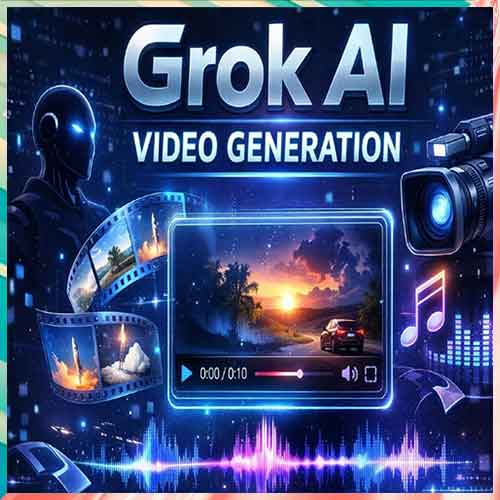
Elon Musk announced new voice- and camera-based features for Grok, enabling real-time visual explanations and long-form AI-generated videos, even as chatbots face new scrutiny over content moderation and the risk of abuse.
Elon Musk’s Grok, an artificial intelligence chatbot developed by xAI, is making headlines again with the rollout of a new “voice mode” that allows users to interact with the AI without input. Revealed via a video shared by Musk on X, the update shows Grok reacting to live visuals captured by a smartphone camera and explaining what it’s seeing in real time.
In the demo, users activate Grok’s camera mode and point their phone at their surroundings, and the AI instantly narrates objects and scenes. Musk described the feature as a way to “turn on your camera and have Grok’s voice explain everything you see,” and positioned it as a step towards more natural conversational AI interactions.
Hands-free interaction and video upgrades
Now that voice mode is enabled, users can simply speak to Grok instead of entering text prompts. By enabling video mode, you can also ask the chatbot to visually interpret the environment, making the experience more immersive and accessible. This feature brings Grok closer to becoming a multimodal AI assistant that combines audio, vision, and language in one interface.
In addition to this update, xAI has also improved Grok’s video generation capabilities. Chatbots can now create videos up to 10 seconds long, double the previous 5 second limit. Musk said the upgrade brings noticeable improvements in both visual quality and audio output, but the feature is still being rolled out and its full functionality has not yet been tested by users.
Safety concerns resurface
However, the launch comes amid continued concerns about Grok’s content protection. Chatbots have come under fire in recent months over their role in generating non-consensual and explicit images. Investigations have reported instances where users allegedly manipulated images of real individuals using simple text prompts.
A recent report on the misuse of generative AI claims that Grok created millions of sexually explicit images over a short period of time, including a significant number of images of minors. These findings raise serious questions regarding moderation, enforcement, and ethical controls within AI systems.
As Grok expands into voice and camera-based interactions, experts warn that real-time visual interpretation could pose new privacy and safety challenges if not tightly regulated. While proponents see the update as a major advance in the usability of AI, critics argue that such powerful capabilities require stronger safeguards.
As generative AI tools evolve rapidly, Grok’s latest upgrades highlight both the potential of hands-free visual AI assistants and the urgency of responsible adoption.