Cognitive warm-up. I’ll be frank. The very dark cloud of a geopolitical conflict unfolding in West Asia has the thinnest silver lining (though it’s temporary, though you always hope that war, if it does happen, will be temporary) – and the AI fraternity is largely silent (except for the fans, but we’ll get to that in a moment). Regardless of the bubble expansion theory that has been the most talked about in recent years, there is probably an acknowledgment that the world does not revolve around AI. Replace humans with AI and become one.

What’s more, each day this war continues, and every day it continues, shows us the fragility of the very foundations of AI. The current conflict is already raising energy risks (and therefore prices) through the Strait of Hormuz, which the International Energy Agency estimates will process nearly 15 million barrels of oil per day in 2025. The technology supply chain is starting to slow down, partly on the direct hardware side. Helium is also no small problem. It is used in semiconductor manufacturing processes, and any disruption there can have a ripple effect on servers and broader electronics supplies.
There is also a funding perspective. Over the past year, the Gulf has become one of the most important capital pools for global AI infrastructure, computing, and “sovereign AI” ambitions. It is good to recall again that Elon Musk confused between millions and billions of dollars and created “billions of dollars”. The World Economic Forum noted that GCC countries are increasing investment in AI as a strategic capability, while Nvidia and Musk were also talking about large-scale infrastructure improvements (Musk’s xAI secured a $3 billion investment from Saudi firm Humane earlier this year). If the conflict continues, that money does not necessarily disappear, but flows slow and investments become more defensive. Of course, there will also be discussions about domestic reconstruction taking priority over betting on AI.
The reality of cost and slop
A few days ago, of course, you may have missed this since our AI friends weren’t talking loudly about this on social media, but OpenAI shut down its Sora video generation app. A rather pragmatic-sounding post on their website seems to point out the reality that video-generating AI consumes large amounts of computing without providing any economic benefit to justify the cost.
“The creativity generated has exceeded what we expected. We are now focused on making this transition as clear and thoughtful as possible. We are sharing timelines and access details so our customers can plan accordingly. We are also exploring ways to support the export and preservation of your work,” the statement said.
The reality of OpenAI is simple. Now we have to cut our losses. So much so that the erotic conversations in “adult mode” that have become a hot topic on ChatGPT seem to have been shelved for now. The AI company hopes its approach, which focuses more on productivity features, will allow it to better compete with Google and Anthropic. I still think it played a role in the legacy Sora left behind: its role in providing us with massive social media feeds and an absolute lack of trust in discerning what is generated from what is real.
Ambiguous mission and victory
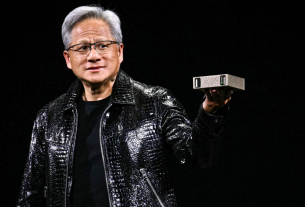
Back to the topic, AI friends don’t talk about things that are mostly nonsense. Jensen Huang appeared on Rex Friedman’s podcast (my opinions on podcasts are generally better kept to myself) and confidently declared, “I think we’ve achieved AGI.” It’s Artificial General Intelligence (if you didn’t know this already, trust me, you haven’t missed anything in life).
All of these AGI calls continue to occur from time to time. This can be described as a desperate cry for attention. It’s all the more impressive that Huang said this because no one has ever really agreed on what AGI actually means or whether it’s the correct term. But hey, Huang now has a chance to plant the flag on the terrain, claim victory in the AGI race, and define this nebulous pursuit as good for Nvidia’s business. To be fair, ambiguity is often the benchmark, as AGI has always been.
Chatbot switch
To be fair, despite all the perceived intelligence of artificial intelligence, these chatbots make it nearly impossible to go from one chatbot to another given their complete conversation history and thus the balance between memory and context. Google has finally found a way around this problem with a new toggle tool to bring historical conversation context from other AI apps into Gemini.
If you wish, you can mainly follow a path like this:
𝙾𝚙𝚎𝚗 𝚌𝚞𝚛𝚛𝚎𝚗𝚝 𝙰𝙸 𝚌𝚑𝚊𝚝𝚋𝚘𝚝 > 𝙶𝚘 𝚝𝚘 “𝚂𝚎𝚝𝚝𝚒𝚗𝚐𝚜” “𝚜𝚞𝚌𝚑” “𝙳𝚊𝚝𝚊𝙲𝚘𝚗𝚝𝚛𝚘𝚕𝚜” “𝙿𝚛𝚒𝚟𝚊𝚌𝚢” >𝚂𝚎𝚕𝚎𝚌𝚝 𝚍𝚊𝚝𝚊.
Currently, Gemini supports imports up to 5 GB in size in .zip format. Google has added “Import chats” and “Import memories to Gemini” options. For the former, specify a zip file, and for the latter, copy/paste the conversation response from another AI chatbot. Google says the ability to toggle chats will be free for all Gemini users.
Neural Dispatch is your weekly guide to the rapidly evolving landscape of AI. Want this newsletter delivered to your inbox? Subscribe here.