Marketing teams are producing more videos than ever before. Product launches require teaser videos, social ads, descriptions, and short-form clips for multiple platforms. Even small brands need to publish content on an ongoing basis.
The problem is that traditional video production can’t keep up with this pace. Hiring creators, shooting footage, and editing all the variations takes time and money.
This is exactly why AI video generators have become a part of modern marketing. The best tools can’t replace creativity. Create and test more ideas faster.
I tested some of the most popular AI video platforms to see which ones actually help marketers create better content at scale.
What marketers want from an AI video generator
Creating beautiful visuals is just part of the job.
Marketing teams need tools that can quickly generate different versions of an idea. A single product campaign may require multiple formats, multiple hooks, and completely different visual styles for different audiences.
When evaluating AI video platforms for marketing, I focus on several factors.
- Generation speed
- quick accuracy
- Commercial quality visuals
- Vertical video support
- Editing flexibility
- Ability to create variations
- Ease of experimentation
The ability to test ideas quickly is often more important than achieving perfect realism.
Top 10 AI Video Generators for Marketing Campaigns
Loova for multi-campaign production
Of all the platforms I tested, I found Loova to be the most practical for marketers running multiple campaigns at the same time.
Marketing projects rarely involve just one asset. Campaigns may require product images, promotional videos, social ads, and visual experiments. Switching between different platforms quickly becomes inefficient.
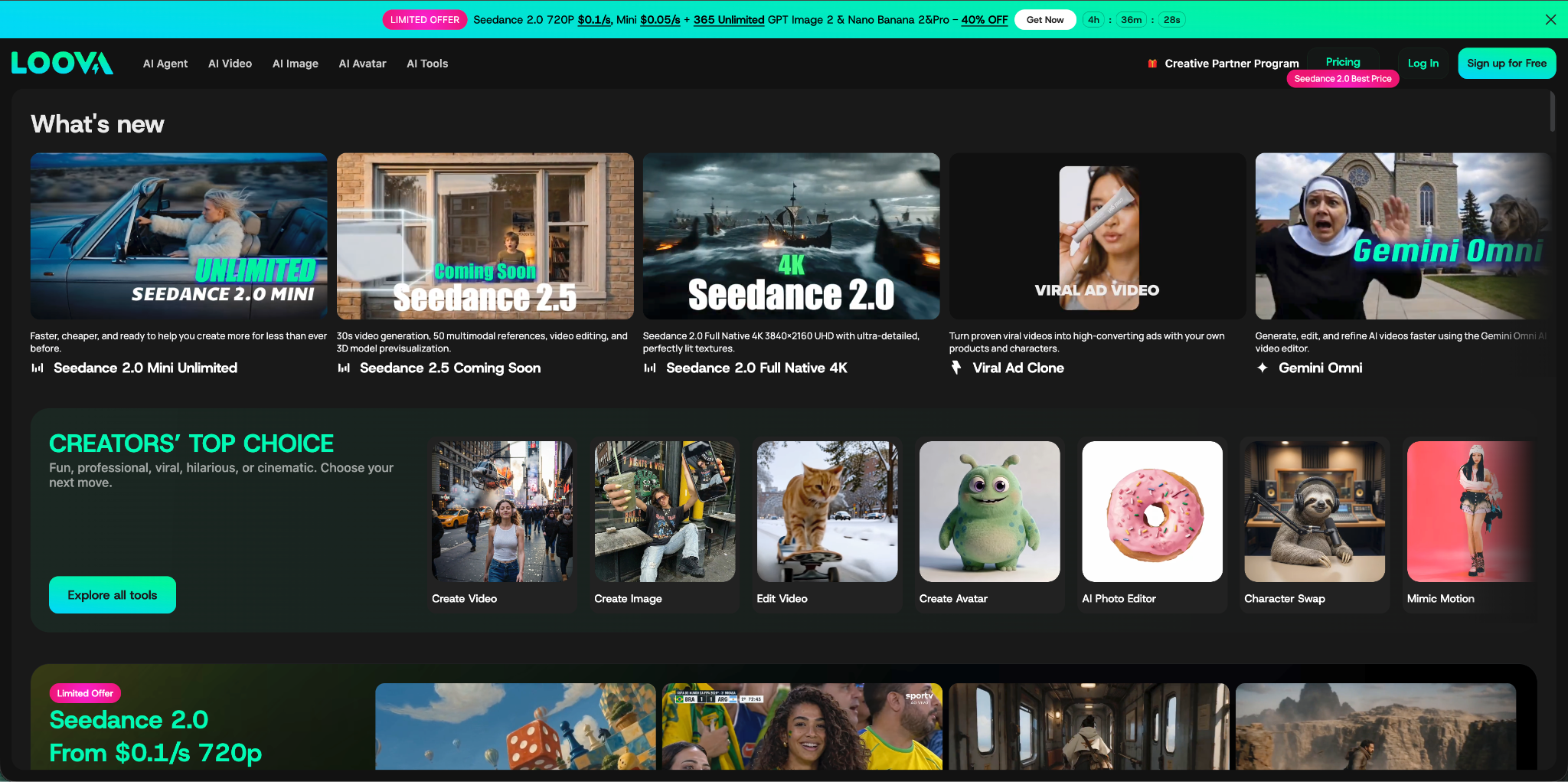
Loova combines image and video generation in one workspace and integrates leading AI models such as Seedance 2.0, Kling 3.0, GPT Image 2, and Nano Banana Pro. This allows marketers to experiment with different creative directions without leaving the platform. Create a product concept with AI Text to Image tools, animate it into a social video, and compare output from different video models without rebuilding your project from scratch.

Imagine launching a new energy drink. One campaign can use cinematic sports visuals, another focuses on lifestyle content, and a third can create humorous social videos. Building these variations within one platform significantly reduces production time.
PixVerse for social advertising
PixVerse feels like it was designed for social media.
This platform is particularly effective for short-form ads that need to grab attention within the first few seconds. Fast visual transitions and eye-catching effects work extremely well on platforms like TikTok and Instagram Reels.
I created and tested a promotional clip for a fictional skin care brand. The ability to generate multiple concepts quickly makes it easy to test different creative directions.
This speed is extremely valuable to marketers running paid campaigns.
Vidu for creating large-capacity content
Vidu is one of the fastest generators I’ve tested.
Fast rendering changes the way marketers approach content creation. Instead of carefully planning the details of a single video, teams can create multiple concepts and instantly compare performance.
We found this to be particularly useful for e-commerce advertising.
Fashion retailers are likely to create dozens of short promotional clips in a day, featuring different products and visual approaches. Traditionally, creating this amount of content would require significantly more resources.
Runway for brand storytelling
Runway remains a viable option for brands looking for creative direction.
This platform gives you more control over editing and visual polish than many social-first generators. We’ve found it particularly useful for campaigns that tell a story and visually sophisticated ads.
For example, travel companies can create destination videos that are more like cinematic short films than traditional advertisements.
For premium brands, visual consistency is often as important as production speed.
Kling for product commercial
Kling 3.0 continues to stand out whenever realism matters.
Product demonstrations, daily life scenes, and people’s movements are generally natural and stable. This realism makes the advertisement more believable.
We tested several concepts for sports apparel and consumer electronics. The results looked sophisticated enough to resemble professionally produced commercials.
Brands that rely heavily on realistic visuals will likely appreciate Kling’s strengths.
Pika for simple promotional videos
Pika focuses on simplicity.
This platform is easy to learn and allows you to create lightweight promotional content very quickly. Small businesses and individual founders can start experimenting almost immediately.
We’ve found this to be especially useful for animated announcements, product launches, and social posts that don’t require highly cinematic production.
In some cases, speed and accessibility are more valuable than visual perfection.
Hailuo AI for creative campaigns
Hailuo AI is perfect for brands looking for unusual visuals.
The platform often produces artistic, highly stylized output that instantly stands out in a crowded social feed.
For example, a music festival can use Hailuo AI to create surreal promotional videos that convey mood and emotion rather than product information.
For some campaigns, being memorable is more important than being realistic.
Grok Imagine for premium advertising
Grok Imagine impressed me with its visual composition.
The scenes feel carefully staged with strong lighting and cinematic pacing. Even short clips often look more polished than expected.
We tried luxury goods campaigns and travel ads. The result resembled a movie trailer rather than a regular social video.
Premium brands seeking high-end aesthetics may find Grok Imagine particularly appealing.
Improving publishing efficiency with VEED
Generating videos is just one part of the marketing process.
Videos need subtitles, formatting, and adjustments before they can be published. VEED handles these tasks efficiently.
We found it especially useful when preparing content for social platforms, where captions greatly increase engagement.
For teams producing large amounts of content, it’s important to save editing time quickly.
CapCut AI for mobile marketing teams
CapCut AI is built around speed and accessibility.
This platform is especially suitable for creators and marketers who primarily work on mobile devices. Features like automatic captions and social formatting make publishing incredibly fast.
After testing several product teaser campaigns, we found the platform particularly useful for trend-driven marketing and everyday content creation.
The learning curve is almost non-existent.
Examples of advertising made possible by AI
AI video generation is already changing the way brands advertise.
Local coffee shops can produce promotional clips for seasonal drinks without having to organize a full production shoot. Small jewelry brands can create dozens of product videos in a matter of days and test completely different visual concepts.

Fitness apps can generate short motivational videos by first creating concepts using the AI Image to Image tool and then animating them using AI Image to Video generation. Instead of creating one ad, the company can test 10 creative variations at the same time.
This kind of experimentation used to be difficult for small businesses. With the advent of AI, it has become more accessible.
Which AI video generator should marketers choose?
If your priority is to create large amounts of content quickly, Vidu and PixVerse are great choices.
Kling performs particularly well when realism is essential for product demonstrations and commercial campaigns.
When storytelling and good aesthetics are most important to you, Runway and Seedance offer powerful creative capabilities.
For teams managing multiple campaigns, assets, and content formats simultaneously, platforms like Loova offer greater flexibility by combining image generation, video generation, and model experimentation within one environment.
final thoughts
AI video generation is becoming a part of everyday marketing.
Brands no longer need huge production budgets to create professional content. You can generate ideas faster, create more variations, and experiment with completely different creative directions.
The biggest advantage is not just automation. It’s the ability to test and learn quickly.
Successful marketers in 2026 will be those who can create, experiment, and adapt faster than anyone else.
FAQ
What is the best AI video generator for advertising?
Loova, Kling, and Seedance are among the most powerful options, depending on whether you prioritize flexibility, realism, or cinematic quality.
Can small businesses use AI video generators?
absolutely. AI tools allow small brands to create product videos, social ads, and promotional campaigns without traditional production costs.
Which AI video generator is best for product commercials?
Kling performs particularly well due to its realistic movements and sophisticated visual quality.
What is the difference between text to video and image to video?
AI text to video Create videos directly from prompts, animate existing visuals, and create moving scenes with image-to-video conversion.
Can AI video generators improve marketing performance?
yes. These allow you to create multiple ad concepts, test different creative ideas, and publish content faster.
Last updated: July 7, 2026