insider brief
- The researchers argue that quantum computing and artificial intelligence are being developed as complementary rather than competing technologies, and that hybrid systems are emerging where classical computing remains dominant, AI provides control and learning, and quantum hardware is selectively used as an accelerator.
- AI already plays a key role in enabling quantum computers by supporting experimental design, hardware calibration, error mitigation, and system optimization, but without AI, scaling of quantum systems will be significantly slower.
- Rather than replacing neural networks or existing AI systems, quantum computing is being considered to address specific computational bottlenecks within AI workflows, such as large-scale optimization, sampling, and reinforcement learning.
In recent years, quantum computing has increasingly been framed as the next technology poised to “replace” artificial intelligence. This story is fascinating. AI is powerful, but it is energy-intensive, consumes large amounts of data, and has reached its scaling limits. Quantum computers promise exponential speedups and new ways of computing. When you put the two together, you talk about quantum AI being the successor to today's machine learning.
However, many researchers do not support this framework.
Across academia, national research institutions, and industry, quantum computing and artificial intelligence are not being developed as competing technologies. The idea is to build quantum AI as complementary systems to address limitations that each cannot achieve alone. AI is already essential to making quantum computers available. On the other hand, quantum computing is being explored as a way to accelerate narrow, high-value tasks within AI workflows, not as a replacement for them.

The real change underway is not a race between quantum and AI. Scholars are charting a path toward the emergence of hybrid systems where classical computing remains dominant, AI provides adaptive control and learning, and quantum hardware is selectively used as a type of accelerator.
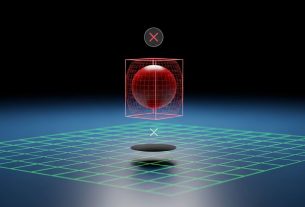
“Quantum Artificial Intelligence (QAI, Quantum AI) is the intersection of both technologies (see Figure 1) and is concerned with investigating the feasibility and potential of leveraging quantum computing for AI and vice versa,” a team of German researchers said in a study on quantum artificial intelligence.
“Quantum vs. AI” – Origin of the myth
This misconception is partly linguistic, perhaps about wanting something new under the sun. Terms like “quantum AI” suggest new forms of intelligence rather than a computationally focused field of research. In practice, quantum artificial intelligence refers to work in two directions: using quantum computing to solve certain difficult AI problems, and using AI methods to design, operate, and scale quantum systems.
The researchers suggest that there is also an economic component to this framework. The rapid growth of AI has revealed its limitations. Currently, training frontier models requires huge computing budgets, specialized hardware, and increasing power. For this reason, some observers are looking to quantum computing as a potential escape route.
However, quantum computers do not replace the statistical underpinnings of modern AI. Neural networks, large-scale language models, and reinforcement learning systems are built to recognize patterns in data. Quantum computers don't perform better than this by default. Instead, what they offer is a separate computational toolkit that is only useful for specific classes of problems.
Quantum Plus AI — What are the strengths of each system?
Modern AI systems are good at approximations. This means that these systems can identify correlations in large datasets, learn complex mappings between inputs and outputs, and perform well in noisy and uncertain environments. These strengths explain why AI has transformed language processing, vision, recommendation systems, and decision support.
They also explain why AI will not be easily replaced.
The researchers report that training and inference workloads are efficiently mapped to traditional hardware, especially GPUs and specialized accelerators. Algorithm and hardware improvements continue to increase performance without requiring new computing paradigms. For most real-world AI applications, classical computing remains the fastest, cheapest, and most reliable option.
What AI struggles with is not intelligence per se, but computation. Certain problems within AI pipelines (global optimization, combinatorial search, high-dimensional sampling) do not scale well. Although these are not the primary features users see, they often determine cost, delay, and feasibility.
Although quantum computing is often described in blanket terms, it is actually somewhat narrowly specialized, at least in the current technology regime. Quantum systems are suitable for problems that can be expressed as optimization landscapes, stochastic sampling tasks, or physical simulations governed by quantum mechanics.
The researchers say quantum devices do not serve as general accelerators for all workloads, nor do they replace traditional memory hierarchies. Neural networks don't run faster just because they're quantum.
Most existing quantum hardware operates in the so-called noisy intermediate-scale quantum (NISQ) era. These machines are fragile, error-prone, and limited in size. As a result, the most promising applications today rely on hybrid workflows, where a quantum processor processes one step of a larger classical pipeline.
This is important for AI. The question is not whether quantum computers can “do AI” but whether they can reduce the cost and complexity of certain subroutines that AI systems rely on.
How AI is already enabling quantum computing
The strongest evidence for the convergence of quantum and AI goes in the opposite direction. Scientists and engineers are starting to consider how AI can help with quantum theory.
Quantum computers are extremely difficult to build and operate. Accurate control of physical systems, continuous calibration, and continuous noise mitigation are required. Many of these challenges are too complex to manually tailor solutions.
Machine learning has become a core tool to address them.
AI methods are currently being used to design quantum experiments, optimize control pulses, calibrate hardware, and reduce errors in quantum measurements. Reinforcement learning has been applied to discover experimental protocols that were not anticipated by human designers. Neural networks are trained to decipher error syndromes and improve fault tolerance. Machine learning models are built into quantum compilers to reduce circuit depth and adapt algorithms to hardware constraints.
Without these tools, scaling quantum systems would be significantly slower. In reality, AI is not an optional add-on to quantum computing. This is part of the operating system.
How quantum computing can help AI
The case for quantum computing to aid AI is more tentative, but still potentially beneficial.
Research has focused on areas where AI faces computational rather than conceptual bottlenecks. This includes combinatorial optimization in planning and scheduling, sampling in probabilistic models, and reinforcement learning in environments with large state spaces.
In the real world, airlines, manufacturers, and logistics companies face planning and scheduling problems that combine millions of possible configurations. The team is considering hybrid quantum-classical optimization to reduce search time under tight constraints. In fields such as drug discovery and autonomous systems, researchers are testing quantum-assisted sampling and reinforcement learning to better explore complex probability distributions and large-scale state spaces during training, while deployment remains entirely classical.
In these areas, quantum and quantum-inspired algorithms show potential benefits, especially when used in hybrid configurations. For example, quantum annealing and variational algorithms have been applied to routing, job scheduling, portfolio optimization, and resource allocation problems. In some cases, experimental results show faster convergence or a reduction in the number of parameters compared to traditional baselines.
These approaches do not speed up the entire AI system, so scope is an issue. These target specific components that are less scalable using traditional methods. If successful, it will yield incremental but valuable benefits such as lower training costs, faster optimization, and more stable learning dynamics.
Why “Quantum AI” is largely a mislabel
Much of the confusion surrounding quantum and AI stems from how the term “quantum AI” is used. It might sound like AI running on a quantum computer, or quantum-native artificial intelligence.
However, there is no standard technical definition of a quantum-native artificial intelligence system. Most so-called quantum AI applications are either simulations, hybrid models, or classical algorithms inspired by quantum mathematics.
This does not make them any less important, but it does mean that they should not be confused with new forms of intelligence.
From a systems perspective, it might be better to look at quantum computing as a coprocessor. Like GPUs, they rely on traditional systems for control, memory, and orchestration while accelerating specific workloads. AI plays a similar role at a higher level, managing complexity and adapting systems in real time.
If you think about it this way, quantum and AI are not alternatives. These occupy different layers of the computing stack.
New hybrid architecture
The dominant architectures that are taking shape appear to be hybrid and hierarchical, according to the researchers.
Classic computing remains the backbone, as AI models run on traditional hardware and perform tasks that are already well-handled. Quantum processors are poised to be integrated as specialized resources that can be accessed when a problem suits their strengths.
AI systems orchestrate these workflows, deciding when to offload tasks, how to adjust parameters, and how to interpret probabilistic outputs. High-performance computing infrastructure can then connect those pieces.
This isn't really anything new or innovative. In fact, it reflects an early shift in computing. CPUs were not replaced by GPUs. GPUs haven't eliminated CPUs. Each found their own role. Scientists expect quantum computing to follow a similar path, but the technical challenges are steeper.
What does this new architecture mean for those outside the lab looking to integrate these frontier technologies into real-world business applications and products?
For businesses, this means avoiding complacency while also urging caution. While quantum computing is unlikely to disrupt AI products in the short term, it has the potential to reshape the cost structure and capabilities of certain sectors such as logistics, energy, finance, and materials science. Businesses need to be aware of this potential change, and while it is important to recognize the hype of all-powerful, all-things-to-all quantum AI, they also need to recognize that this change will be large-scale and potentially costly for late adopters.
For quantum developers, AI expertise is no longer optional. Advances in hardware, error correction, and scaling rely on machine learning techniques that can handle complexities that humans cannot handle.
The lesson for policymakers is integration. Funding AI without quantum or funding quantum without AI creates bottlenecks. Workforce development, infrastructure planning, and research investment are increasingly at the intersection.
To summarize what researchers are starting to better understand: quantum computing is not a replacement for artificial intelligence. Artificial intelligence will not make quantum computing obsolete.
The evidence points to a slower, more realistic convergence, with AI enabling the capabilities of quantum systems and quantum computing providing targeted remedies for AI's most difficult computational problems. The future of advanced computing is not quantum versus AI. This is quantum with AI, embedded, constrained, and integrated into the broader classical ecosystem.