
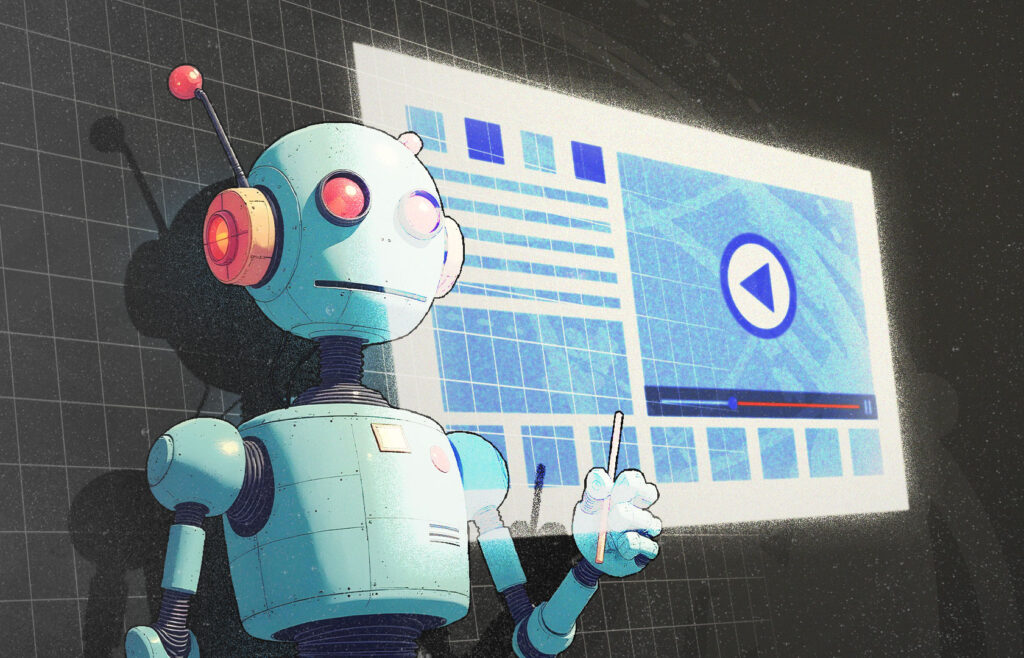
The digital environment is undergoing major changes. For decades, the barrier to entry to high-quality video production has been defined by expensive equipment, steep software learning curves, and hours of painstaking manual labor. However, the advent of generative artificial intelligence has broken down these barriers and ushered in an era where static images can be brought to life with a single prompt or click. As platforms like AI Journal document the rapid evolution of these technologies, it is becoming clear that a fundamental shift is occurring in the way content is conceived and consumed.
Evolution of visual media
Human history is a chronicle of finding better ways to tell stories. From cave paintings to printing presses, still photography to film, each leap has increased the immersion of audiences. Today, we are making a leap from static to dynamic. Image-to-Video AI bridges the gap between the two, allowing creators to capture moments in photos, digital paintings, and even brand logos and give them temporal depth.
This transformation is powered by sophisticated neural networks, especially diffusion models and generative adversarial networks (GANs). These models have “learned” the laws of physics, the way light reflects off moving water, and the subtle nuances of human facial expressions. When you feed a still image to AI, it doesn’t just “stretch” the pixels. Predict what will happen next in 3D space and create movements that feel intuitive and realistic.
Why motion is better than static content
In the attention economy, movement is the currency. Social media algorithms on platforms like Instagram, TikTok, and LinkedIn focus heavily on video content. Statistics consistently show that videos generate higher engagement rates, longer dwell times, and better conversion metrics than static posts.
The challenge for companies and independent creators has always been the “content treadmill” – the need to produce large amounts of video content without blowing the budget. This is where AI-powered tools become essential. By leveraging existing assets like product photos and marketing illustrations and turning them into short, punchy video clips, brands can maintain a high-quality presence without the overhead of full-fledged film production.
One of the most effective ways to streamline this process is to Renderforest Image to Video Generatorallows users to transform static visuals into professional-looking animations in seconds. This type of accessibility allows people without a background in motion graphics to create content that stands out in a crowded digital feed.

Technical magic behind the curtain
To understand the impact of AI on image-to-video, you need to understand what’s happening under the hood. AI must perform several high-level tasks simultaneously, including:
- segmentation: AI identifies different elements in images (sky, people, cars, etc.).
- Depth estimation: Calculates the distance between objects so that movement looks natural (objects closer to the “camera” move faster than objects in the background).
- repair: As the object moves, previously hidden parts of the background become visible. The AI must “hallucinate” or fill in these gaps based on its surroundings.
- Temporal consistency: AI ensures that objects look the same from frame 1 to frame 60, avoiding the “flicker” effect that plagued early AI video experiments.
Applications across various industries
The impact of this technology extends far beyond social media marketing.
E-commerce: Imagine an online store where every product photo comes to life. A still image of a dress can show the fabric waving in the wind, or a watch can show the intricate movement of the gears inside. This gives digital shopping a “tangible” feel and reduces the gap between online and offline experiences.
Education and training: Complex concepts are often difficult to convey through text or static diagrams. Image-to-Video AI can animate scientific processes, historical recreations, or architectural blueprints to make learning more interactive and understandable for visual learners.
Personal content and legacy: On a more personal level, people are using AI to animate old family photos. Seeing a deceased relative smile or blink creates a deep emotional connection that can’t be recreated in a still photograph. This “living history” aspect of AI is one of its most human-centric applications.
overcome creative block
For many creators, the most difficult part of the process is the “blank canvas.” AI can act as a powerful ally to eliminate this friction. Rather than starting from scratch, creators can use tools like Midjourney or DALL-E to generate a concept image, then use an image-to-video converter to see how that concept transforms.
This iterative process allows for rapid prototyping. Filmmakers can use AI images to storyboard their scenes and animate those boards to get a sense of pacing and composition before picking up the camera. This democratizes the “pre-visualization” phase of production, which was once exclusive to big-budget Hollywood studios.
Ethics of synthetic media
As we leverage these tools, the industry must also address the ethical considerations of synthetic media. The ease with which “deepfakes” and doctored videos can be created necessitates a shift toward transparency. Watermarking AI-generated content and using blockchain for digital provenance are becoming standard practices to maintain a clear line between captured reality and generated content. At AI Journal, we continue to focus on how these tools can be used to enhance human creativity, rather than replace the need for truth and authenticity.
The road ahead
We are currently in the “dial-up” phase of AI video. Just as the internet evolved from simple text to high-definition streaming, AI video will evolve from short loops to full-length, high-fidelity cinematic experiences. We’re moving toward a future where “text to film” is a reality, where you can feed your script into an engine that automatically handles cinematography, acting, and lighting.
However, the center of the story will always remain humans. AI is a brush, not an artist. The most successful users of Image-to-Video technology are those who use it to enhance their own vision and use the time saved on technical execution to focus on narrative, emotion, and strategy.
conclusion
Moving from images to video is more than just a technical upgrade. It’s a change in the way we communicate. AI enables a new generation of storytellers to share their ideas with the world by reducing the cost and complexity of video production. Whether you’re a small business owner looking to improve your marketing or a digital artist pushing the boundaries of your craft, tools are at your fingertips. The era of “living images” has arrived, and the possibilities are as limitless as the algorithms that power them.



