

The views expressed are those of the authors and do not necessarily reflect the views of ASPA as an organization.
April Hayward
July 1, 2024
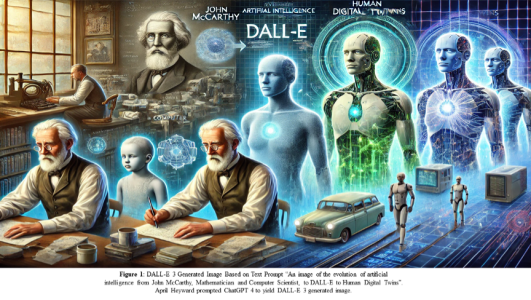
Artificial intelligence is broad and multifaceted, and its rapid evolution has enabled it to solve complex and intractable problems globally. The COVID-19 pandemic has been a complex and intractable problem. April Hayward gives an example of an artificial intelligence intervention employed during the COVID-19 pandemic as ” E-Government and Artificial Intelligence as Interventions to Combat the COVID-19 PandemicTypes of interventions employed during the pandemic include, but are not limited to, virtual doctors, sterilizing robots, medical assisting robots, contact tracing, etc. Virtual doctors diagnosed patients to reduce the strain on the healthcare system. Sterilizing robots sterilized healthcare facilities. Medical assisting robots delivered medicines and meals to patients to reduce contact between medical staff and patients and save on PPE (personal protective equipment) usage due to PPE shortages. Contact tracing chatbots and apps identified the spread of COVID-19 cases in geographic locations. Hayward aims to highlight the evolution of artificial intelligence from John McCarthy, who formally characterized artificial intelligence, to DALL-E.
Although the precedents of artificial intelligence in the United States date back to the 1930s, the phrase “artificial intelligence” was not used publicly until 1956. Researchers and practitioners from various disciplines contributed to the birth of artificial intelligence. Disparities in the fields of computer science, mathematics, electrical engineering, psychology, complex systems, and political science led to various names for what would later become known as artificial intelligence. Suggested names include, but are not limited to, thinking machines, electronic brains, reasoning machines, machine intelligence, intelligent machines, complex information processing, and simulation of cognitive processes. John McCarthy (Dartmouth College), Marvin Minsky (Harvard University), Nathaniel Rochester (IBM Corporation), and Claude Shannon (Bell Telephone Laboratories) submitted a proposal to the Rockefeller Foundation to conduct research into artificial intelligence in August 1955. McCarthy wrote, Dartmouth College Artificial Intelligence Summer Research Project A workshop held at Dartmouth College in 1956 led to the birth of the field of artificial intelligence. The main purpose of McCarthy's workshop was to address the overall research goals laid out in a proposal for the Rockefeller Foundation. The proposal stated that the research should be “How to get machines to use language, form abstractions and concepts, solve the kinds of problems that humans must solve today, and improve themselves.“At the workshop, McCarthy formally defined this new field as artificial intelligence. Participants in the workshop would go on to be known as pioneers and leaders in AI, including Herbert Simon, a respected figure in computer science, public administration, economics, psychology, and government.
The evolution of AI has given rise to several subfields and research areas, including machine learning, deep learning, generative AI, large-scale language models, robotics, computer vision, neural networks and natural language processing, and XAI (Explainable Artificial Intelligence). This has led to new public debates around artificial intelligence and human intelligence. Is artificial intelligence better than human intelligence? Can AI be trusted? What are the ethical and security considerations for AI? Should we rely entirely on AI or human intelligence in our decision-making? What is responsible AI? When should we choose between artificial intelligence and human intelligence? The public debates are interesting and can guide research questions. AI can assist and augment human intelligence, but this depends on the purpose for which AI is employed. AI has evolved to the point where it can synthesize language and generate images based on its interpretation of that language. OpenAI released DALL-E in 2021, followed by 2022 (DALL-E 2) and 2023 (DALL-E 3). DALL-E uses deep learning and natural language processing to generate images based on ChatGPT's text prompts.
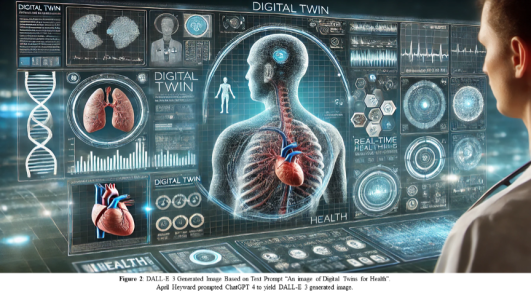
For example, Hayward wrote,An illustration of the evolution of artificial intelligence, from mathematician and computer scientist John McCarthy to DALL-E and human digital twins.ChatGPT 4 responds to the text prompt with, “This is an image that depicts the evolution of artificial intelligence from mathematician and computer scientist John McCarthy to DALL-E and finally to human digital twins. It captures the progress and technological advancements of AI at different times.“See Figure 1 for a DALL-E 3 image interpretation of the evolution of AI text prompts. Hayward explains the raw text prompts:Image of a digital twin for healthChatGPT 4 responds to the text prompt with, “This is a depiction of a digital twin for health in the medical world of the future. A human digital twin is shown surrounded by advanced medical interfaces and holographic displays with detailed images of internal organs and health data. If you need further modifications or additional details, feel free to let us know.“See DALL-3 Image Interpretation in Figure 2. Digital Twin Health Text Prompts. AI continues to evolve rapidly to become ubiquitous in all areas of life. Its evolution is identifying different ways in which machines use language, form abstractions and concepts, and solve problems. Several The McCarthy, Minsky, Rochester and Shannon vision of AI has been realized: solving problems humans should solve and continuously improving in tandem with human intelligence.
authorApril Hayward is President of the South Carolina Academy of Sciences, a member of the Digital Twins for Health (DT4H) Consortium, a researcher, and an R and SQL programmer. Hayward's research interests include artificial intelligence, data science, digital twins for health, deep learning, generative AI, health informatics, large-scale language models, and machine learning. She can be reached at: [email protected].
 (No ratings yet)
 Loading…


