
AI systems outperform humans in tasks that require speed and large-scale data processing. However, these systems must work in conjunction with humans and must be comfortable for humans to use. The success of human-AI collaborations depends on several factors, most specifically the need for clear ethical considerations to address the anxieties and fears people have about these systems.
Organizations are deploying agent AI to automate complex workflows and free up team members for high-value tasks. Agent AI often processes sensitive data, increasing privacy risks as these systems become additional nodes that bad actors can exploit. The opacity of advanced AI decision-making also raises questions about transparency and accountability. Companies that incorporate strong AI governance practices can build sustainable operating models that increase productivity while maintaining compliance and protection from uncertainty.
If IT and business executives want to create agent teams that work effectively and benefit from human-AI collaboration, they must create ethical agent AI frameworks that address trust and dependence, role clarity, bias, and the emotional impact of AI.
Agent AI ethics
Agentic AI refers to systems that act as agents and complete specific tasks with little supervision. They use machine learning to train them to make decisions based on previous results and experience, the same way humans approach problem solving.
The move from human involvement to fully autonomous operations makes agents powerful, but also requires strong and proactive governance to address the following ethical concerns:
Transparency. The basic process of agent AI decision-making follows a loop of perception, reason, action, and learning. However, its behavior is nondeterministic, so even the same prompt will produce different results. Michael Chui, a senior fellow at McKinsey, emphasizes the importance of consistency in business, especially in compliance, as unclear explanations undermine stakeholder trust.
Accountability. When AI systems operate independently, it becomes difficult to determine who is in charge. AIs cannot be held accountable to themselves or evaluate other AIs, so human evaluations and technical guardrails, such as rule-based systems, are required to monitor output.
Prejudice and fairness. research from Automation and Intelligence Journal It turns out that agent systems inherit biases from the large-scale language models they use to train them. Reliance on flawed or unrepresentative data can exacerbate social inequalities and continue to influence automated decision-making.
privacy. European data protection supervisors have warned that widespread and unavoidable access to consumer information will make it difficult to know what personal data AI will collect, how it will be used, or whether new uses will emerge as AI pursues its goals.
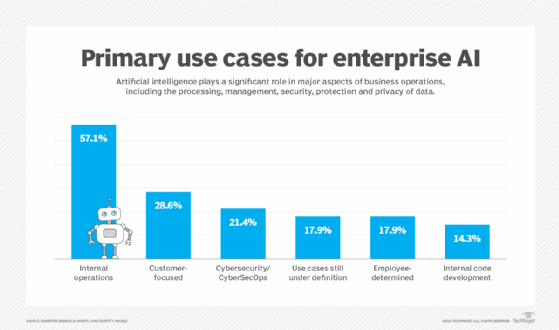
As AI adoption expands and new use cases emerge, enterprises need clear guardrails to address these concerns. GP’s report 2025 AI at Work shows that 91% of business leaders around the world are actively expanding their AI strategies. But that doesn’t mean the implementation is sustainable.
To understand the scope and impact of AI, look at its applications across different industries. In healthcare, systems such as Google’s DeepMind analyze medical images to detect conditions, and human doctors make the final diagnosis and treatment decisions. In retail, AI personalizes shopping by suggesting products based on browsing and purchasing behavior. Meanwhile, the financial sector provides financial plans and recommendations based on market trends and user opinions.
However, these applications involve the processing of sensitive personal data. If AI that can exploit this information is made public, it can compromise personal privacy, violate regulations, undermine organizational trust, and make employees uncomfortable about using or interacting with that information.
Important ethical considerations in human-AI collaboration
This partnership will impact the success of agentic AI implementations, so the way employees view and use AI will need to evolve. Leaders must carefully manage this relationship to keep technology aligned with the organization’s values. When implementing and operating agent teams, it is important to consider the following ethical factors:
trust and dependence
Building trust between humans and AI agents is key to successful collaboration. Teams need to understand how agents work to effectively manage them and avoid over-reliance on blind automation.
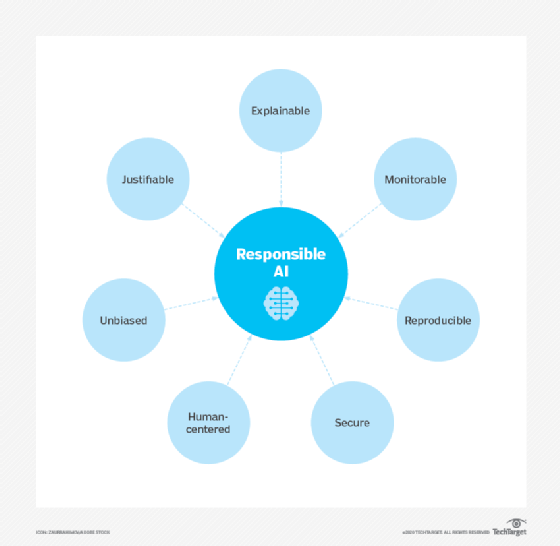
Although AI agents are powerful, they can also fail. According to Asana’s State of AI at Work report, approximately 6 in 10 employees believe that AI agents perform so unreliably that they are unusable. Unlike standard chatbots, agent AI can generate inaccurate answers in more complex and harmful ways. Because these systems operate autonomously, errors can occur due to corrupted logic, inaccurate data, or lack of understanding of context. Explainable AI techniques allow users to understand the reasoning behind an agent’s decisions. Monitoring systems spot errors and allow team members to intervene if necessary.
Organizations should apply the same quality assurance and training protocols to AI agents and human employees. A single platform for onboarding, assessment, and monitoring ensures consistent standards and clear accountability. Companies should provide style guides, policies, and data to agents during onboarding to ensure their interactions align with company culture and mission.
Role clarity and collaboration
Ambiguity in decision-making and accountability undermines performance and trust. Organizations need to clearly define roles and responsibilities within human and AI teams to reduce confusion and ethical risks.
Human involvement (HITL) principles allow employees to monitor moral judgment and critical decisions in complex situations. AI agents can handle limited routine tasks and escalate sensitive issues or sensitive instances to human managers. In customer service, AI may resolve common inquiries, but emotionally complex or ambiguous issues may be passed on to a real person.
Organizations must design AI and human workflows that respect this balance. Automating decision-making without meaningful human input risks ethical mistakes and stakeholder backlash. As agentic AI matures, strategic oversight will often replace operational management, with humans providing high-level guidance and intervening only when the AI encounters uncertainty or ethical dilemmas.
Addressing bias and fairness
Biased datasets can lead to unfair outcomes in decision-making. Users who interact with AI systems can unknowingly introduce their own biases by providing distorted information or engaging with the system in a biased way. These factors shape how agent AI makes decisions and create real-world risks.
A University of Southern California study highlights biases in AI applications across a variety of fields. In the U.S. criminal justice system, black defendants were often labeled as high-risk, even if they had no criminal record. In the medical field, AI tools that predict patient mortality have shown a bias against black patients. Gender discrimination is also noticeable. When users asked the AI model to generate an image of a CEO, it almost always produced an image of a man, reflecting the underrepresentation of women in such roles.
To address these issues, leaders should mandate regular bias audits and testing to uncover harmful patterns. Building a diverse development team helps you spot blind spots. Continuous monitoring and adjustment based on real-world usage is key to preventing AI from drifting in an unfair direction.
Emotional impact and employee anxiety
Introducing autonomous systems alongside human team members impacts operations and the people who work with these systems. Research published in journals Technology prediction and social change We found that when AI has agency and human-like capabilities, it can lead to concerns about job security.
Employees who worry about being replaced by advanced robots may be reluctant to fully engage with AI agents. Even if a company has no plans to reduce its workforce, this fear can reduce productivity and increase turnover. Organizations should provide opportunities for open communication and skill development. Training programs should emphasize how AI enhances human work rather than replacing it, and positions AI as a collaborator rather than a competitor.
It’s important to emotionally support employees and reduce their anxiety about replacement through the transition to agent-driven AI. AI remains a tool, and continuous learning ensures that employees can make valuable contributions as their roles evolve with new technology.
Zac Amos is a freelance technology writer specializing in AI, cybersecurity, and business technology. He is also a features editor for ReHack Magazine and has written bylines for publications such as VentureBeat, TechRepublic, and Forbes. To learn more about his work, follow him on LinkedIn.