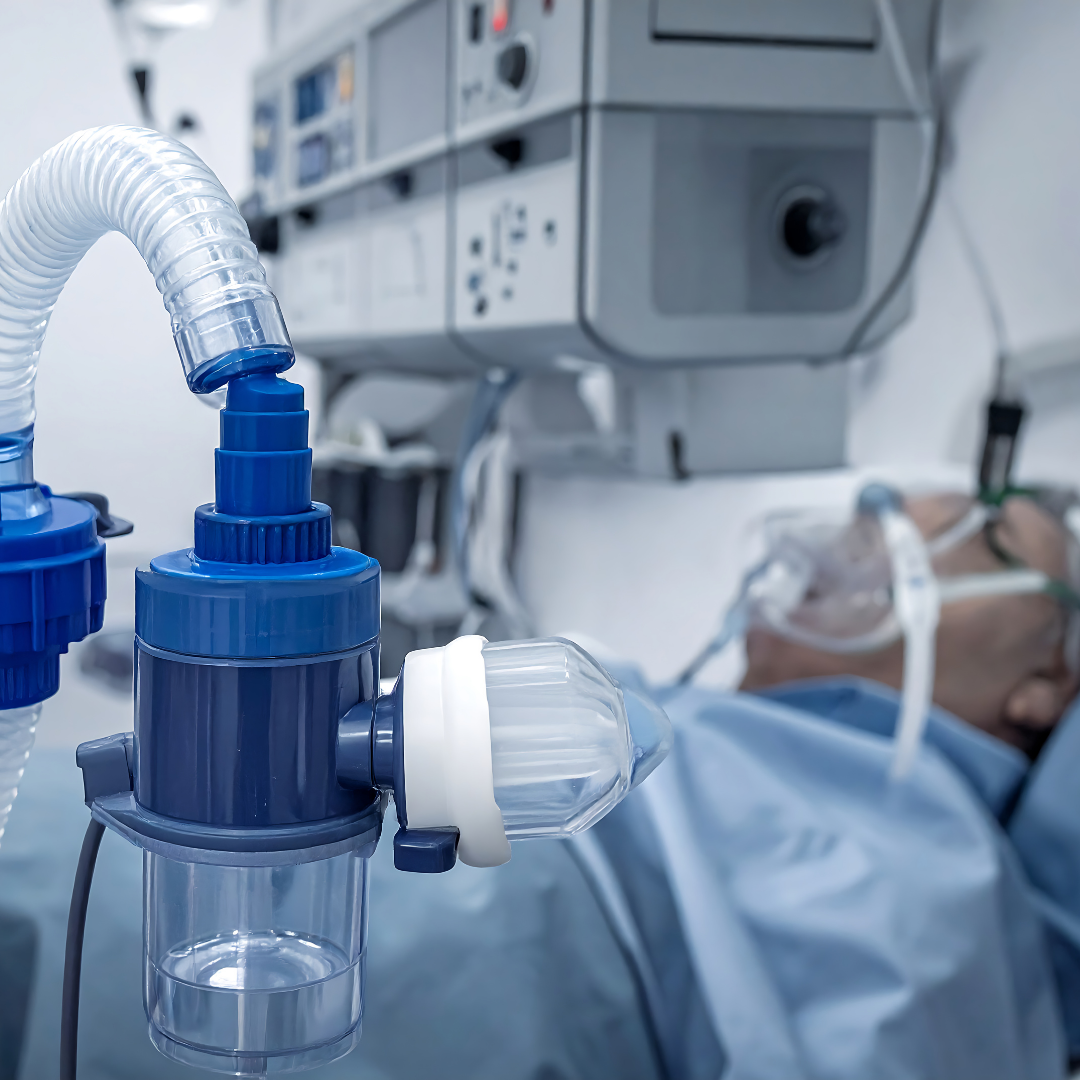
A team of students at Carle Illinois College of Medicine has created a new smartphone app that allows anesthesiologists to manage the complex equipment that keeps patients alive during surgeries.
A machine learning app called Halo uses artificial intelligence, natural language processing, and image recognition to provide anesthesiologists with just-in-time information about anesthesia machines, infusion pumps, and monitors that track patient status during surgery. Anesthesiologists are tasked with administering this wide range of life support equipment before and during surgery. Keeping track of all equipment parameters can be difficult, especially when there is an urgent need.
“Our goal was to create a tool that would give clinicians instant access to specialized anesthesia equipment information without the need for specialized software or searching through manuals,” said Anvita Mishra., Founder and project leader.
Halo works through a conversational, chatbot-style interface that allows clinicians to ask questions and troubleshoot devices in real-time. Image recognition allows anesthetists to take photos of any device and retrieve important information via a standard smartphone.
“Halo gives clinicians instant access to instructions, reducing errors, increasing workflow efficiency, and allowing anesthesiologists to spend more time caring for their patients,” said team member Gaurang Amonkar.
The invention recently won first place in the 2026 Society of Anesthesia Technology (STA) Engineering Challenge, a national competition focused on innovations that support surgery, planning, and recovery. Mr. Mishra introduced Halo to an audience of anesthesiologists, engineers, and industry leaders at the STA Annual Meeting. Mishra encouraged clinicians to ask and test the devices they use on a daily basis.
“Halo shows how AI can solve real-world clinical workflow challenges,” says Amonkar. “This project bridges engineering and medicine and demonstrates the ability of CI MED students to translate clinical problems into technical solutions.”
The Halo team exemplifies CI MED, which leverages team members’ experience in engineering, computer science, and medicine and focuses on innovation through cross-disciplinary collaboration. Both Mishra and Amonkar have a background in biomedical engineering, Kanchi Sridhar is a chemical engineer, and Preeti Prem is trained in computer science.
Editor’s Note: Team Halo is the third group from CI MED to win the prestigious STA competition. Michael Ma and Maharshi Pandya, both MD Class of 2025, won the 2023 competition with a machine learning system designed to improve patient recovery assessment after surgery. In 2025, Nathan Nguyen and Sharon Chao invented SuctionSense, a smart pressure transducer system aimed at extending the life of expensive anesthesiology suction equipment.