Even Singaporean singer Stephanie Sun never imagined she’d find her way back into the spotlight.
Her voice has been the centerpiece of a series of music videos that have recently gone viral on Bilibili.com, a Chinese video platform dominated by Generation Z. But she never sang these songs. All of these were generated by artificial intelligence software.
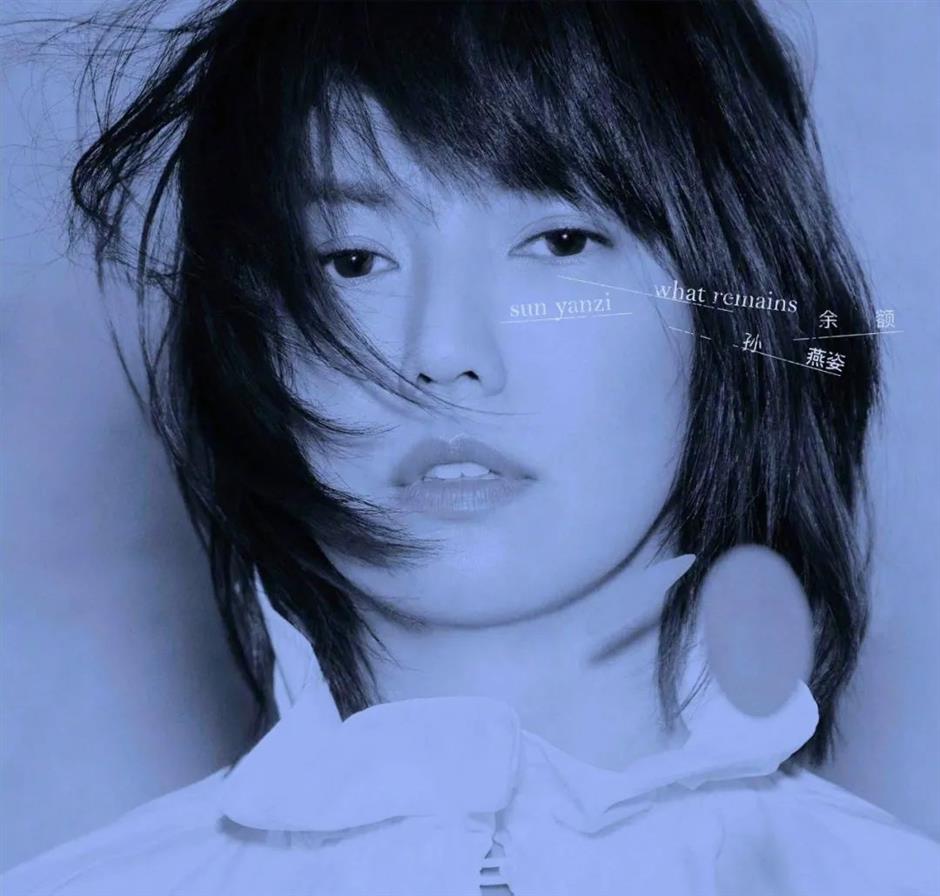
Singaporean singer Stephanie Sun

Part of an AI-generated music video using Sun’s voice.
Videos like these are produced by the so-vits-svc fork, an open source software developed on GitHub that allows anyone to train their own AI model to speak in any voice and language.
One of the uploaders, Ziyu, posted several AI-generated videos that have garnered millions of views. Many people commented that they were amazed at the fidelity of Sun’s AI-generated voice.
Ziyu has previously produced a series of AI-generated music videos for pop singers David Zitao and Jay Chou, but their video views have never matched the number of views for the AI Stephanie Sun series.
“It probably has something to do with Sun’s unique voice and her articulation when she sings. Her voice has a grainy quality and a unique breath. Somehow it matched the AI model, and that’s probably why the video with Sun’s voice is the most popular view,” Ziyu speculated.

One of the AI-generated videos uploaded by Ziyu.
According to Github introduction, the current version of this project iterates to version 4.0. Compared to previous projects such as VITS, soft-vc and VISinger2, Sovits is very easy to use, allowing users to train desired acoustic models with just a few audio segments.
However, the audio should be “dry sound”. It is the “original sound” of a song, with the instruments, accompaniment, reverberations, and harmonies removed.
To make the AI singing more reliable, the trainer also needs to collect the singer’s “dry sound” performances at different pitches. “So, generally speaking, her AI work for a singer with a wide vocal range will be more similar,” Ziyu explained.
Out of curiosity, he has replaced many songs with his own voice or sang in other languages such as English and Japanese.
“When I first heard my voice, I got goosebumps all over my body. It was fun, but I was a little scared,” Ziyu said.
How do singers and the music industry take it?
Many people, including the singer himself, are terrified. Taiwanese crooner Sandee Chan revealed last month on social media that her new song “Teach Me How to Be Your Lover,” released March 14, was actually sung by “AI Sandee Chan.” bottom.
The news shocked the music industry because no one had noticed it before. In fact, some fans even commented that Chan’s voice seemed to have “brought back her youth” and that her singing level on this song was superior to her recent performances.
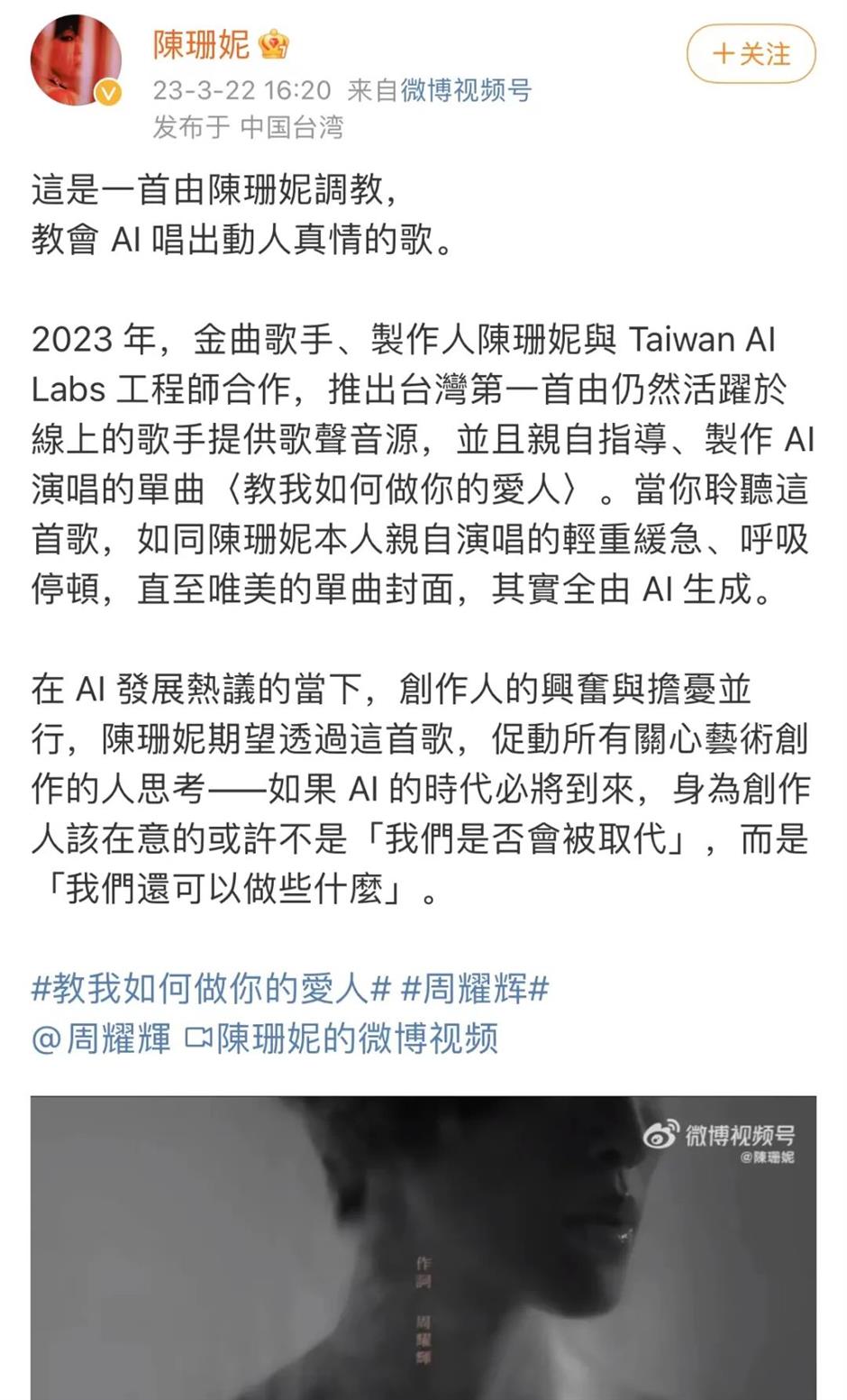
Taiwanese singer Sandy Chan revealed on Weibo that her latest single was sung by AI.
A well-trained “AI singer” can fool the majority of people. Chan later revealed her intentions, and she said she hoped the song would make people who value creativity think.
If the AI age is inevitable, she noted that perhaps creators should care less about “can we replace them” and more about “what else can they do?”
What if people intentionally use the “AI singer” for evil purposes?
Already prevalent fake singing is becoming more difficult to detect, the barriers to entry for the singer profession are lower, and copyright infringements on singers’ voices are becoming more frequent.
On the other hand, “AI Singer” can also be actively utilized.
Restoring the voices of deceased singers, such as Teresa Teng, Leslie Cheung, and Michael Jackson, allows audiences to mourn them. On a broader level, this could also ‘resurrect’ the voices of those who have passed away, providing comfort to fans and loved ones.

To mark the 22nd anniversary of Teresa Teng’s death, the Japanese show “Kim SMA” used holographic projection technology to “resurrect” the deceased Chinese singer.
The emergence of “AI singers” has the potential to serve the public or become accomplices in crime. Ultimately it comes down to user choice.
Are AI-generated music videos copyright infringement?
Li Zhang, a copyright attorney who has worked with many music streaming platforms, believes AI enthusiasts will argue that AI training is purely for fun and does not harm the rights of singers. ing.
However, copyright holders consider using unauthorized singers and data to train AI to be an infringement.
Lee argued that using AI to simulate a singer’s voice without his permission and then publicly releasing it should be considered a violation of the singer’s rights.
Some musicians take an open stance toward “AI clones.” Canadian singer Grimes, for example, openly welcomes the use of her AI to mimic her own voice for creative purposes, and her royalties are split 50/50 by her. increase.

Canadian singer Grimes has tweeted that he is open to AI duplicating his voice.
Chinese rapper Xiao Laohu has also openly said that if someone duplicates his voice and sings another song, “It’s not a bad thing. Maybe we can be friends.”
“I’m more interested in how to cooperate with AI than to ‘protect’. I think it will be difficult to ‘create’ without cooperation with AI in the future,” he emphasized.

Rapper Xiao Laohu (Little Tiger)
Regarding further regulatory improvements, industry analyst An Laining said that joint efforts of lawmakers and copyright owners, followed by countless I think a lawsuit will definitely be necessary.