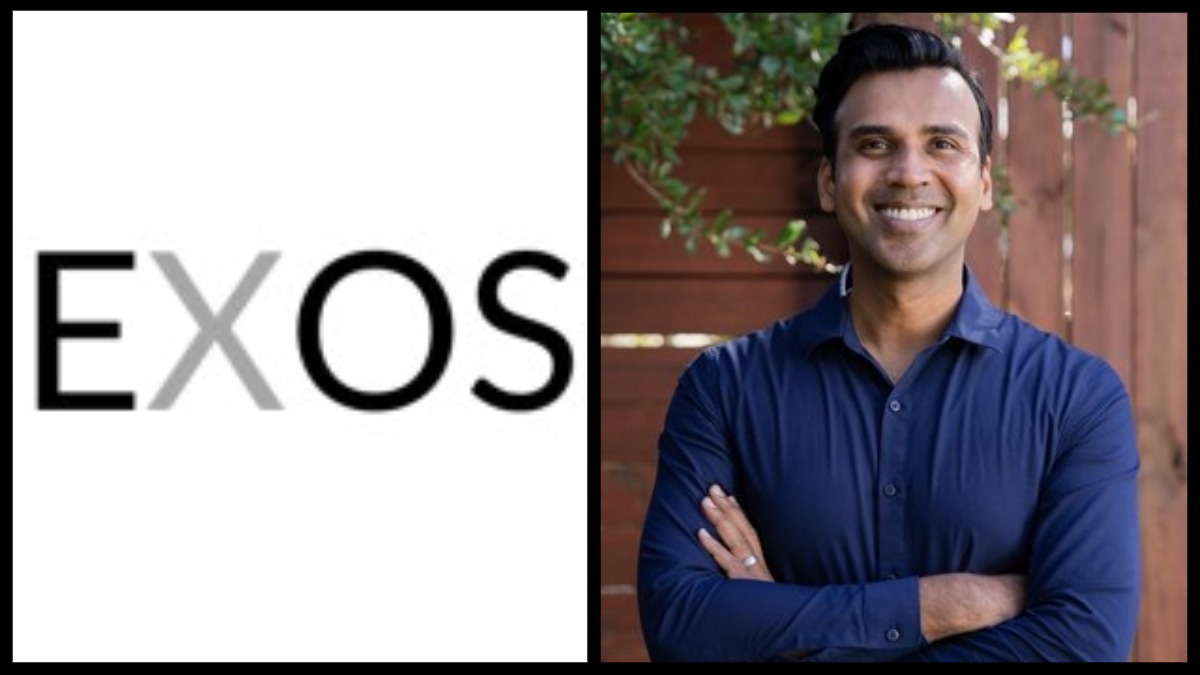
Balaji Ramadoss doesn't measure success by how much money a company raises.
He evaluates work based on whether it improves people's performance.
After leaving his homegrown health technology company Edgility in 2024, the Tampa Bay founder is now building his next business around a clear philosophy: “Keeping the People, Upgrading the Systems.”
It's a mindset shaped by public health work, hospital leadership, crisis response, and eight years of building a company without raising a single dollar.
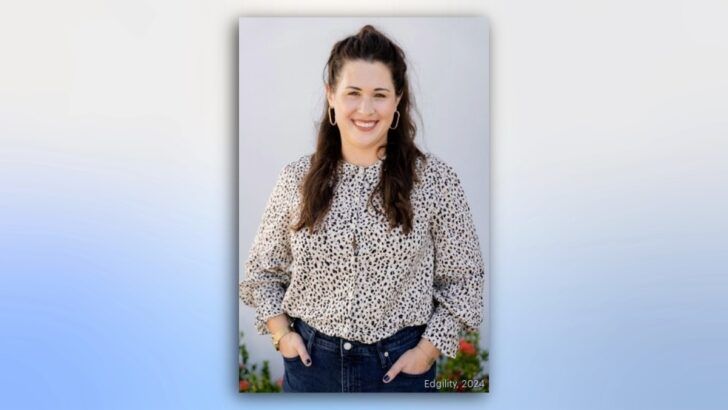
The company was founded with his wife and co-founder Heather Holland. Heather Holland is a healthcare leader who was instrumental in both the formation of the business and the decision to make Tampa Bay its home.
From public health to healthcare technology
Mr. Ramadoss came to the United States from southern India for graduate school and received his doctorate from the University of South Florida.
He then worked in public health and the CDC before joining Tampa General Hospital, where he served as CTO for seven years.
A defining moment came early in his career during Hurricane Katrina.
More Tampa Bay news
While deployed to Houston, Ramadoss built what he describes as an early application used to triage evacuees from New Orleans for the purpose of preventing infectious diseases. Ramadoss said the work affected nearly 1 million evacuees.
“That experience stuck with me,” he said. “Great people have given me opportunities. Everything I've ever done has come from there.”
Ramadoss said his work in the Katrina response later contributed to his path to U.S. citizenship.
Start a company without venture capital
After years of working in large health systems, Ramadoss and his wife, Heather Holland, made the deliberate choice to build Edgility and relocate to Tampa Bay.
Holland was instrumental in turning that decision into a sustainable company and helped anchor the business and culture as it expanded.
They built the business themselves from day one.
The company focused on using artificial intelligence to predict the timing of hospital discharges, one of the most complex and costly problems in healthcare operations.
By breaking down discharge plans into measurable data points, the platform helped hospitals plan care more effectively and free up beds faster.
Read about the Tampa real estate market
At its peak, Ramadoss said, the company helped manage discharges for about 2 million patients across the United States, including during the pandemic.
Ramadoss said some hospital systems need more than 98% predictive accuracy before considering the technology.
“This was never about replacing clinicians,” he said. “The goal was to provide better tools to treat patients faster and more safely.”
The company operated out of an unlikely Tampa Bay office, a converted 1940s gas station.
Flexibility was more important than sophistication, as the team constantly visits hospitals across the country.
Ramadoss credits Holland with helping create a work environment that made Tampa feel like home, even though the company operated on a national scale.
Despite interest from venture capital firms, the founders never raised outside funding. The company was acquired by private equity in April 2024.
Ramadoss emphasized that the exit reflects a common path, noting that the company's success is inseparable from Holland's role as co-founder.
“Too many people treat fundraising like a scorecard,” says Ramadoss. “Financial well-being is important. If you dilute it to the end, the result won't feel like success.”
Stay involved even after leaving
Ramadoss has remained active in multiple roles since leaving the club.
He serves on the company's board of directors, helps guide healthcare investments, and is the lead investor in the private equity group that acquired the company.
The current focus is on integrating complementary healthcare companies to build a platform.
At the same time, I'm starting a new company called XOS.
What XOS builds next
XOS is not limited to healthcare.
The platform is designed to help teams work together more effectively using AI-driven workflows. Rather than focusing on individual productivity, XOS focuses on how work moves between people.
“We already know that AI improves individual productivity,” says Ramadoss. “The more difficult question is how the team works together.”
XOS has been tested across healthcare, manufacturing, utilities, and consulting companies. Although each industry faces different challenges, Ramadoss sees commonalities.
Read TBBW's December magazine
Healthcare is struggling with capacity. Manufacturing is struggling to meet demand. Both require high precision, compliance, and repeatable processes.
One of the early use cases focuses on price estimating in manufacturing, reducing the time and effort required to generate accurate quotes.
“It’s not about shiny tools,” he said. “You have to get your workflow right.”
A philosophy shaped by humility
Throughout his career, Ramadoss returns to one theme: humility.
Arriving in the United States without any guarantees, his approach has been consistent, from responding to national crises to starting a company without outside capital.
“AI should help people do their jobs better,” he said. “If it doesn't improve human speech, it's not the correct use.”
It's a philosophy he's brought to Tampa Bay's growing tech ecosystem, where success is often measured by the funding and headlines garnered.
In the case of Ramadoss, the measures are simpler.
Build the actual system. Solve real problems. Please respect the people you work with.
Click here to learn more about EXOS.
stay connected
Sign up for TBBW's newsletter
Watch the TBBW Podcast
Follow TBBW on social media
Read more stories from TBBW